Wall Street se hunde: Reporta su peor caída desde abril de 2025
A nivel global las bolsas reportan su mayor descalabro desde 2020.
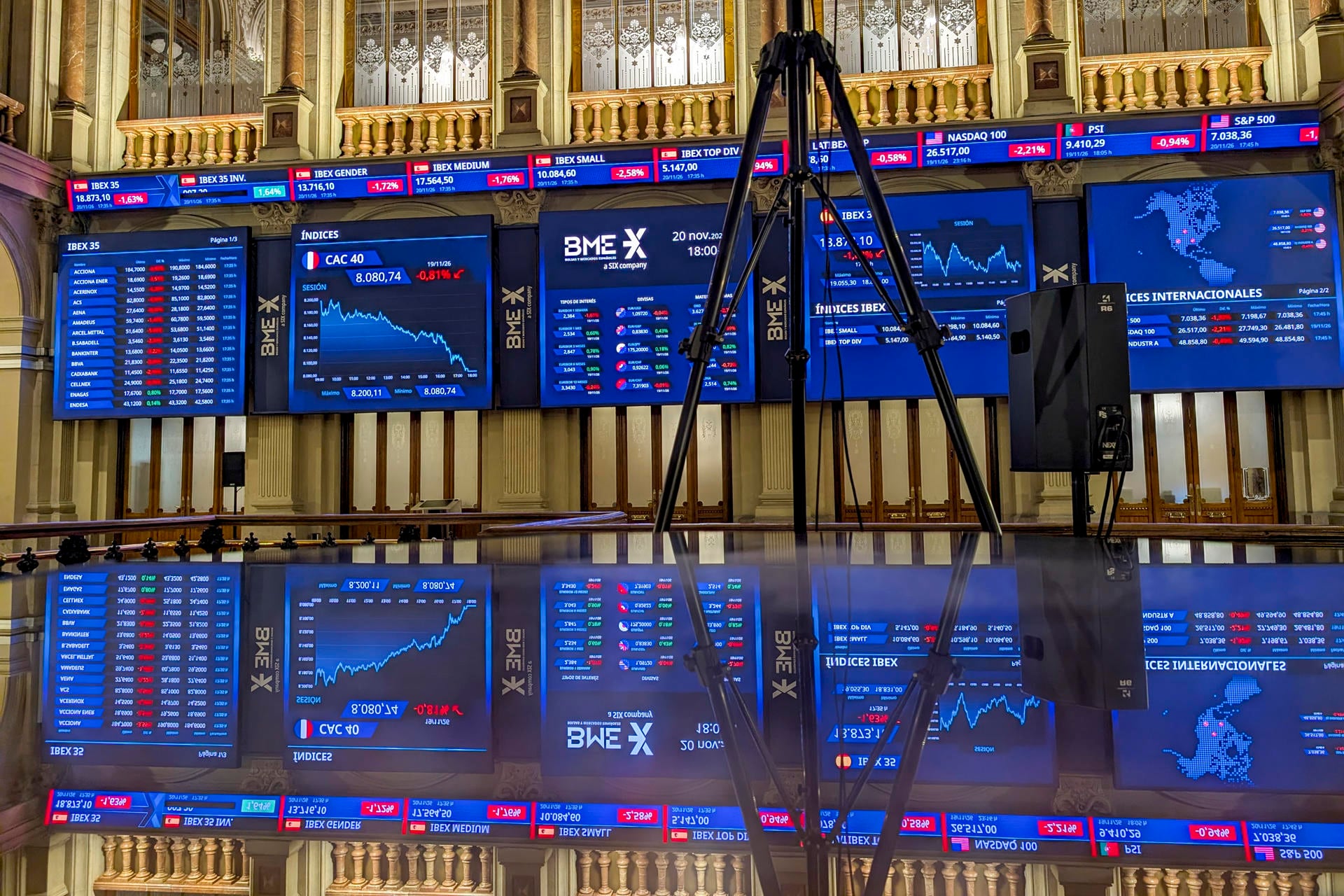
Wall Street experienced its worst week since April 2025 due to a surge in sales that has led to caution about the artificial intelligence sector, causing losses in global stock markets. The Nasdaq led the decline in the United States with a 10% drop, followed by the S&P 500 which fell 8.6%, and the Dow Jones, which lost 8%. This was the Dow Jones' worst week since March 2020.
The MSCI index, which includes stocks from developed and emerging markets, fell 8.1% in the week, its worst decline since the pandemic. Global stock market capitalization saw a $10.5 trillion drop, an unprecedented amount, according to Bloomberg. Weekly declines were notable in Asia and Europe, with 7.9% in South Korea's Kospi, 7.7% in Japan's Nikkei-225, 7.3% in Germany's Xetra DAX, and 5.7% in Spain's IBEX 35.
Mexico's S&P/BMV IPC fell 3.6%, and Spain's FTSE BIVA dropped 3.2%. Laura Torres, director of investment at IMB Capital Quants, said liquidations occurred due to steep earnings and regulatory and financial pressures on the AI infrastructure, following Anthropic's stock plunge and scrutiny of Nvidia. She noted the S&P 500 and Dow Jones entered technical correction territory amid worries about data center debt, the Federal Reserve's tight policy, and massive deleveraging.
Edward Jones' Mona Mahajan said investors remain concerned about slowing AI, rising financing costs, and doubts about investment returns, which have weighed on market sentiment. Since October 6, the S&P 500 fell over 11%, while the Nasdaq, with a strong tech presence, dropped about 18%. Both indices have fallen below technical support levels like the 200-day moving average, suggesting greater volatility ahead.
Gabriela Siller, Edward Jones' investment strategy director, said stock losses are closely tied to a more pessimistic outlook for the AI industry. She added that Democratic wins in the midterm elections in the U.S. could lead some governors to enforce stricter rules for AI infrastructure construction, particularly in Texas. "Additionally, President Donald Trump's administration plans to restrict U.S. tech firms' investment in data centers abroad, reducing their long-term cash flow generation capacity," she added.
Fundamentals remain robust, with corporate profits still strong, S&P 500 earnings expected to grow over 30% this year and 16% in 2027. While AI investment development may slow next year, the sector is still set for strong manufacturing and economic growth, according to Edward Jones.
Rewritten by urgent.news; may contain errors — check the original.
Source: elfinanciero.com.mx