Ukraine’s defense industry has likely hit a ceiling, industry officials tell WSJ. Even the Neptune’s maker admits Ukraine produces less than Russia
Neptune output will stay below 1,000 this year, says the head of its maker, while some firms now base themselves in Estonia and the US.
Ukraine's defense sector, which has been revitalized since the onset of war in 2022, is facing significant limitations according to officials and analysts, as reported by The Wall Street Journal on 21 November. The industry grapples with budget constraints, a shortage of skilled workers, and the challenge of establishing secure facilities to expand operations.
This situation was highlighted shortly after Ukrainian forces successfully downed sections of the Crimean bridge on November 17 using Palianytsia drones, Neptune missiles, Ruta drones, and FP-5 drones, as announced by President Volodymyr Zelenskyy.
The ceiling for this sector's growth is largely determined by its ability to match Russia's production capacity, according to these officials. While Ukraine plans to manufacture over seven million drones by 2026, as stated by Deputy Defense Minister Serhii Boiev during a conference on January 26, the country cannot produce the same scale of advanced missiles as Russia.
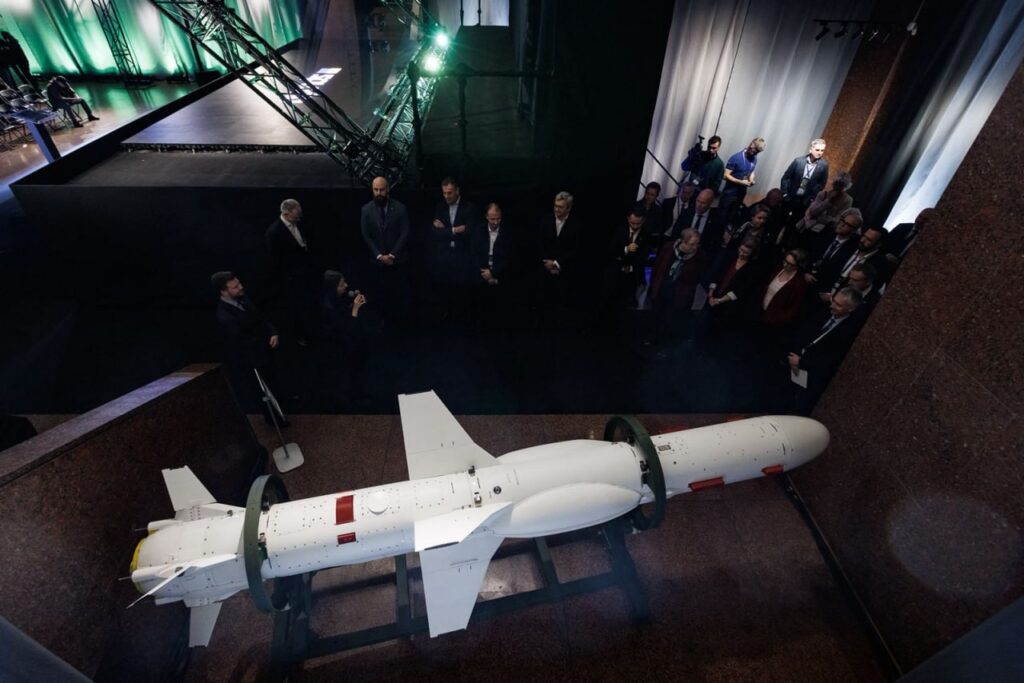
Specifically, the Neptune missile, produced by Luch Design Bureau, is limited to hundreds of units per year, falling short of Russia's hundreds of thousands, as confirmed by Oleh Korostelov, the company's director general.
Luch Design Bureau is reported to produce over 1,000 of its Palianytsia drones annually, a figure that underscores Ukraine's comparative disadvantage in missile production. Comparative statistics provided by Ukraine's military intelligence suggest that Russia manufactures approximately 3,000 jet-powered drones each month, a stark contrast to Ukraine's output.
The financial shortfall in the defense industry is further compounded by the distribution of funds among more than 1,300 companies. Kyiv's procurement system, which allows commanders and individual units to procure equipment or receive donations, has scattered spending and diluted the overall impact, according to Nico Woods, a former U.S. Navy officer who has advised Ukrainian defense production. Many companies, Woods noted, contribute minimally to the war effort, instead competing for limited resources.
Additionally, Luch Design Bureau must address the security of its production sites from Russian attacks, a concern expressed by Oleh Korostelov. In October, Russia claimed to have targeted an Antonov plant in Kyiv, according to reports from TASS, a news agency linked to the Russian government. This attack threatens Luch's shared parent company, Antonov.
The industry's talent and infrastructure challenges are also notable. Ground-drone manufacturer Ark Robotics has received numerous orders but struggles to meet demand due to a shortage of skilled workers, as well as difficulties in attracting employees given the large number of Ukrainians working abroad or serving in the military. The issue of safety also affects real estate, with landlords hesitant to lease properties in areas that could become targets for Russian forces.
In response to these challenges, several Ukrainian companies are seeking opportunities abroad. Oleg Rogynskyy, CEO of Uforce, a British-based Ukrainian company, mentioned that many firms are aiming to establish themselves in Western markets. For instance, Swarmer, a drone-autonomy software company, recently completed its Nasdaq IPO in March and relocated its headquarters to Austin, Texas.
Additionally, Uforce has established a partnership with ReconCraft, an American boatbuilder, to manufacture sea drones in the United States. Similarly, Ark Robotics has moved its headquarters to Estonia, where it continues to produce advanced drones.
Foreign investments are also flowing into Ukrainian defense firms. Swarmer secured the largest defense investment since the start of the war and is now exploring the possibility of filing on the world's second-largest stock exchange. These strategic moves reflect Ukraine's ambition to leverage international markets and expertise to overcome domestic production constraints and bolster its defense capabilities.
Rewritten by urgent.news; may contain errors — check the original.
Source: euromaidanpress.com