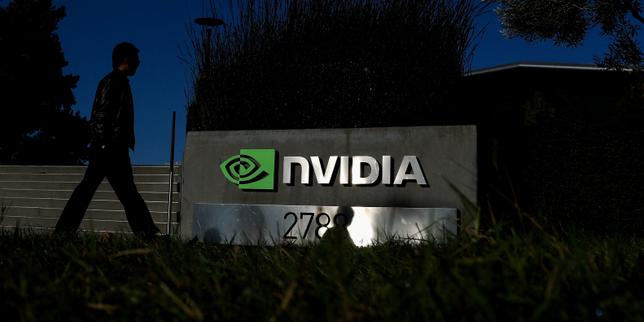
"Too big to fail": The economic fear behind Jensen Huang's Nvidia comeback
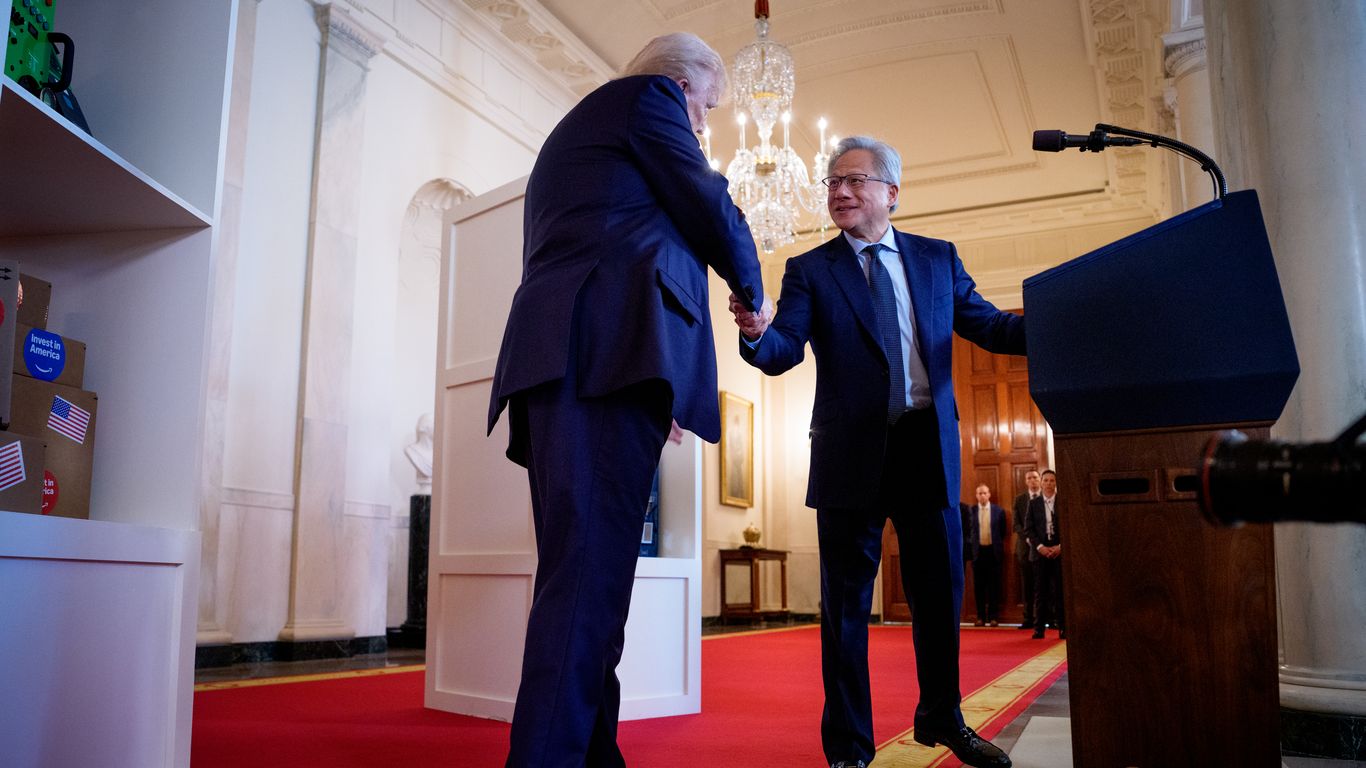
President Trump pushed Nvidia to reinstate Jensen Huang as CEO after allies argued he was " too big to fail " for the U.S. economy and a victim of "deep state" maneuvering, sources familiar with the discussions told Axios. Why it matters: Trump put the weight of the presidency behind a private company's decision about who should run it, an intervention that strengthened Huang's allies inside the…
Six days after Nvidia's board ruled out reinstating Jensen Huang as CEO, Huang has returned. Nvidia shares soared around 30% in early trading following the news. The tech world and markets had spent a week wondering if Nvidia, or AI, could function without its founder. It couldn't. Triumph is likely among US observers, and red faces among those who claim American capitalism's strength and governance. The focus is on Big Tech's founder problem.
The issue is not just CEO misconduct and weak boards. It's also the problem of totalitarian founder control. Meta's Mark Zuckerberg, Anthropic's founders, and SpaceX's Elon Musk all have significant voting power, raising questions about who can challenge them. Nvidia's board first said it wouldn't bring Huang back, then reversed its decision, showing how boards can be shaped by the founder's influence.
Succession planning is uncertain. For SpaceX, finding a successor could be lengthy and uncertain, revealing that one of the world's largest companies finds replacing its founder difficult. The Sam Altman episode at OpenAI highlighted the question of who holds authority when a founder becomes the company's center of gravity.
Nvidia's "founder mode" has been taken to extremes, with the founder central to the company's success. Huang equals Nvidia, and Nvidia equals Huang. The company's symbol is Huang's leather jacket, not its green eye.
Political ties complicate the issue. Donald Trump urged Nvidia to bring Huang back, suggesting a bargain between Washington and Nvidia. Yet, this raises questions about business, politics, and national security entanglement, especially when a company is at the heart of the AI race.
The US suspects Huang's relationship with a woman had ties to Chinese intelligence, although no proof exists. This shows how private conduct can become a national security vulnerability. His return is a reprieve for Nvidia and, in a narrow sense, a setback for Beijing.
The market viewed Huang's return as a victory, lifting Nvidia shares and reversing the broader sell-off in US tech stocks. However, a stock market rally does not replace a governance plan. The board's investigation continues, and Nvidia will strengthen national-security and export-control oversight. Will these measures establish independent checks with real authority, or will business-as-usual continue with Huang back?
The episode underscores the human role in the AI era: the human in the loop is both a weakness and a safeguard. One person's choices can shake a company at the heart of the AI economy, and his return demonstrates the flip side: the machine did not decide Nvidia was safe again. Institutions built around one person remain fragile.
Rewritten by urgent.news; may contain errors — check the original.
Sources: economictimes.indiatimes.com · axios.com
This story
This is one outlet's version. Read the fullest account.
- Huang comeback exposes Big Tech's founder problem economictimes.indiatimes.com