The Marketing Metrics That Matter
Brands have access to more data than ever, but too often they’re focusing on conversation volume and not getting a complete picture of how top-of-funnel awareness translates to sales. Executives need a unified playbook that ties cultural buzz to commercial growth.
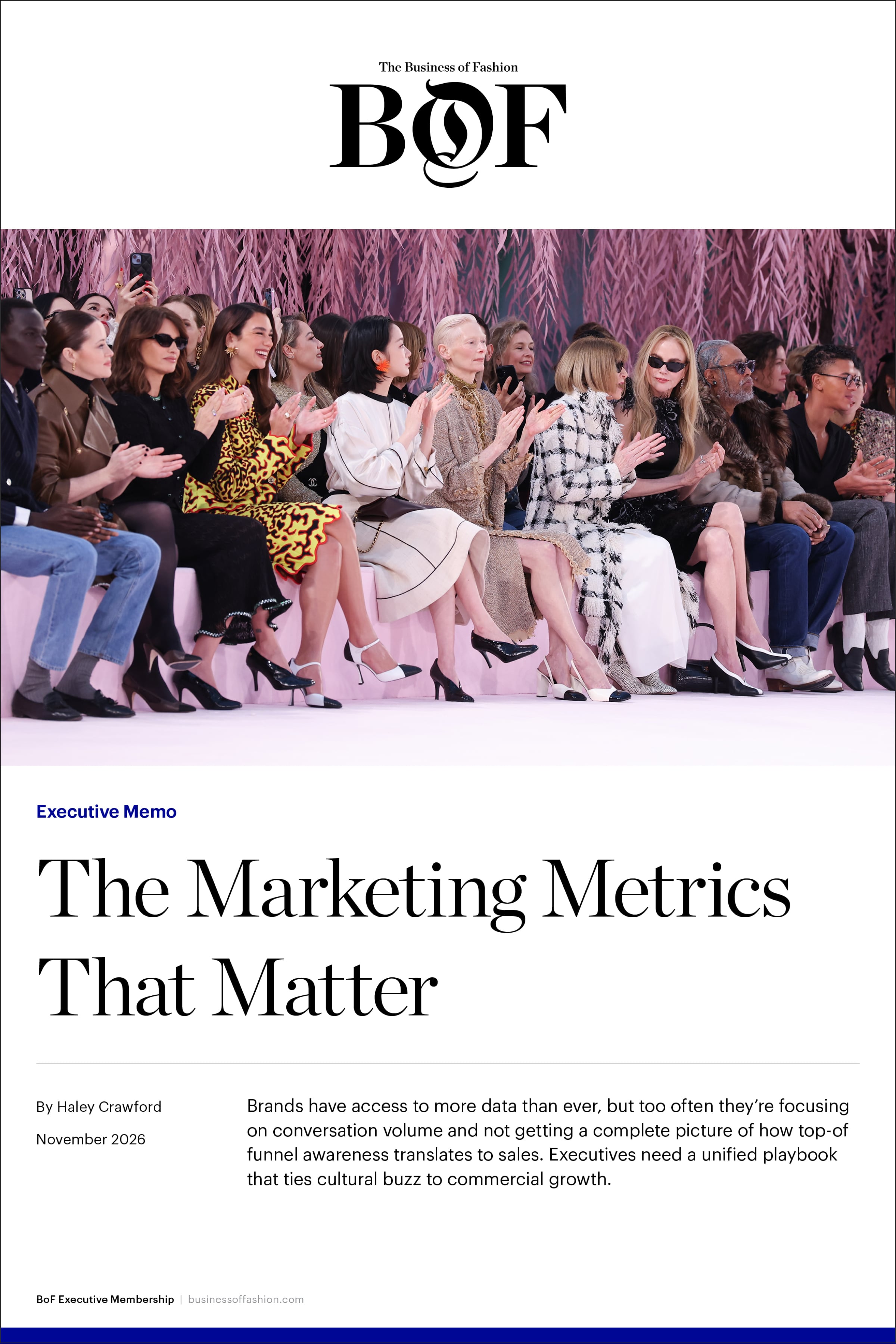
Fashion's marketing strategies have become increasingly complex, but brands have yet to fully develop effective methods for gauging the tangible impact of their marketing efforts. While an abundance of data and analytics tools are now available, due to the diversification of marketing budgets across various channels, many companies have difficulty linking cultural trends, consumer needs, and revenue generation.
This disconnect often leads brands to overemphasize certain metrics, neglecting others that could provide a more comprehensive understanding of their marketing performance.
Brands frequently place undue importance on high-level visibility indicators, such as earned media value (EMV) and media impact value (MIV). These metrics attempt to assign a dollar value to the attention a brand garners online. However, this approach can give a skewed perspective on marketing effectiveness since it does not directly correlate with sales or revenue growth.
At the other end of the spectrum, marketers often focus on metrics related to website traffic from paid media and affiliate links shared by influencers. By analyzing click-through rates and calculating return on ad spend (ROAS), brands can determine which channels are most effective at driving sales. While these measures are essential for understanding the financial return on advertising investments, they alone cannot provide a holistic view of marketing's role in achieving business objectives.
To bridge the gap between these disparate metrics and deliver a more accurate assessment of marketing's impact on the bottom line, executives need a comprehensive, unified measurement framework. This updated playbook should encompass a range of indicators that capture the full spectrum of marketing activities, from brand awareness to direct sales conversions.
By adopting a more integrated approach to tracking performance, fashion brands can better align their marketing strategies with their overall business goals and ensure that their marketing investments yield measurable, profitable results.
Rewritten by urgent.news; may contain errors — check the original.
Source: businessoffashion.com