South Korea president nominates new foreign minister, spy chief amid US worries
SEOUL: South Korea’s president unveiled a surprise cabinet reshuffle on Monday, changing three key national security posts, as he nominated a new spy chief and foreign and unification ministers amid calls to better manage the alliance with Washington.
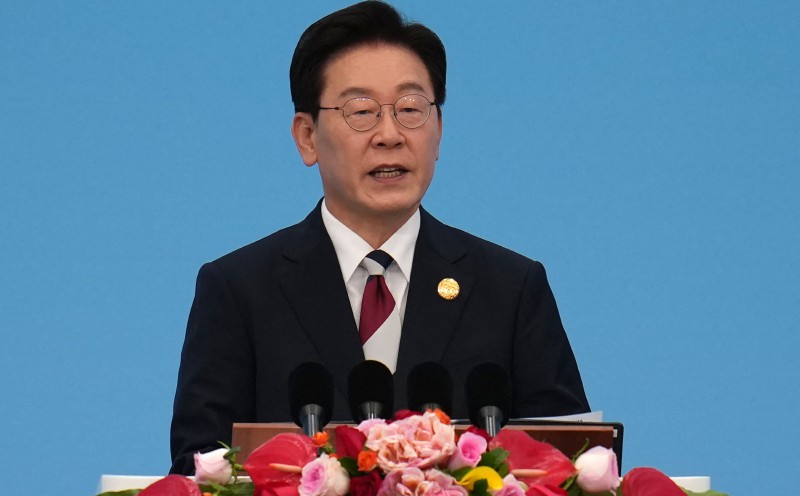
On Monday, South Korea's President Lee Jae Myung announced a surprise cabinet reshuffle, altering three critical national security positions. He appointed a new director for the National Intelligence Service (NIS), selecting former Justice Minister Kang Kum-sil, who would become the country's first female spy chief. Additionally, Lee named a career diplomat, Lim Woong-soon, as the new foreign minister and selected former member of parliament Hong Ik-pyo as unification minister, responsible for leading Seoul's interactions with North Korea.
If appointed, the three new ministers will focus on managing South Korea's alliance with the United States and enhancing relations with nuclear-armed North Korea, amid mounting tensions between the two nations. Former defense ministry official Song Seong-jong suggested that Lee's move aimed to improve US relations, given the recent strains in their ties, such as the suspension of certain intelligence sharing and limited access to senior White House officials.
The US embassy in Seoul did not comment on the matter. Lim Woong-soon, the foreign minister nominee, is seen as a specialist in US affairs, having held multiple posts at the embassy in Washington and participated in negotiations to end North Korea's nuclear weapons program in the early 2010s. David Satterwhite, an academic specializing in Asian studies, viewed the three appointments as a thoughtful effort to improve the situation, rather than a balancing act between factions or reactions to public opinion. He believed Lim's understanding of the US and his diplomatic approach would be beneficial.
Most of the nominees had worked closely with President Lee, according to Lim Eul-chul, a professor at South Korea's Kyungnam University. They were considered reliable to carry out his directives. Lee, who assumed office in June of the previous year, also appointed new culture and safety ministers on the same day. The cabinet and spy chief nominees were required to undergo parliamentary nomination hearings but did not need to pass votes to be confirmed.
Despite these changes, Seoul's fundamental policy lines concerning the US and North Korea would remain unchanged, as confirmed by Lim Kwang-hyun, the chief of staff at the presidential Blue House.
Rewritten by urgent.news; may contain errors — check the original.
Sources: koreatimes.co.kr · en.yna.co.kr · freemalaysiatoday.com · nst.com.my