Presidential villa suffers water and power cuts, Nigerian leader says
Nigeria’s President Bola Tinubu says the presidential villa suffers from cuts in electricity and water – issues that are all too common for the country’s ordinary citizens. He said he was shaving last week when the water supply cut at the villa, known as Aso Rock, in Abuja. He is seeking re-election next January and […]
Nigeria's President Bola Tinubu has revealed that the presidential villa, known as Aso Rock, in Abuja, is experiencing regular electricity and water cuts. These issues are prevalent across the country, affecting ordinary citizens. The president, seeking re-election in January, has pledged to tackle these problems. He recounted an incident where he was shaving and the water supply unexpectedly cut off at the villa.
Tinubu emphasized that the lack of light and water in the villa is emblematic of the broader issues faced nationwide. The Aso Villa, which serves as both the office and residence of the Nigerian president, is located at the base of Aso Rock. In 2022, the budget allocated 10 billion naira (£5.5m; $7.2m) for the installation of a solar mini-grid in the Aso Villa to address rising electricity bills and unstable power supply.
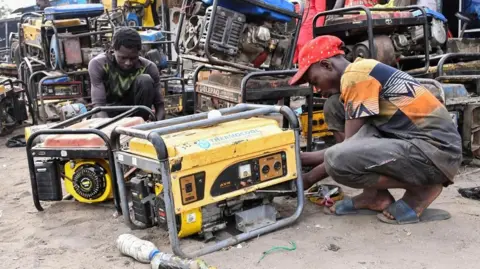
The project is reportedly in the testing phase, with plans to disconnect it from the national grid. Nigeria has long grappled with electricity shortages, but recent disruptions have been primarily due to insufficient gas supplies and declining hydropower output, rather than nationwide grid collapse. Lagos, Abuja, and other regions have experienced persistent blackouts, leading to rotating power cuts that significantly impact households and businesses.
The country also struggles with chronic water shortages, a result of rapid urban population growth outpacing decaying public water infrastructure, leaving millions without reliable water supplies. Tinubu made a significant electricity promise during the 2023 election campaign, promising uninterrupted power and the end of estimated bills.
However, the exact wording and binding nature of this promise have become a contentious issue ahead of the election on January 16, 2027. In 2022, Tinubu reiterated his commitment during the last presidential election, stating that if he fails to keep this promise during a second term, voters should not re-elect him unless given a compelling reason.
Despite the ongoing power cuts, some of his supporters highlight recent improvements in rural areas and a recently approved $2 billion (£1.5 billion) investment in a new East–West Super Grid, designed to increase electricity transmission capacity and strengthen the national grid, as evidence of his efforts to fulfill his commitment.
Tinubu defeated former Vice-President Atiku Abubakar and former Anambra state governor Peter Obi in the 2023 election, and all three are considered the strongest contenders for the upcoming election.
Rewritten by urgent.news; may contain errors — check the original.
Sources: capitalfm.africa · bbc.co.uk · kbc.co.ke · gbcghanaonline.com