Plastic-choked beaches: Coastal livelihoods under threat
Towering drifts of crushed water sachets, bleached single-use grocery bags, tangled heaps of monofilament fishing nets, and sun-faded plastic bottles stretch along the seashore as far as the eye can see.
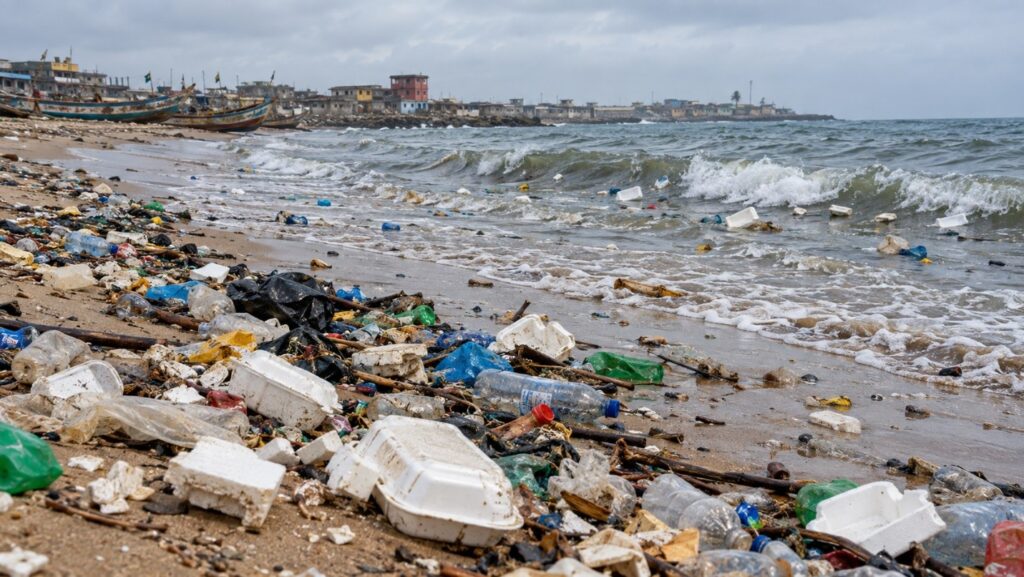
The historic James Town Fishing Harbour, once a bustling center for artisanal canoes and traditional fishing activities, is now being overwhelmed by a staggering amount of plastic waste. As one enters the harbour, the once vibrant scene of fishermen mending their nets and reeling in catches is marred by a sea of discarded polythene, monofilament fishing nets, and sun-faded plastic bottles.
This overwhelming presence of plastic is not only harming the marine ecosystem but also threatening the livelihoods of the local fishing community.
Sammy Okine, a 37-year-old fisherman, recounted his struggles with the plastic menace. He expressed frustration over having to repair his nets multiple times a week due to tangled debris, and lamented the diminishing returns on his fishing trips, often returning empty-handed or with a fraction of the expected catch. Daniel Otoo, another local fisherman, echoed similar sentiments, noting the decline in fish catches and the struggle to make ends meet for his family.
The Nae Wulomo, Nuumo Kwaa Mensah III, highlighted the broader implications of this crisis. He emphasized that the plastic pollution is not just depleting fish stocks but also eroding the very livelihoods of the people of James Town. "The plastics are not generated locally; they come from markets and other places. We need to address this issue holistically," he stressed.
The crisis facing the James Town fishermen is indicative of a larger national emergency, according to the United Nations Environment Programme (UNEP). Globally, the UNEP reports that about 450 million tonnes of plastic waste are generated each year, leading to severe biodiversity loss, ecosystem degradation, and climate vulnerabilities. Without urgent global actions, it is projected that plastic waste in aquatic ecosystems could nearly triple by 2040.
Ghana, for its part, generates over one million tonnes of plastic waste annually, with less than 10% collected and recycled. The rest ends up in open drains, rivers, and the ocean, contributing to the alarming projections that by 2050, the world's oceans could contain more plastic waste by weight than fish. The President of the Ghana National Canoe Fishermen Council (GNCFC), Nana Joojo Solomon, pointed out that over 140,000 artisanal fishermen across 320 coastal communities contribute to this pollution.
He stated that the fishermen's own consumption habits, such as discarding plastic sachets and bottles after use, exacerbate the problem.
Scientific research further underscores the severity of the issue. A study by the Council for Scientific and Industrial Research-Water Research Institute (CSIR-WRI) found that 80-93% of the plastic waste on Ghanaian beaches originates from land, entering the sea through drains, markets, and households. The research also revealed dangerously high levels of microplastics in local fish, posing potential health risks.
Dr. Pennante Naa Ayikailey Bruce-Vanderpuije, a Senior Research Scientist at CSIR-WRI, warned that microplastic levels in fish from coastal communities, including James Town, exceed internationally recommended safety limits.
Rewritten by urgent.news; may contain errors — check the original.
Source: myjoyonline.com