New Research Reveals Europa's Sodium Cloud Originated from its Interior Ocean
Scientists using the W.M. Keck Observatory's HIRISE spectrometer have revealed new information about the origin of Europa's sodium cloud.
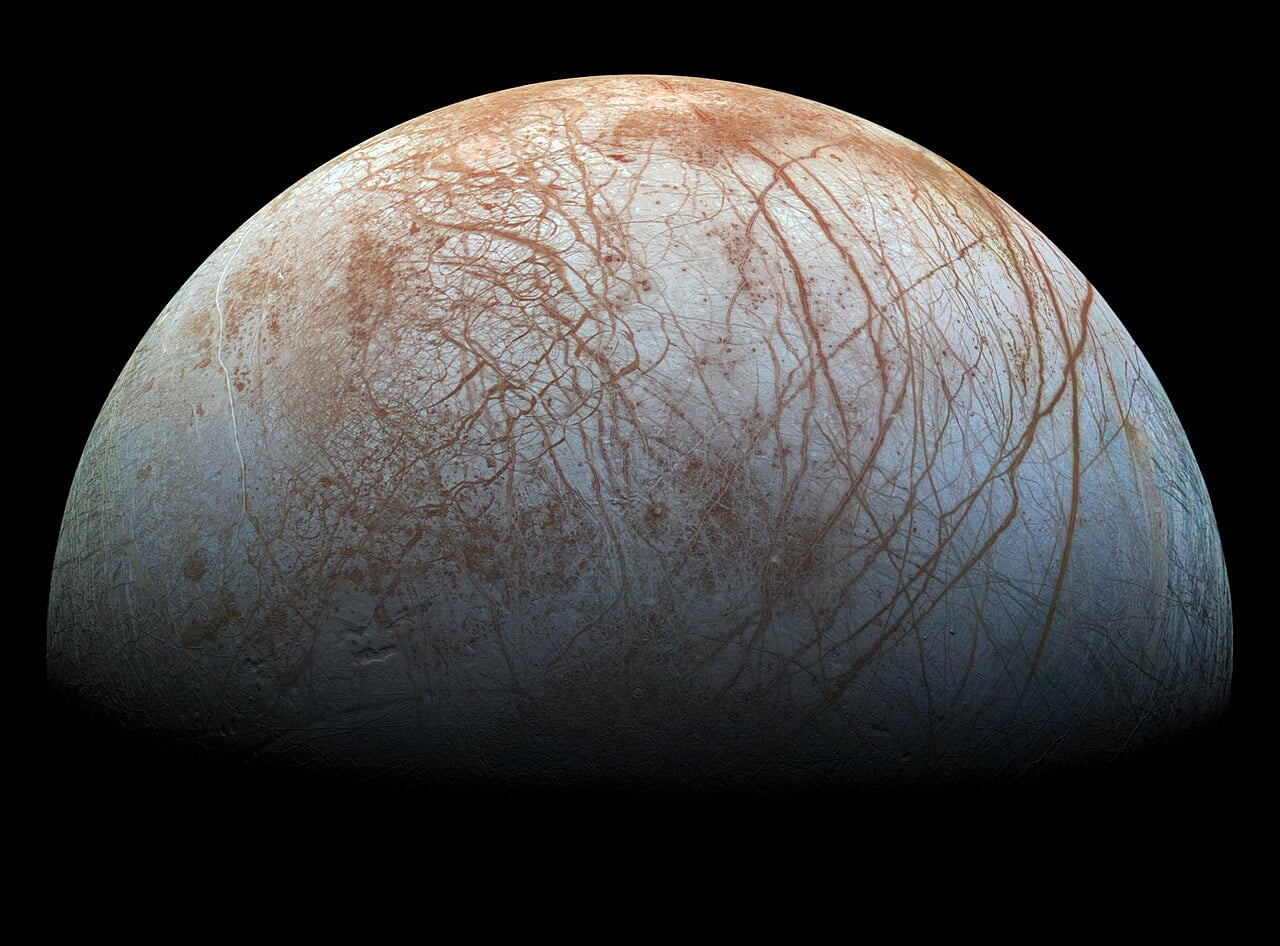
For decades, scientists have pondered the existence of an ocean beneath Jupiter's moon Europa's icy surface. Observations from the Voyager probes in 1979 strengthened this hypothesis, revealing surface plumes caused by warm water pushing up through vents in the crust (cryovolcanism). Additionally, Europa's surface exhibits intriguing chemistry and a vast, diffuse cloud of sodium.
A new study led by Boston University has uncovered a fascinating connection between this sodium cloud and Europa's hidden ocean. Despite the dynamic and powerful forces in Jupiter's environment, the sodium cloud has remained remarkably stable over two decades of observations. This stability, coupled with the cloud's oblong shape and size, suggests that its origins lie within Europa's saltwater ocean rather than being influenced by Europa's volcanic moon Io.
The research, published in the Journal of Geophysical Research: Space Physics, utilized two decades of Keck Observatory data to map the sodium cloud's distribution and behavior, providing valuable insights into Europa's chemical environment and potential habitability.
Rewritten by urgent.news; may contain errors — check the original.
Source: universetoday.com