NASA’s first 3D printer in space made a wrench. It could help us live on the moon
One of the newest items to go on display in the National Air and Space Museum in downtown Washington is also one of its most unassuming: a metal box with a glass door on one side , tucked inside a display case dominated by a humanoid robot with arms extended toward the viewer. A small white wrench standing next to that box could be even easier to overlook. But the wrench was made in that box—a 3D…
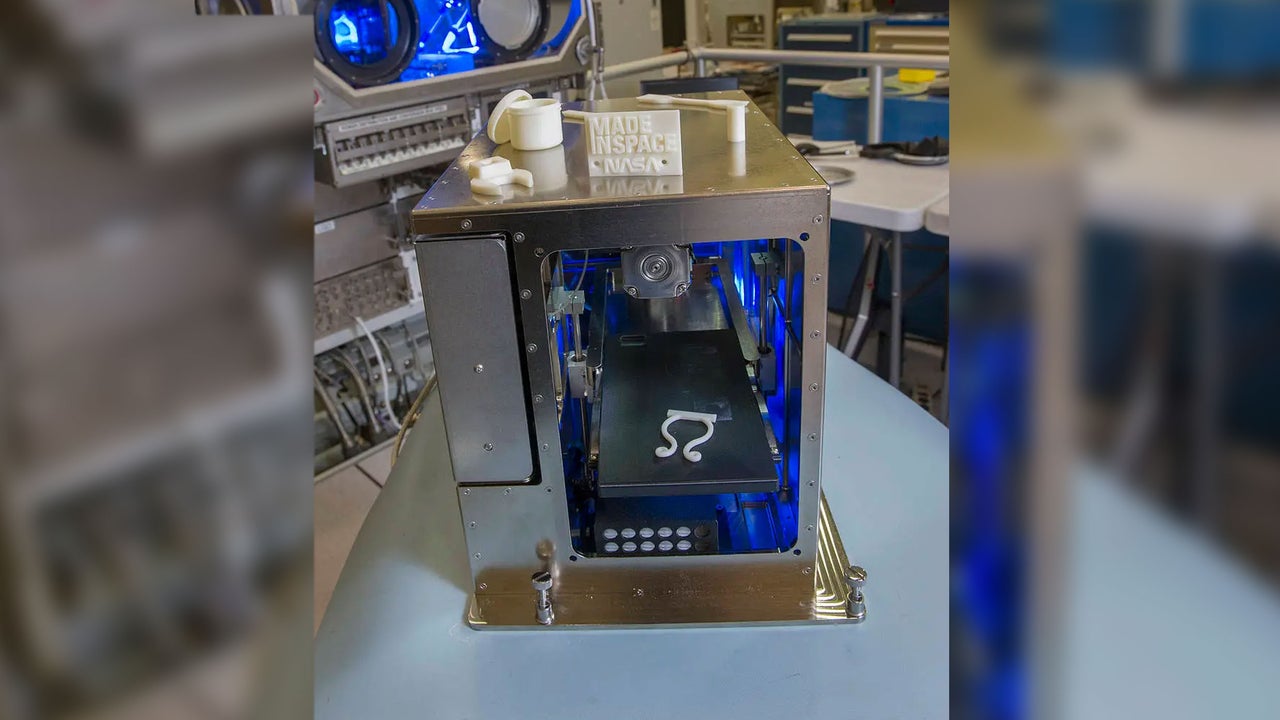
A 3D printer developed by Made in Space, acquired by Redwire in 2020, made its debut at the National Air and Space Museum in Washington, D.C. The printer created a small white wrench, marking the first 3D printed tool in space.
NASA approached the endeavor cautiously, given the risks of 3D printing emitting microscopic particles that could harm the astronauts' lungs. To address this, the printing hardware was enclosed in a glass-doored case to prevent airborne particles. Microgravity, or microgravity, presented another challenge, requiring engineers to modify standard 3D-printing equipment to ensure consistent results.
Made in Space adjusted extruder designs to maintain force and layer consistency in a microgravity environment. The printer was designed for easy use by astronauts, with modular components that could be swapped out without altering settings. Power consumption was reduced from 1.2 kilowatts to a peak of 196 watts, fitting the printer into a single cargo transfer bag for transport aboard a SpaceX Cargo Dragon capsule.
The wrench originally intended to be printed was changed to a ratchet wrench after astronaut Butch Wilmore expressed his need for one during maintenance. The wrench was printed, fully assembled, and sent to the ISS within a day and a half, with a torque rating label added.
The potential of 3D printing for on-demand tools and components aboard spacecraft could significantly reduce the need for creative problem-solving in space emergencies. However, lunar gravity, one-sixth that of Earth, presents new challenges for engineers and astronauts to address.
Rewritten by urgent.news; may contain errors — check the original.
Source: fastcompany.com