NASA’s ESCAPADE Captures Parting Images of Earth on Its Way to Mars
After completing a successful powered flyby of Earth, one of NASA’s twin ESCAPADE (Escape and Plasma Acceleration and Dynamics Explorers) spacecraft snapped farewell images of its home planet before heading off to Mars. The ESCAPADE spacecraft used its Visible and Infrared Observation System camera, provided by Northern Arizona University, to capture the images of Earth […] The post NASA’s…
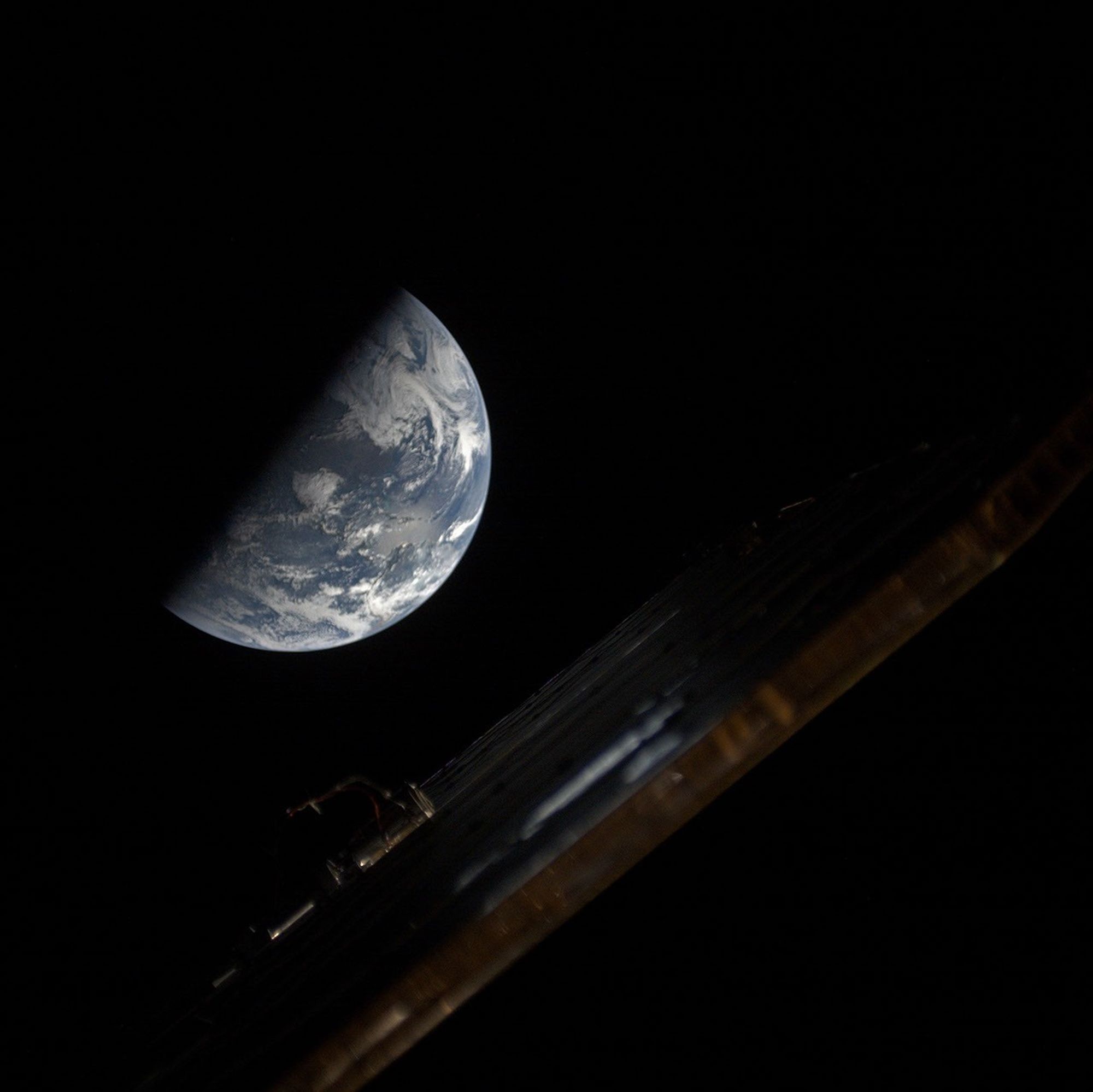
On November 9, 2026, one of NASA's twin ESCAPADE spacecraft captured farewell images of Earth before continuing its journey to Mars. The spacecraft performed a powered flyby of Earth, coming within approximately 38,500 miles of the planet. This close approach allowed the spacecraft to take images of Earth using its Visible and Infrared Observation System camera, which was provided by Northern Arizona University.
The images were taken around 9 a.m. EST on the day of the flyby, about three hours after the spacecraft's closest approach to Earth. At the time the images were captured, the spacecraft was positioned to view the Western Hemisphere of the planet. One of the spacecraft's solar panels can be seen in the foreground of the images.
The visible-light image shows Earth in visible and infrared light, with areas that appear brighter indicating warmer regions. This type of image can provide valuable information about the planet's temperature and surface features. The infrared image of the Western Hemisphere of Earth also reveals similar temperature variations, with brighter areas indicating warmer regions.
Rewritten by urgent.news; may contain errors — check the original.
Source: science.nasa.gov