NASA Seeks Partners to Design First Nuclear Reactor for the Moon
NASA is seeking industry partners to develop and test the first nuclear reactor designed to provide electricity on the Moon, a major step toward establishing a sustained human presence on the lunar surface. Lunar Reactor-1 (LR-1) will be a small fission power system that will generate 20 kilowatts of electricity, enough to power approximately 16 […] The post NASA Seeks Partners to Design First…
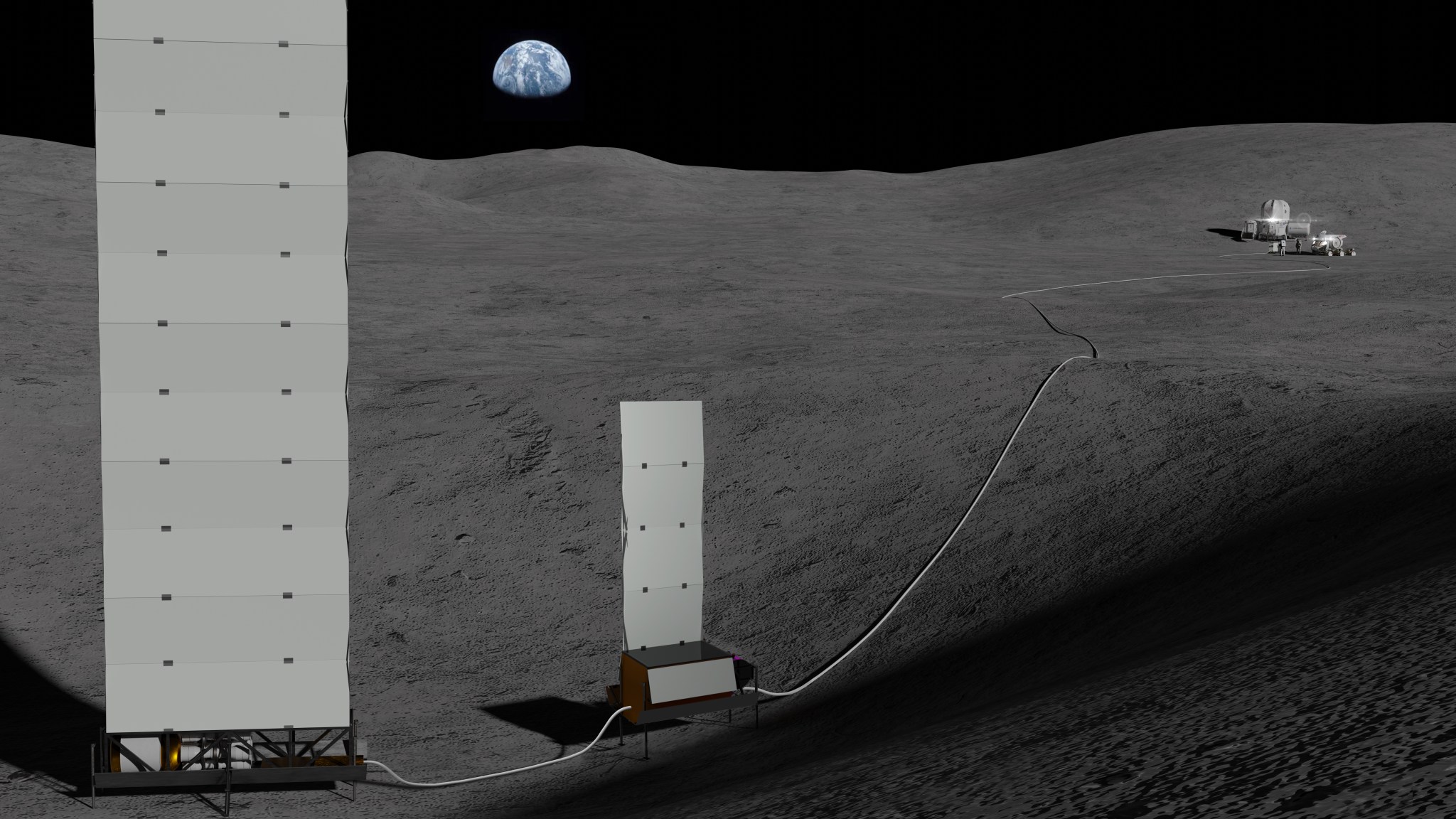
NASA is seeking industry partners to design and test the first nuclear reactor intended to generate electricity on the lunar surface, a crucial step towards establishing a permanent human presence on the Moon. Lunar Reactor-1 (LR-1) would produce 20 kilowatts of power, enough to supply electricity to roughly 16 typical American households in a year.
This energy could sustain habitats, communications, rovers, scientific equipment, and other necessary infrastructure for future lunar bases. NASA aims to have a launch-ready system by 2030, with operational status on the Moon for a minimum of five years post-deployment.
Unlike solar power, which relies on sunlight, a nuclear reactor can provide consistent electricity generation, even during the Moon's long nights lasting around 14 Earth days due to its distant orbit. This reliability is essential for sustaining lunar operations, especially in locations with limited sunlight. Brian Giblin, NASA’s Lunar Reactor-1 program manager, emphasized that a dependable and abundant energy source will be critical for future lunar and potentially Martian exploration.
Space nuclear systems can deliver continuous power in any environment, regardless of sunlight availability.
The Space Power and Reactor Capabilities Request for Proposals outlines that the reactor must adhere to Department of Energy (DOE) safety standards for nuclear operations. While the main objective is to develop and test LR-1, NASA may issue additional contracts to support the creation of other space nuclear power systems. Proposals are due on December 21.
Nuclear energy will become increasingly vital for NASA’s space exploration initiatives as lunar nights are prolonged and dust storms on Mars can block sunlight for extended periods. Consequently, solar power becomes less effective as we move further from the Sun. Nuclear power offers a dependable electricity source in these extreme conditions.
LR-1 is overseen by NASA’s Space Reactors Division in collaboration with the Department of Energy. The division is also responsible for developing NASA’s Space Reactor‑1 (SR-1) Freedom, scheduled for launch in 2028. SR-1 Freedom will deploy three SkyFall helicopters to Mars and demonstrate nuclear electric propulsion, a technology that uses electricity from a nuclear reactor to power spacecraft propulsion systems.
This technology could facilitate future spacecraft to travel longer distances and embark on deep space missions that are currently beyond the reach of conventional propulsion methods. Collectively, LR-1 and SR-1 Freedom aim to advance nuclear power and propulsion technologies, thereby paving the way for a new era of space exploration.
By investing in these technologies, NASA and DOE are securing America’s leadership in space for the coming decades.
Rewritten by urgent.news; may contain errors — check the original.
Source: nasa.gov