Metabolic Pathway Identified as Potential Target for Liver Diseases
A study identified increased levels of the enzyme EPHX1 in the livers of mice and patients with advanced fibrosis and showed that EPHXI promotes liver fibrosis by decreasing EET levels. The post Metabolic Pathway Identified as Potential Target for Liver Diseases appeared first on GEN - Genetic Engineering and Biotechnology News .
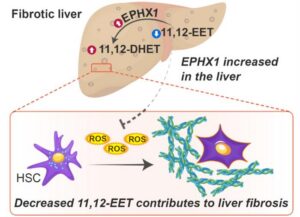
A study conducted by researchers at Osaka Metropolitan University has identified a metabolic pathway that could serve as a potential target for treating liver diseases, specifically liver fibrosis. The pathway involves the conversion of dietary polyunsaturated fats into metabolites like epoxyeicosatrienoic acid (EET) and its reduced counterpart, dihydroxyeicosatrienoic acid (DHET).
The researchers found that increased levels of the enzyme hepatic microsomal epoxide hydrolase EPHX1 in the livers of mice and patients with advanced fibrosis were linked to decreased levels of EET and increased levels of DHET, both of which contribute to liver fibrosis. Mice bred without EPHX1 exhibited higher levels of EET and less liver fibrosis, suggesting that EPHX1 plays a role in liver fibrogenesis.
The findings, published in JCI Insight in a paper titled "Hepatic EPHX1 Potentiates Liver Fibrosis by Decreasing Eicosatrienoic Acids," indicate that EPHX1 contributes to liver fibrosis by hydrolyzing EETs into DHETs. Treating liver cells with 11,12-EET resulted in reduced oxidative stress and inhibited the activation of fibrotic pathways in the cells. Suppressing EPHX1 activity or maintaining 11,12-EET levels could be promising therapeutic strategies for liver fibrosis.
The study also highlights the potential of tracking DHET levels in blood samples as a biomarker for more severe liver fibrosis, which could help identify patients who require early intervention. However, the researchers acknowledge the challenges of developing drugs that inhibit EPHX1 and those affecting 11,12-EET, as current inhibitors are unstable and lack human clinical applications.
The authors hope that these findings will act as a foundation for the development of new therapies targeting EPHX1 for the treatment of liver diseases such as fibrosis and cirrhosis.
Rewritten by urgent.news; may contain errors — check the original.
Source: genengnews.com