Male bumblebees are more than ‘flying bags of sperm’
A new study finds that the male bumblebees help incubate baby bumbles, and that with males' assistance, hives thrive.
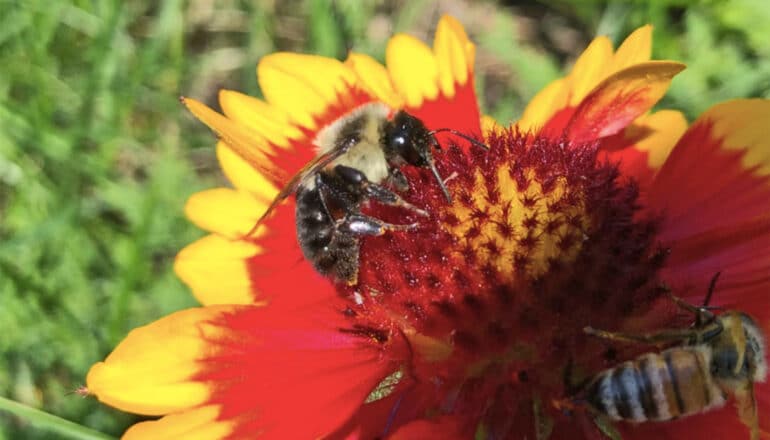
For decades, scientists have believed that male bumblebees' role in colonies revolved solely around reproduction. A recent study, however, reveals that males also contribute to nurturing baby bumblebees, and their assistance leads to thriving hives. The study, published in the Royal Society Open Science journal, highlights the positive impact of male babysitters within the nest.
University of California, Riverside entomologist and lead author Meghan Moore explains that when queens have males in their nests, they begin laying eggs twice as quickly, resulting in up to 1.5 times more offspring. This finding is particularly significant given the challenges facing bumblebee populations due to pollution and habitat loss.
Researchers have long assumed that male bumblebees leave the nest to mate with queens, leaving the maintenance and operation of the colony to female workers. However, this assumption was challenged when Moore, while conducting a separate experiment using a thermal camera, discovered that males hovering over the eggs and larvae were generating heat.
This phenomenon, known as "incubation posture," was previously overlooked in scientific literature, which portrayed males as mere "flying bags of sperm" with no other purpose than mating with queens.
To further investigate, Moore and her colleague, UCR entomology professor Hollis Woodard, established laboratory nests with mated queens and varying numbers of males. The nests contained either no males, one male, three males, or five males. Remarkably, none of the nests included female workers. By monitoring these nests for approximately a month using thermal imaging, the researchers tracked body temperatures, the frequency of incubation posture, and the number of offspring produced in each nest.
The findings revealed that males adopting the incubation posture had significantly elevated thorax temperatures, around 34.8 degrees Celsius, compared to the typical 31 degrees. This active heat generation indicates that males were indeed incubating the brood by producing heat. Moore speculates that the lower temperatures may serve to preserve sperm viability, although this hypothesis requires further investigation.
The researchers acknowledge certain limitations to their study. The experimental setup was artificial, as natural bumblebee nests typically consist of a queen and workers, not males. Additionally, males were unable to leave the nest in the laboratory, and the duration of their presence in wild nests remains uncertain. Nevertheless, the study suggests that male bumblebees may play a crucial role in brood care, even in the presence of female workers.
The researchers are planning further studies to explore the potential trade-offs of this nurturing behavior, such as the energy costs to male bodies.
Rewritten by urgent.news; may contain errors — check the original.
Source: futurity.org