MacBook modder turns Apple’s Force Touch trackpad into a speaker using haptic engine
The MacBook's Force Touch trackpad with its haptic engine can be used to make it into a speaker using some new 'No Speaker' software.
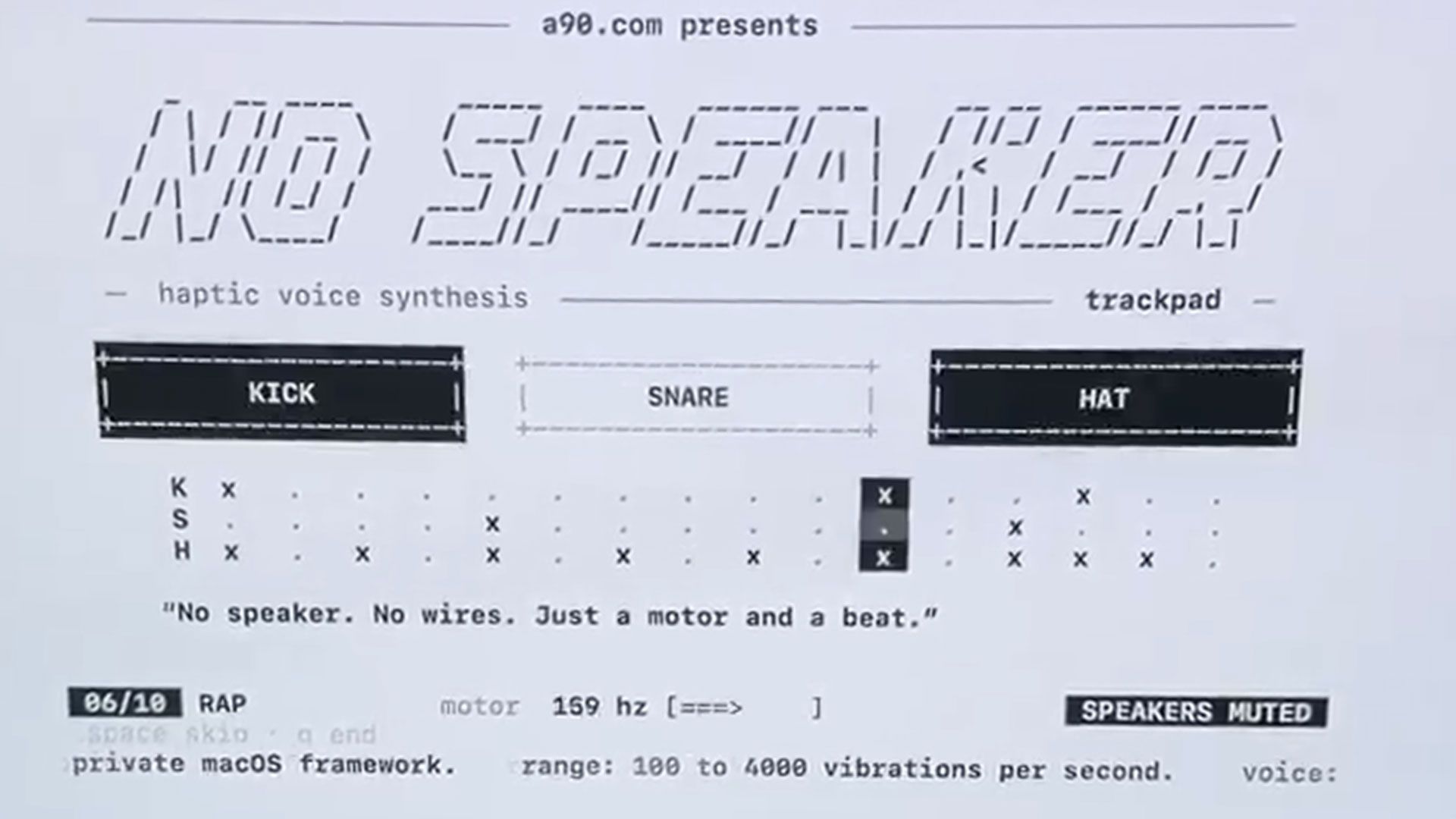
Apple's MacBook Force Touch trackpad, renowned for its smooth glass surface and accurate haptic feedback, has found an unconventional new use thanks to coder Cody Collier, known as os6 on GitHub. The trackpad's haptic engine, typically responsible for providing tactile feedback, can be manipulated to function as a speaker through Collier's No Speaker software.
In a video demonstration, Collier shows how the trackpad can be used to play a melody, as well as serve as a rudimentary drum machine with programmed kick, snare, and high hat sounds. However, the audio quality produced by this method is decidedly poor, comparable to an ancient Speak & Spell device with a damaged speaker.
The No Speaker software allows users to interact with the trackpad by sending text strings for speech, adjusting the voice output, playing test tones, and switching UI modes. The project requires macOS 12 or later on Apple Silicon, or macOS 13 or later on Intel processors. It is compatible with MacBook Pros starting from 2015 and can function on devices with Force Touch trackpads as well as those without.
While Apple's Force Touch trackpad is not the first device to be repurposed for audio playback, it represents another instance of tech enthusiasts finding creative uses for unconventional components. Past examples include playing music using floppy drive motors and utilizing hard drive actuators as speakers.
Rewritten by urgent.news; may contain errors — check the original.
Source: tomshardware.com