Landwirtschaft: Öko-Weinbau hat sich innerhalb von zehn Jahren verdoppelt
In allen 13 deutschen Weinregionen wird zunehmend ökologisch gewirtschaftet. Doch der Umstieg und die Schädlingsbekämpfung stellen Winzer vor Herausforderungen.
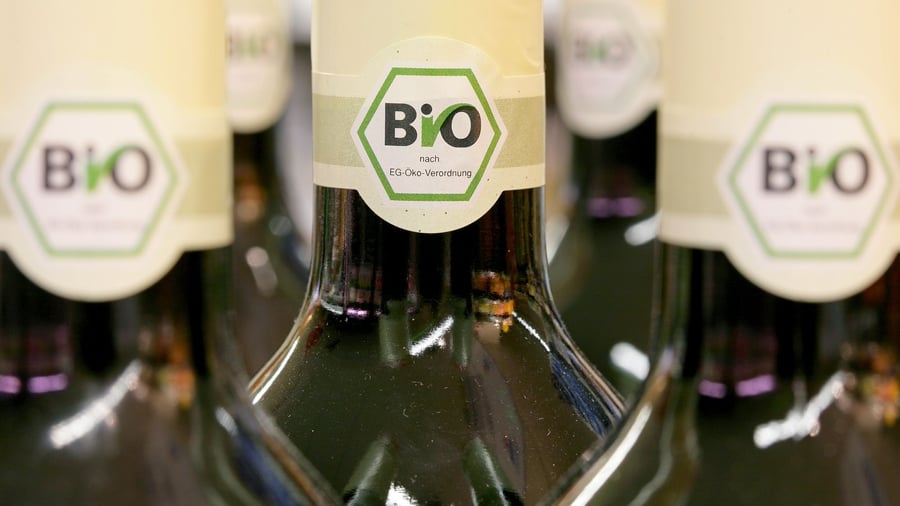
Bio-wine is becoming increasingly popular in Germany, with the area under ecological cultivation nearly doubling within a decade, according to the German Wine Institute (DWI). Now accounting for 15.5 percent of all cultivated vineyards, this represents a significant shift from just 1.6 percent in the year 2000 and 7.4 percent in 2015.
Since the turn of the millennium, more and more vineyards have been cultivated according to ecological criteria, with a slight fluctuation each year. Last year, the certified organic vineyard area reached 15,800 hectares – up from 7,600 hectares in 2015 and a mere 1,700 hectares in 2000, said DWI spokesperson Ernst Büscher, based on surveys by the Agrarmarkt Information Society.
Over the past year, the organic wine area has grown by around 500 hectares. The total vineyard area in Germany, on the other hand, has remained roughly constant since 2000, with around 102,000 hectares. Ecological cultivation accounted for only 1.6 percent of the total in 2000 and 7.4 percent in 2015. Many prestigious vineyards place great emphasis on organic farming.
Indeed, 82 out of roughly 200 wine estates in the German Association of Prädikatswein (VDP) cultivate more than 40 percent of their vineyards organically, though some estates or areas are still in the process of transitioning, according to VDP spokesperson Max Rohde. This accounts for roughly 15 percent of the total organic wine area in Germany, despite the VDP estates collectively managing just six percent of the country's vineyard area.
Rewritten by urgent.news; may contain errors — check the original.
Source: handelsblatt.com
This story
This is one outlet's version. Read the fullest account.
- Organic wines: Organic viticulture has doubled within ten years handelsblatt.com