Kriminalität und Aufklärung: Neue Methode verlängert Nachweis von K.-o.-Tropfen deutlich
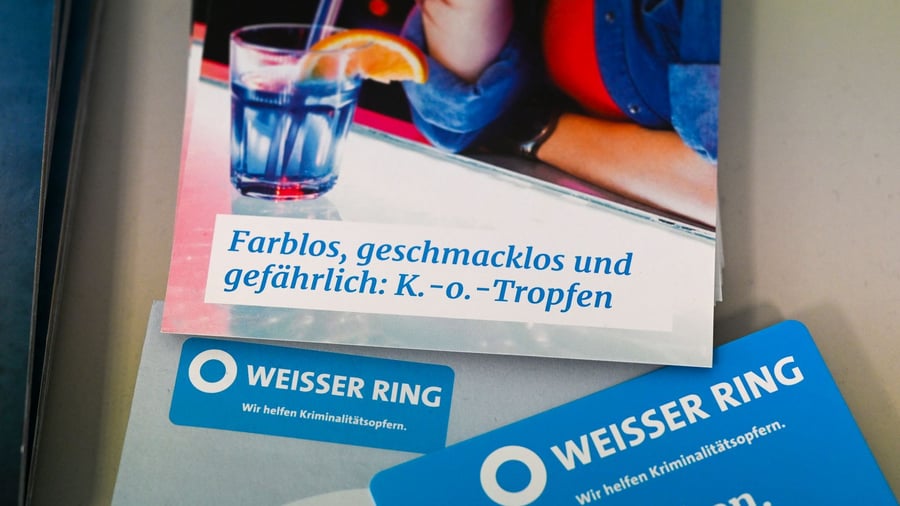
Wer den Verdacht hat, mit K.-o.-Tropfen betäubt worden zu sein, kommt oft zu spät zur Untersuchung. Denn GHB ist nach wenigen Stunden nicht mehr nachweisbar. Das könnte sich bald ändern.
Germany's Volker Auwärter, a forensic toxicologist from Freiburg, has announced a revolutionary method to detect GHB, also known as Gamma-Hydroxybutyrate, even up to 48 hours after its use. This breakthrough allows victims of GHB overdoses or sexual assaults to gather crucial evidence for prosecution. Current methods make it difficult to detect GHB within the first few hours, leaving little time for evidence collection.
The new approach, based on the discovery of a new biomarker, offers a significant window for retrieving valuable information. Auwärter, who is also the president of the Society for Toxicological and Forensic Chemistry, highlighted the potential impact of this development, stating, "This is a breakthrough in this field." He expects its implementation in suspicious cases within weeks.
While GHB is the most well-known date rape drug, it's essential to note that other substances can also cause similar effects. GHB leaves the bloodstream within six hours and urine within about twelve hours. However, when victims ingest the odorless and flavorless drug without realizing its consequences, it remains in their system for much longer.
The key challenge until now was proving GHB's presence without dismissing other potential substances. A study conducted by forensic toxicologist Andrea Steuer and her colleagues from the University of Zurich revealed a new biomarker in 2021, which remained detectable in urine up to three days after GHB consumption. This discovery formed the basis for the new method.
Their findings were later confirmed in a study analyzing over 2,400 anonymized urine samples from forensic cases published in the journal "Drug Testing and Analysis" in November. Particularly noteworthy is a study conducted by a team from the University of Aarhus, in collaboration with Swiss researchers, that used a controlled clinical trial involving 30 volunteers given either GHB or a placebo.
The research, published in the journal "Science Advances," demonstrated that the GHB-Pentose remained detectable in the blood for up to 48 hours after intake. Auwärter emphasized that the stability of the GHB-Pentose needs to be confirmed, as the Aarhus study used frozen samples before laboratory analysis. However, there is no indication that the method's stability would be compromised under these conditions.
Rewritten by urgent.news; may contain errors — check the original.
Source: handelsblatt.com