Jian Tang, robot maker: ‘The first things they will do will be to pick up objects and run washing machines’
The chief technology officer of the Chinese company X-Humanoid believes that, in the future, humanoids will become another member of the family
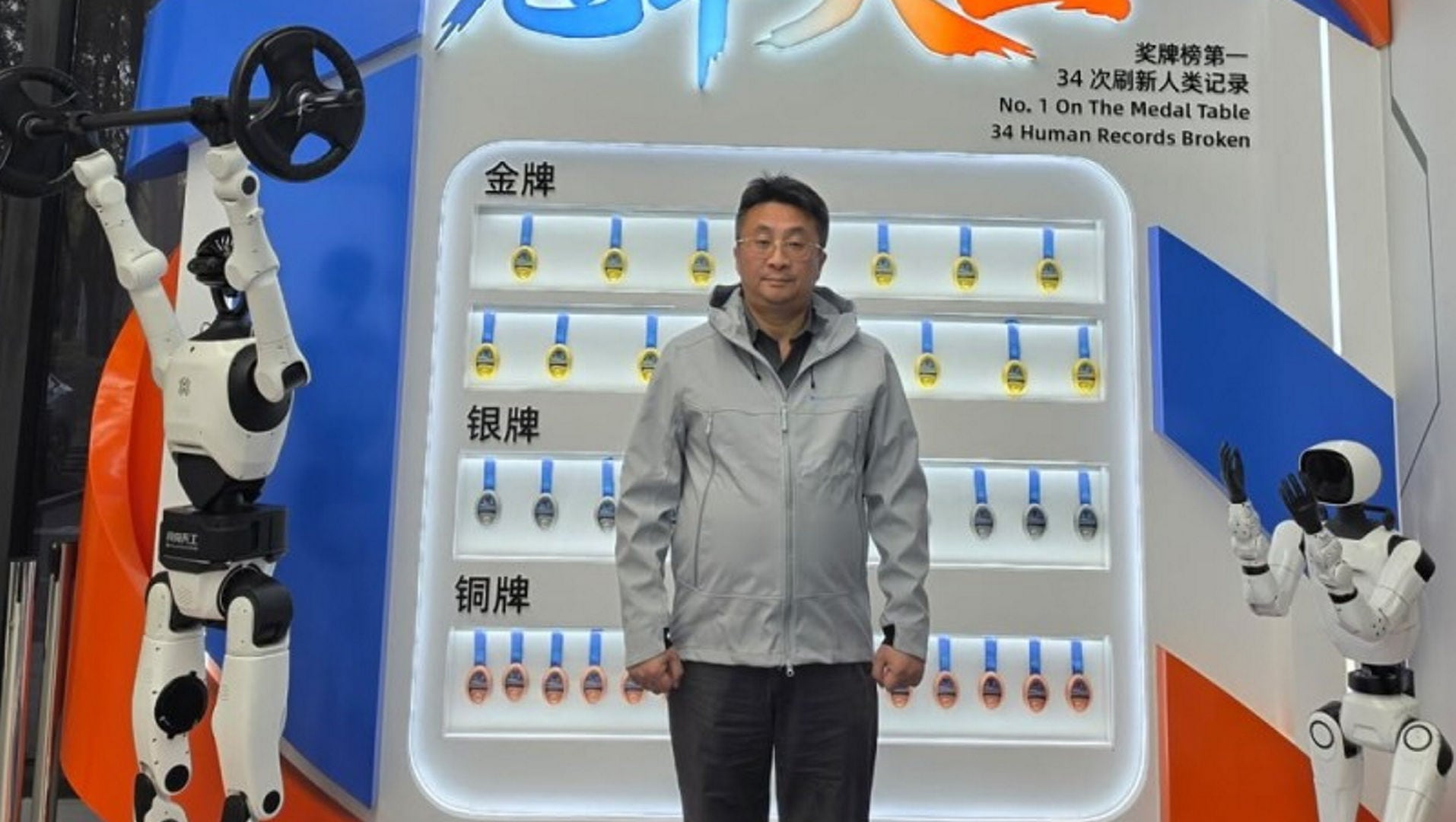
Jian Tang, chief technology officer of Chinese company X-Humanoid, explained that humanoid robots are already performing impressive feats. They have participated in half-marathon races to test their endurance and stability, and they are also showcased in dancing performances that have gained popularity. However, the next frontier for these robots lies in domestic environments.
Tang elaborated that in the near future, robots will likely be deployed in dangerous, dirty, or dull jobs, such as hazardous material labs, logistics warehouses, and earthquake-affected areas. But the ultimate goal is to integrate them into homes for household chores. While the robots are already capable of precision tasks like picking up and placing objects, or even operating a washing machine, they still have limitations.
When introduced to new environments or objects they have never encountered, the robots may struggle to adapt and may fail to perform as expected. The biggest misconception, according to Tang, is that a demonstration of a robot performing a complex task means it's close to becoming a household item. In reality, the data gathered for such demonstrations is specific to the environment where it was collected, and that data may not translate well to thousands of homes.
Tang believes that within nine years, robots may be able to perform 90% of household tasks, but the remaining 10% will likely require significant advancements in AI models. These models need to achieve a generalization capability similar to that of ChatGPT or Claude, enabling robots to manipulate new objects and navigate unfamiliar spaces.
Within four years, domestic service robots could become available for purchase, with limited functions such as picking up a glass of water. As technology improves, they will gradually acquire more capabilities, culminating in the creation of true home service robots within the next nine years. These robots are expected to cost around $20,000 (€18,200), comparable to the price of a car.
The primary challenge holding back the progress of these robots is the AI model's lack of generalization capacity. Currently, most robots rely on remote control to perform tasks, but as the generalization capability of AI models improves, robots will be able to operate autonomously, even in new homes. Ultimately, humanoid robots will become a member of the family, with a lifespan comparable to that of a car, lasting at least five years.
Rewritten by urgent.news; may contain errors — check the original.
Source: english.elpais.com