Is the Privatization of Space Sustainable?
A nearly 50-year-old treaty dictates international and commercial collaboration in space, but space law may need updating in the face of growing cosmic capitalism The post Is the Privatization of Space Sustainable? appeared first on Nautilus .
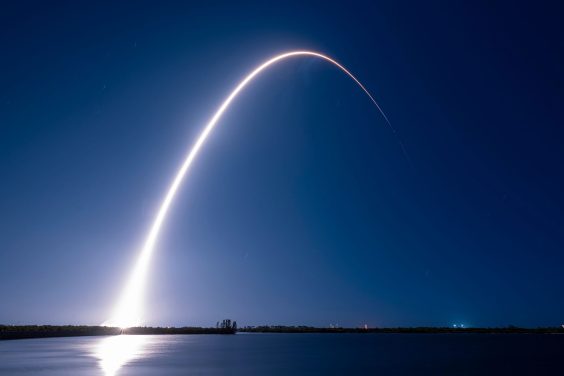
The privatization of space is rapidly gaining momentum, with private startups playing an increasingly significant role in humanity's exploration and exploitation of outer space. The long-standing international treaty governing space activities may require updating to accommodate the growing influence of commercial interests. While the stage is being set for a new era of space development, the question remains whether this shift will lead to harmonious collaboration or conflict in the heavens.
The proliferation of commercial satellites in low Earth orbit, coupled with the emergence of commercial space stations, floating data centers, and other space-based infrastructure, paints a picture of a rapidly evolving economic zone. Visionaries like Amazon's Jeff Bezos envision millions of people residing in space within two decades, a prospect that could unfold faster than many anticipate, driven by advancements in artificial intelligence, robotics, and government investments.
However, the term "privatization" may be misleading, as the government remains a crucial player in space endeavors. Instead, the transformation can be better described as "commercialization," with private capital shaping the landscape of space exploration. The Office of Space Commerce and the National Institute of Standards and Technology (NIST) have released a report highlighting the potential benefits of a circular space economy, which would involve extending the lifetimes of space assets through inspection, servicing, repair, reuse, repurposing, and recycling.
This approach could reduce dependence on terrestrial resupply and foster a more sustainable space industry.
Special representative Jeffrey Manber of Voyager Technologies predicts that low Earth orbit will become a bustling marketplace populated by various services and platforms owned by different organizations and companies, catering to a range of markets. He notes that commercial space markets require time to mature, with government investments playing a crucial role in their development.
Looking ahead, Manber anticipates a growing presence of orbiting space stations, research and manufacturing facilities, hotels, warehouses, and fuel depots, as well as potential activity on the lunar surface. This burgeoning space economy will likely extend from Earth's orbit to cis-lunar space and the moon itself, driven by international cooperation and the infusion of private capital.
Rewritten by urgent.news; may contain errors — check the original.
Source: nautil.us