‘I want the experiences I had to be available forever’: arts figures and scientists hit out at proposed job cuts at Tasmanian Museum and Art Gallery
Scientists, a former Tasmanian premier and the director of Hobart’s Museum of Old and New Art have all expressed concerns over the state government’s proposals
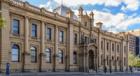
More than 100 prominent figures from the arts, politics, and media have penned a joint letter criticizing proposed job cuts at the Tasmanian Museum and Art Gallery (TMAG), Australia's second-oldest institution. The signatories include former Tasmanian premier Lara Giddings, 2014 Man Booker Prize winner Richard Flanagan, and 44 leading scientists from universities across the UK, Europe, Canada, USA, Russia, and Australia.
TMAG, established in 1848, is the only institution in Australia that combines an art gallery, museum, and herbarium. Ian Terry, chair of Friends of TMAG and former senior curator of cultural heritage, emphasizes that the museum's science collections are crucial for global research on climate change and species extinction, highlighting the rarity of a Thylacine taxidermied specimen and the importance of over 12,000 Tasmanian Aboriginal cultural artifacts.
In August, staff at TMAG were informed that up to 19.7 full-time equivalent (FTE) jobs, roughly 30% of its workforce, would be eliminated to address government spending concerns. Despite the government's denial of the 30% reduction claim, the news prompted more than 25 letters from European scientists to TMAG's board, voicing concerns about the potential consequences for the Tasmanian economy and the international research community.
One of the letter's signatories, David Walsh, founder of Hobart's Museum of Old and New Art (MONA), called for the Tasmanian government to fulfill its "statutory obligation to care for approximately one million objects of inestimable value" and to reconsider the proposed job cuts. The proposed cuts are part of a broader cost-cutting initiative by the state Liberal government aimed at reducing the state's ballooning debt, which is projected to reach A$9.9bn by 2027-28.
Among the positions threatened with elimination are two roles at the herbarium, a biologist, a graphic designer, a photographer, the museum's exhibitions officer, and the merger of the vertebrate and invertebrate zoologist into a single position. Terry notes that TMAG has already experienced significant staff reductions through natural attrition and redundancies over the past year, suggesting that some of the positions listed in the 19.7 figure may have been affected by these factors.
TMAG and the premier's department have not responded to inquiries from The Art Newspaper. Independent budget analysis indicates that the proposed changes would see TMAG under the control of a new government agency, Building Tasmania, and result in a 27% reduction in funding for 2027-28 while increasing targets for physical visitation by 6.4%.
TMAG's current exhibition, "Becoming Modern: Mid-century Australian Art," has a 16-month run, longer than usual, according to Terry, who predicts decreased attendance due to the lack of new exhibitions. A government spokesperson denies any correlation between the cost-cutting measures and the construction of a new $1.13bn football stadium in Macquarie Point, a location previously considered for a truth-and-reconciliation art park proposed by Dark Lab, a subsidiary of MONA.
The fate of TMAG's staff and budget remains uncertain as the Tasmanian Industrial Commission reviews the proposed cuts, and Tasmania's Upper House debates proposals to reverse them, with decisions expected on November 24.
Rewritten by urgent.news; may contain errors — check the original.
Source: theartnewspaper.com