How sci‑fi imagines sports in microgravity, and how zero‑g sports might actually work
How realistic are the zero-g sports we see in sci-fi? We talk to Les Johnson, former Chief Technologist for NASA, to find out.
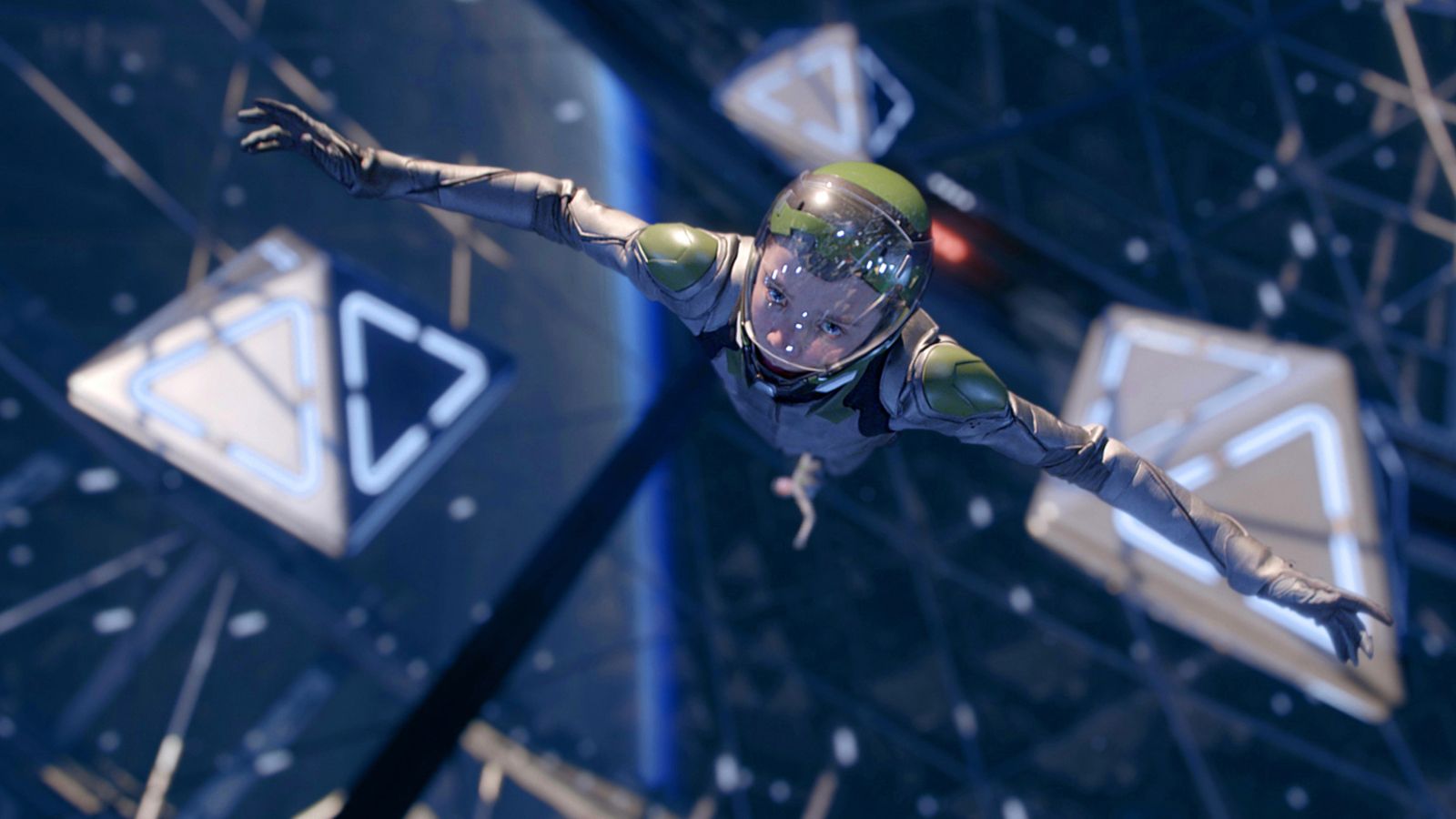
Sports in space have long fascinated humanity, evidenced by figures like Alan Shepard's moon golf and the ISS's Olympic games. Now, the Space Games Federation aims to govern zero or micro-gravity sports, following in the footsteps of science fiction that has expanded our imagination to include everything from Doctor Who's zero-g squash to the combat simulations of Ender's Game.
Gravity profoundly shapes sports on Earth, determining ball trajectories, player speed, and spatial orientation. In the absence of gravity, these assumptions and mechanics vanish. NASA physicist Les Johnson explains that "for every action, there is an equal and opposite reaction," a principle that becomes particularly challenging to simulate on Earth due to gravity.
In microgravity, our perception of up and down disappears, making the playing field three-dimensional. Momentum behaves differently, as objects continue moving until acted upon by an external force. Maneuvering in microgravity is significantly trickier, with any ball or object retaining its trajectory without the arc we're accustomed to on Earth.
Science fiction often takes these differences to their logical conclusion, creating more three-dimensional, chess-like sports rather than the physically demanding contests we're used to. The Battle Room from Ender's Game exemplifies this approach, featuring a giant hollow cube with obstacles where teams engage in laser tag-style drills, adapting to the lack of preferred 'up' or 'down' in space.
Real-world space agencies have also begun exploring recreational sports in microgravity. Concepts like 3D ball games with walls and elastic tethers have been proposed to improve movement control and reduce collisions. The Space Games Federation has even floated ideas for space basketball and dodgeball variants.
While these proposals remain thought experiments for now, they highlight the importance of play and its potential to combat the risks of space madness. With potential future human settlements on the moon and beyond, imagining sports in zero-g environments becomes increasingly relevant.
Rewritten by urgent.news; may contain errors — check the original.
Source: space.com