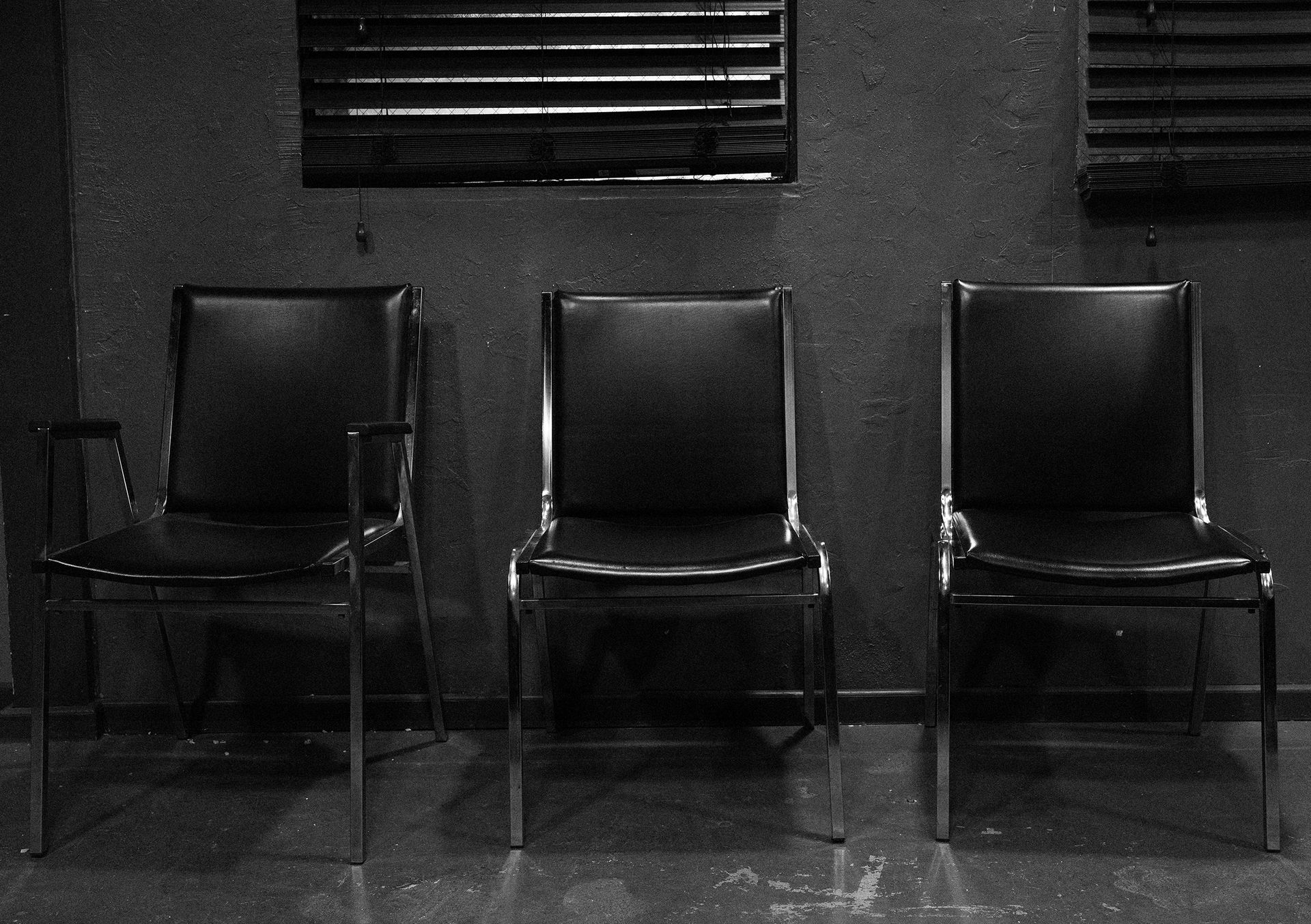
Grainy police video stills, empty chairs and faces in the dark: Robin Dahlberg's photos show how the claustrophobia of the interrogation room pushes innocent people into confessing
A former civil rights lawyer teams up with six people who falsely confessed to crimes they didn't commit, in a stark black-and-white study of how innocent people break
Robin Dahlberg, a photographer and former attorney, has created a photobook titled "Breaking Point: When the Criminal Justice System Fails" that delves into the issue of false confessions and their devastating impact on innocent individuals. The book, published by Kehrer Verlag, features the work of six exonerees who were coerced into confessing to crimes they did not commit.
Dahlberg's work explores the history of coercive interrogations in the US, tracing their roots back to the Salem witch trials and continuing to the present day. She uses a combination of stark black-and-white photography and altered video recordings to create a sense of claustrophobia that mirrors the experience of being interrogated.
Each exoneree's story is told through a series of tight close-up portraits, placed against a black background and illuminated by hard, directional light. Some of the faces show a sense of loss, while others, like Jeffrey Deskovic's, stare directly into the camera, challenging the viewer. The photographs are accompanied by transcripts, court documents, and newspaper articles detailing the exonerees' trials and eventual release.
Psychologist Dr. Sara C. Appleby contributes an essay to the book, discussing the psychological effects of false confessions, which not only increase the likelihood of conviction but also continue to haunt the innocent person upon exoneration. Breaking Point serves as a powerful reminder of the importance of ensuring fair and ethical practices within the criminal justice system.
Rewritten by urgent.news; may contain errors — check the original.
Source: digitalcameraworld.com