Galaxies SIG Seminar, 1 Dec 2026
Inside the Little Red Dots: Clues to the Origins of Massive Black Holes. Speaker: Josephine Baggen The post Galaxies SIG Seminar, 1 Dec 2026 appeared first on NASA Science .
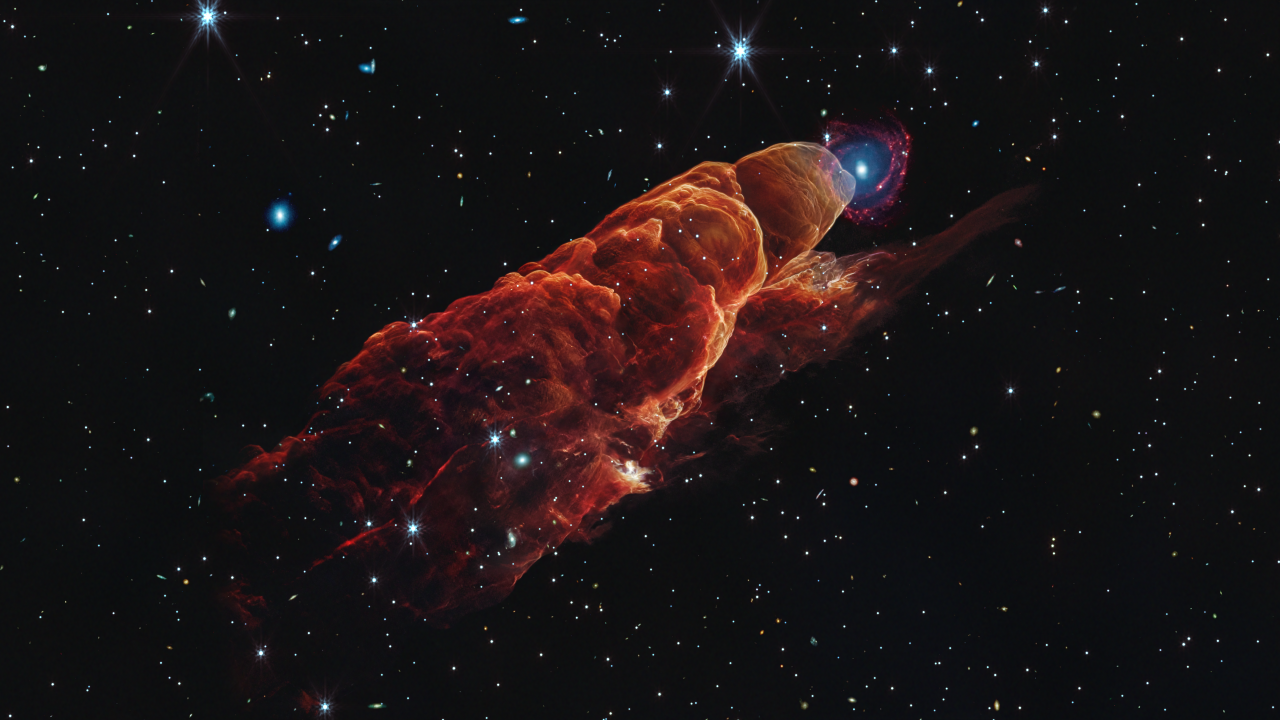
On 1st December 2026, the Cosmic Origins Community held its Galaxies SIG Seminar virtually. The event's focus was on the "Little Red Dots" (LRDs), a mysterious population of compact, red sources discovered by the James Webb Space Telescope in the early universe's first billion years.
Josephine Baggen, one of the seminar speakers, discussed how strong gravitational lensing offers a unique opportunity to examine these compact, red sources. Baggen presented a case study where a normally solitary LRD appeared as two distinct components: an ultra-compact red source and a nearby UV-bright companion.
The discussion then shifted to the implications of these red-blue pairs for the formation of massive black hole seeds. Baggen proposed that UV radiation from the companion galaxy could create the ideal conditions for gas to rapidly collapse into a massive black hole seed. This theory could potentially link LRDs to longstanding theoretical models for the formation of massive black holes in the early Universe.
Lastly, Baggen briefly touched on how future missions like the Roman and the Habitable Worlds Observatory could test this theory, providing a glimpse into the future of black hole research. The seminar was accessible through a Zoom link.
Rewritten by urgent.news; may contain errors — check the original.
Source: science.nasa.gov