El límite de la estrategia de García Harfuch
García Harfuch tampoco prometió una solución rápida a la crisis de violencia. Por el contrario, subrayó con realismo que “el fortalecimiento a las instituciones de seguridad estatales es el camino”.
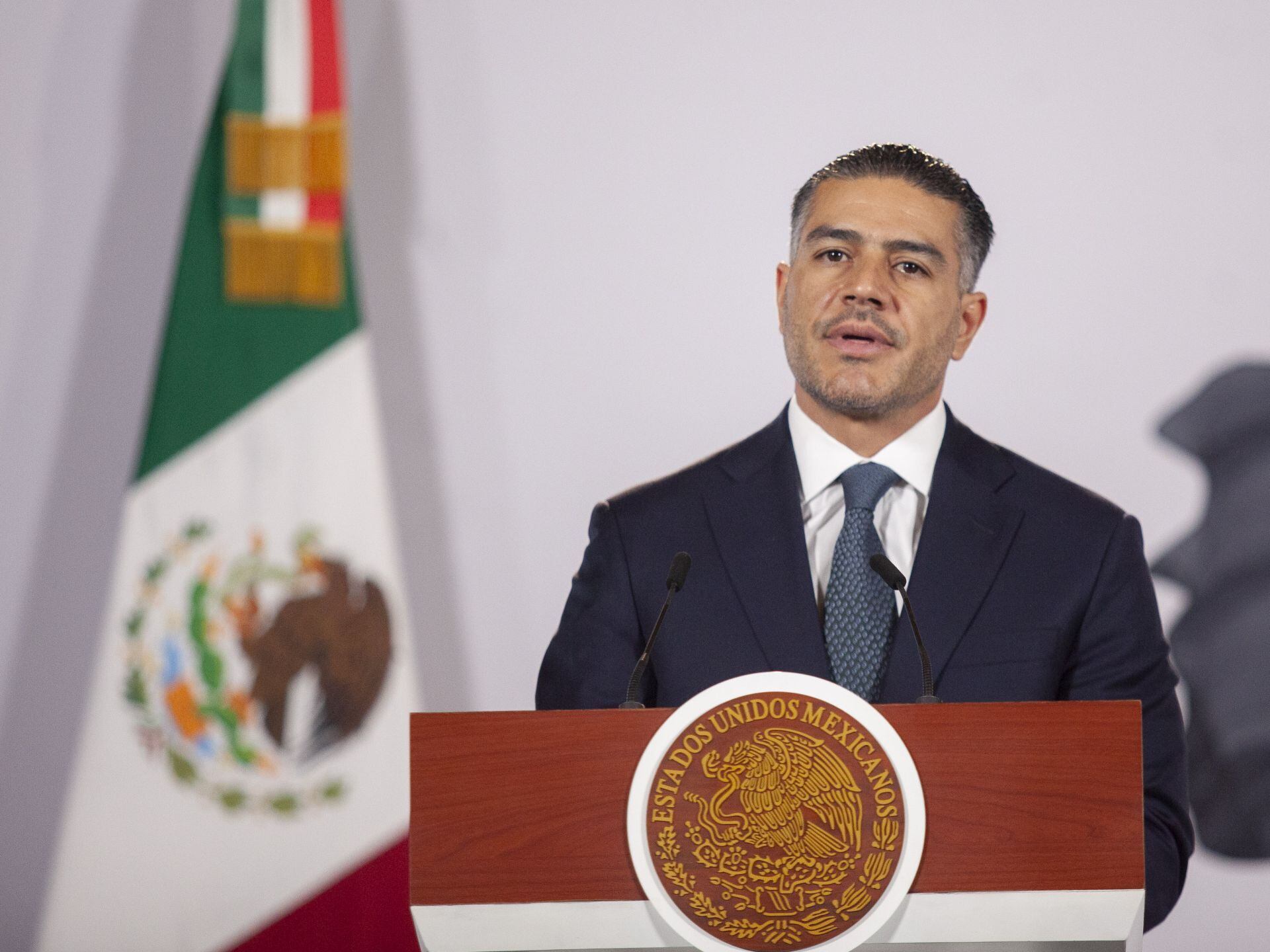
On September 3, a lengthy interview was broadcast featuring Secretary García Harfuch speaking with Gabriela Warkentin. The conversation struck a cordial tone, yet the tough topics did not shy away, such as the disappearance crisis, US pressure, and a general perception of insecurity. Like other exchanges with the media, García Harfuch managed what many officials find difficult: he did not deny reality or stray from the main point.
There were no grand gestures. He defended his managerial results, but did not try to sell smoke; he acknowledged that the task is still incomplete and that cartels still hold significant power. He himself mentioned the CJNG's show of force following the assassination of El Mencho. García Harfuch did not promise a quick solution to the violence crisis; instead, he emphasized realistically that "strengthening the state security institutions is the way forward."
This idea was abandoned during the AMLO administration, where the armed forces and National Guard dominated the security agenda. Today, the Secretary acknowledges that while federal security agencies have the best leadership in years, it is not enough on its own. The limit to what can be achieved will be determined by the federal entities.
García Harfuch has been conciliatory, so far seeking to bridge gaps instead of smoothing over disputes. However, many governors resist assuming the political and operational costs of fighting organized crime, preferring to evade security issues or use police and public ministries for personal or political gains, sometimes even colluding with organized crime.
The National Strategy against Extortion is a good example of the level of collaboration states are willing to provide. The extortion levy is a critical issue, impacting citizens' safety perceptions and deterring investments. It should be a national priority. In the Palace of the Nation, they recognize this. That is why they sought to advance an ambitious strategy in this area, drawing some inspiration from the kidnapping prevention model initiated during the Peña Nieto administration.
In October 2025, Article 73 of the Constitution was reformed to include extortion as a nationwide defined crime. Shortly after, on November 28, the General Law to Prevent, Investigate, and Punish Extortion-related Crimes was published. Since then, almost every week, García Harfuch announces the federal government's involvement in operations against criminal cells engaged in extortion.
However, he has not capitalized on the key component of the strategy: creating specialized units within each state's fiscal office, staffed entirely by ministers, police, and analysts dedicated to combating extortion. As of a year after the general law's publication, only eight states have operational specialized units: Baja California, Baja California Sur, Chiapas, Chihuahua, Mexico City, Guanajuato, Guerrero, and Michoacán.
In some of the remaining states, efforts are "in process," while in many others, they have assigned this responsibility to anti-extortion units or simply lack awareness. The core problem with extortion, like many other criminal phenomena involving powerful criminal groups, is that several state governments resist addressing the issue.
Recent statements from several governors, secretaries, and prosecutors attempt to downplay the severity of extortion. These statements often coincide with the refusal to create specialized units. To move forward, President Sheinbaum and Secretary García Harfuch face the challenge of breaking the resistance that local political classes have imposed over the past two decades.
Inertia is strong, and so far, the Palace of the Nation has prioritized Morena's internal cohesion, avoiding stretching the alliance too far with governors. They collaborate with the federal strategy when they want to; those who don't want to are left behind. So far, these are the advances in fighting extortion and other issues.
Perhaps this will change in 2027 if Morena suffers a major setback in elections or if Washington increases its pressure. In those scenarios, we may see a less conciliatory García Harfuch, with more friction but also better results.
Rewritten by urgent.news; may contain errors — check the original.
Source: elfinanciero.com.mx