Bad COP, worse COP: What’s next after climate talks fail?
BANGKOK, Nov 23 — The collapse of marathon climate talks in Turkey has renewed questions about reform of their consensus...
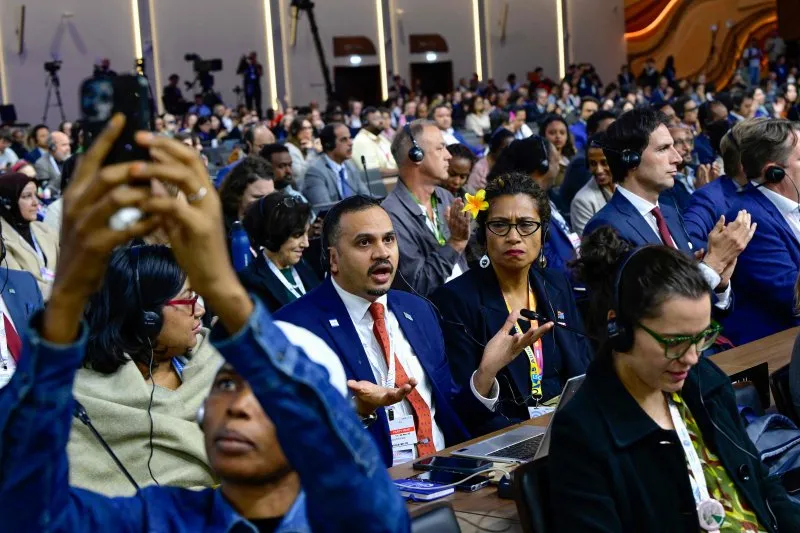
Bangkok, November 23 — The failure of climate negotiations in Turkey has sparked discussions on reforming the consensus requirement for the talks, and has spurred calls for legal action and ambitious side agreements among like-minded nations. The Conference of the Parties (COP31) concluded without agreement and two days past schedule as countries clashed over fossil fuels, finance, science and carbon-removing technologies.
Cop chair Chris Bowen, Australia's climate minister, described the result as "very disappointing". Many observers believe the outcome was a natural consequence of a decision-making process where every country must agree on every detail, which they argue is not suitable for addressing a climate emergency. "When COP was established, for reasons understood, it was made consensus-based, which is a very demanding task," Bowen noted.
"That's the core problem." Since then, there have been calls for substantial reforms to the consensus-based process, in which any one country or a small minority can derail progress. Former US Vice President Al Gore wrote on X that the COP process needs significant reform, suggesting a reinvigorated multilateral approach that reflects the latest science and represents the majority view of the world.
However, as Bowen pointed out, reforming the consensus itself would require all countries to agree, which he called a "particular challenge", though others might deem it impossible. The talks stalled on numerous issues, particularly whether the so-called cover decision would acknowledge phasing out fossil fuels. Some countries were unwilling to accept a deal without such a mention, while others, such as Saudi Arabia, strongly opposed its inclusion.
Other contentious points included the timing of scientific work from the Intergovernmental Panel on Climate Change, and language on carbon capture, a technology supported by the fossil fuel industry but criticized by some for being expensive and ineffective. Crucially for developing nations, there was no progress on finance - the crucial funds needed to help countries transition to clean energy and adapt to the worsening impacts of climate change.
"The core challenge for globally agreed climate policy is more evident than ever: fossil fuel powers will not agree to have their wealth devalued, while rich countries won't provide enough climate finance to developing nations," Frank Jotzo, a professor of environmental and climate change economics at the Australian National University, said.
While other COPs have ended in failure before, most agree that the COP process remains important due to its unique format, uniting virtually every country in the world and allowing equal representation for all. Consequently, few advocate for abandoning the process, but there is growing interest in alternative avenues for advancing climate action, such as legal suits.
This avenue has already been taken, notably with an International Court of Justice advisory opinion that confirmed states have a legal obligation to combat climate change. "If the negotiations are not delivering what individual states need, they'll certainly consider turning to the ICJ and other international courts," Harj Narulla, an international lawyer who advised the Solomon Islands at COP31, said.
Others expect increasing interest in agreements made outside the COP process, such as the Santa Marta initiative, which brings together countries committed to phasing out fossil fuels. Following the COP30 meeting in Brazil, interested nations sought to circumvent the lack of consensus on phasing out fossil fuels by forming the Santa Marta process.
Members held talks earlier this year and agreed on some initial steps, including setting up an expert scientific panel to advise on pathways. Such plurilateral processes are gaining ground, according to Jotzo, and more are needed, particularly on carbon removal technologies and finance for adaptation. Bowen also acknowledged the Santa Marta process could become "increasingly significant." "It doesn't replace the COP; it's just another way of doing it," he added.
Rewritten by urgent.news; may contain errors — check the original.
Source: malaymail.com