A New Age of Sail
My tumultuous journey across the Atlantic on a wind-powered cargo ship
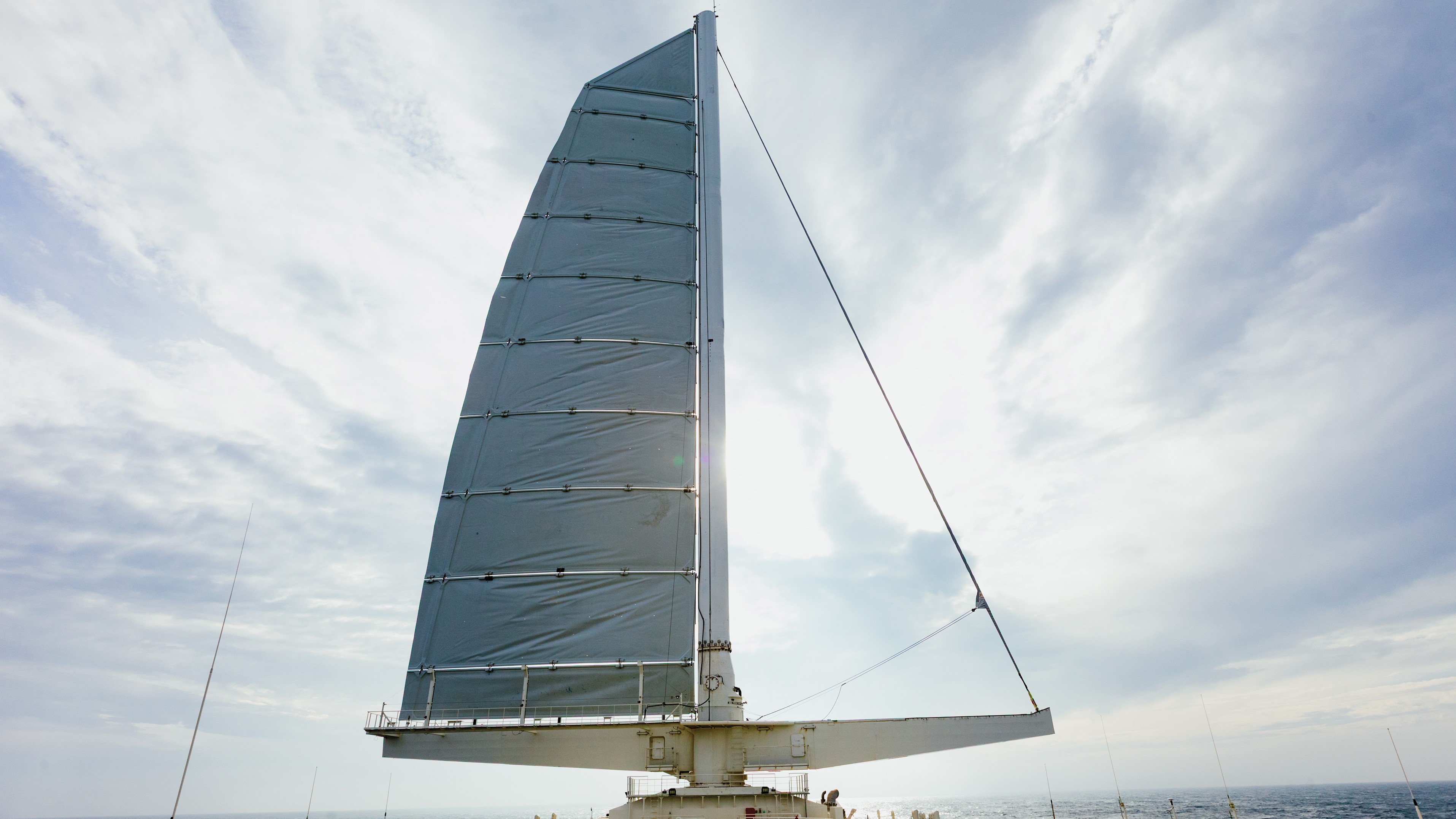
For a brief period, the Neoliner Origin, the world’s largest sailing cargo ship, glided across the Atlantic Ocean using only the power of wind. Four massive sails extended from towering masts reaching 90 meters above the water. Although the vessel possessed an engine, it was idle. The ship, nearly as long as a football field, traveled at nearly 16 knots, comparable to an engine-powered freighter.
Previously, the Neoliner Origin had consumed 400 liters of marine diesel per hour. Now, the only sounds were the waves crashing against the hull below and the wind rustling through the sails above. It was a blend of the novel and the ancient, as humans had utilized sails for millennia. Early Egyptians, for instance, crafted linen sails and considered wind so intimately connected to boats that they depicted a hoisted sail in their hieroglyphs.
Polynesians navigated vast stretches of the Pacific in sail-equipped canoes, navigating by stars. Wind navigation reached its peak during the Age of Sail, the epoch of Columbus, Magellan, Hudson, and Cook, when colossal ships relied on square-rigged sails, rectangular jibs, and quadrilateral gaff sails to propel themselves. Empires were erected upon wind and canvas.
However, sails gradually faded from prominence starting in 1807 when Robert Fulton introduced the first paddle-wheel steamboat. Elegant clippers were replaced by massive, engine-driven cargo vessels that now sustain modern society. Yet, these vessels also pose risks, as they emit 3% of global carbon emissions annually, surpassing all airplanes and nearly matching the emissions of all U.S. coal plants.
The International Maritime Organization, a UN agency regulating global shipping, aims to phase out greenhouse-gas emissions from shipping by 2050. Naval architects and shipping companies anticipate that future technologies, harnessing hydrogen, ammonia, or batteries, will eventually replace oil. Yet, despite years of research, none of these alternatives has yet proven effective.
A small yet expanding group of designers and engineers advocate for wind to become the energy source of the future, free and renewable. Gavin Allwright, who leads the International Windship Association, expressed his enthusiasm for wind technology, stating, "It's like, please tell me why you wouldn’t want to be saving money." Over 120 merchant ships now incorporate some form of wind technology, with another 120 on the way. China and Europe lead this industry, though the United States’ shipbuilding sector lags behind.
Neoline, the French company operating the Neoliner Origin, might be the most ambitious player in the quest for wind-powered cargo ships. While other carriers aim to reduce fuel consumption by 15 to 20%, Neoline seeks to sail primarily with wind, potentially reducing fuel consumption by up to 80% compared to conventional ships. The Neoliner Origin commenced cargo service in 2025, transporting Renault cars, brioche, and cognac between France and North America. If successful, Neoline could usher in a new Age of Sail on the high seas.
Rewritten by urgent.news; may contain errors — check the original.
Source: theatlantic.com