Why forest fires often break out at the same time across Europe
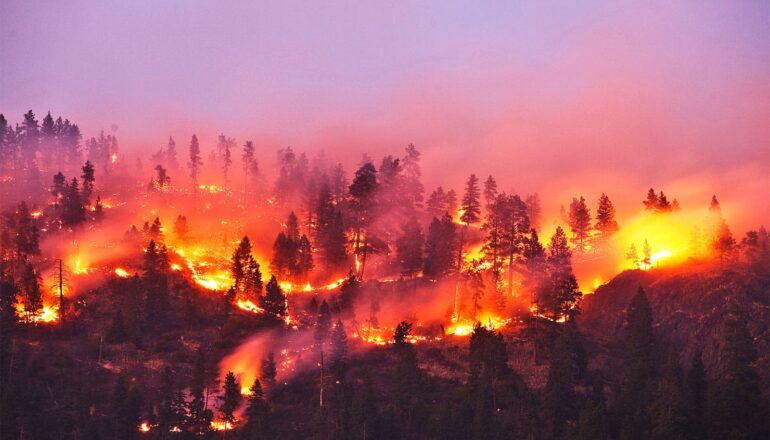
A new study has uncovered the weather patterns that trigger simultaneous forest fires across various regions in Europe. With limited firefighting resources, these events require efficient allocation and proactive measures to prevent fires from spreading. Led by Professor Manuela Brunner from ETH Zurich and the WSL Institute for Snow and Avalanche Research SLF, the research team analyzed whether and how such events in Europe are connected.
Forest fire expert Xinhang Li, a member of Brunner's group, examined the weather conditions necessary for wildfires to ignite in different regions. A weather regime refers to a large-scale weather pattern that remains consistent for several days to weeks. The findings could enhance early warning systems for synchronous forest fires, providing vital extra time for fire crews.
Surprisingly, a stable high-pressure area over Scandinavia during the summer favors forest fires not only in the far north but also in Italy and the Balkans. Conversely, a stable low-pressure area over Scandinavia in spring promotes forest fires in the Iberian Peninsula and Balkans. Li analyzed satellite data from 2001 to 2020, considering only large fires and excluding smaller ones, fires in built-up or agricultural areas, and uncertain causes.
The study revealed that the time of year plays a significant role: Scandinavia and Southern Europe primarily experience fires during the summer, while Germany, the UK, and Central Europe see more fires in spring. The Alps and France, however, do not exhibit distinct fire seasons.
Comparing her results with weather data, Li discovered that a high-pressure system over the North Atlantic in the summer of 2026, combined with hot and dry conditions, led to synchronous fires in France and Spain, causing evacuations. Only one of the seven weather regimes studied suppressed such synchronous fires in the period from 2001 to 2020: a high-pressure system over Greenland, known as Greenland Blocking, resulting in a low-pressure system over mainland Europe, causing cold and damp conditions.
Funded by ETH Zurich, the study highlights the importance of understanding these weather patterns for better early warning systems and improved firefighting strategies.
Rewritten by urgent.news; may contain errors — check the original.