What Would Aliens Learn About Humanity From NASA’s Golden Record?
When NASA launched Voyager 1 and Voyager 2 in 1977, each spacecraft carried a gold-plated record containing a carefully selected collection of images, sounds, and music from Earth. The project, led by astronomer Carl Sagan, sought to present a picture of human life and the planet that produced it. The Golden Record contains 115 images, […]
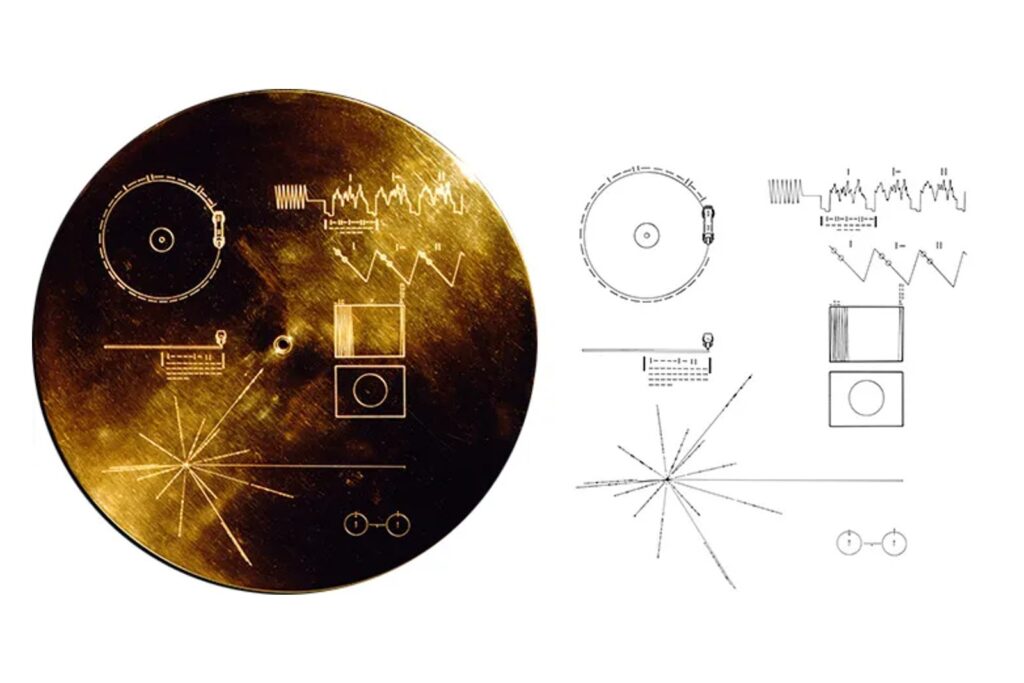
NASA’s Golden Record, a 12-inch gold-plated copper disc, was launched alongside Voyager 1 and Voyager 2 in 1977. The project, led by astronomer Carl Sagan, aimed to convey a portrait of humanity and Earth to any extraterrestrial discoverers who might find it. The record contains 115 images, greetings in 55 languages, recordings of natural sounds, and a 90-minute musical selection.
The images cover a wide range of human life and the Earth's environment, from scientific diagrams of the solar system and cell structures to everyday life scenes like family portraits, traditional performances, and industrial machinery. The collection highlights various landscapes, plants, animals, and people engaged in ordinary activities, giving potential discoverers a sense of Earth's diverse ecosystems and cultural settings.
The audio portion of the Golden Record features greetings in 55 languages, natural recordings of various sounds, and a musical selection spanning different regions and periods. This diverse range of content allows the record to convey both the physical and cultural aspects of human life on Earth. However, it's important to note that the selection of what to include in the Golden Record raises questions about which parts of human life were deemed important to represent the entire planet.
Rewritten by urgent.news; may contain errors — check the original.