Milei could benefit Peronists by scrapping PASO primaries
If there is no PASO, the Peronist leadership will do what it does best: backroom dealing that usually leads to a mafia pact, unity for the sake of power-grabbing. Leer más
President Javier Milei's government is attempting, yet facing challenges, to alter next year's electoral rules by temporarily halting the mandatory PASO primaries, an electoral component established 15 years ago. These primaries were also suspended for the 2025 mid-term elections. The primary justification given is their financial burden amidst stringent fiscal austerity measures.
However, the real intent might be to hinder the Peronist opposition's ability to resolve their leadership crisis. This latter explanation is questionable and might not hold water in practice. Without primaries, the Peronists may opt for early unification in the electoral year, avoiding a fragmented field with numerous candidates.
Milei has confidently asserted his victory in the first round of the 2027 election, scheduled for October, but recent polls do not substantiate this prediction. Nonetheless, Milei and his sister Karina, who serves as the presidential chief-staff and the party's political strategist, are placing significant reliance on electoral reforms as a crucial element of the administration's strategy.
These reforms include scrapping the compulsory presidential debates. The primaries serve a dual purpose: they inadvertently contributed to Milei's rise to power, as demonstrated in previous elections when they helped candidates secure their positions. In 2015, Mauricio Macri utilized the primaries to bolster his candidacy against Elisa Carrió and Ernesto Sanz, emerging victorious and leading the Cambiemos alliance to defeat the Peronists in the second round.
Conversely, in 2023, the PASO primaries may have backfired for the centre-right Juntos por el Cambio coalition, which was favored to defeat the struggling Peronists led by the dysfunctional couple Alberto Fernández and Cristina Fernández de Kirchner. The absence of compulsory primaries would likely have led Juntos por el Cambio to select its top candidate, potentially Buenos Aires City mayor Horacio Rodríguez Larreta, thus eliminating the emergence of Milei as a prominent opposition figure.
The current internal turmoil within the Peronist party is so profound that six months of intense internal debates to secure the nomination could exacerbate existing rifts. If the primaries are eliminated, the Peronists may resort to the usual behind-the-scenes negotiations, leading to a power grab. However, if Milei's approval ratings remain stagnant around 35 percent, a united Peronist party, potentially led by figures like Fernández de Kirchner, Massa, or Kicillof, could become a formidable contender.
Massa managed to secure 37 percent of the votes in the first round and 44 percent in the second round during the 2023 election, while inflation skyrocketed under his tenure as economy minister to nearly 150 percent. In this scenario, Argentine voters would likely choose the less terrible option in a second-round runoff, rather than a savior.
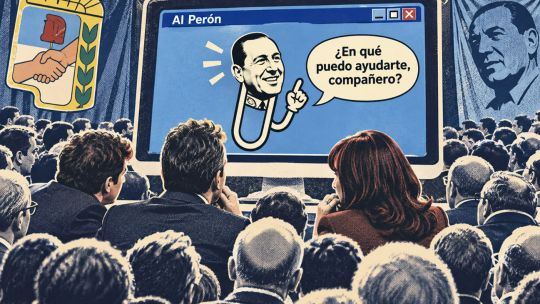
On the other hand, if the Peronists present a fresh face, an unexpected candidate, the election might swing in their favor. Milei can take solace in the fact that the Peronists lack such creativity: if they continue to consult an AI version of Juan Perón, as they did during Peronist Militancy Day, the election might come down to a toss of the coin.
Political analyst and Director for the Americas for the Horizon Engage political risk consultancy firm, expresses that if the Peronists persist in their current approach, the 2027 election could be unpredictable.
Written by urgent.news from Buenos Aires Times's reporting — not their text. Machine-written — may contain errors; check the original before relying on it.
This story
This is one outlet's version. Read the fullest account.
- Bullrich: ‘Suspension of PASO primaries is a done deal’ batimes.com.ar