Jospong subsidiary partners Turkish firm to test shrimp-shell-based farm products in Ghana
The African Agribusiness Consortium Limited (AAC), a subsidiary of the Jospong Group of Companies, has signed a memorandum of understanding with Türkiye-based ChitoGlobal Biotechnology to test agricultural products derived from discarded shrimp and crab shells on farms in Ghana. The agreement, signed on the sidelines of COP31 in Antalya, will begin with joint research and field trials to assess…
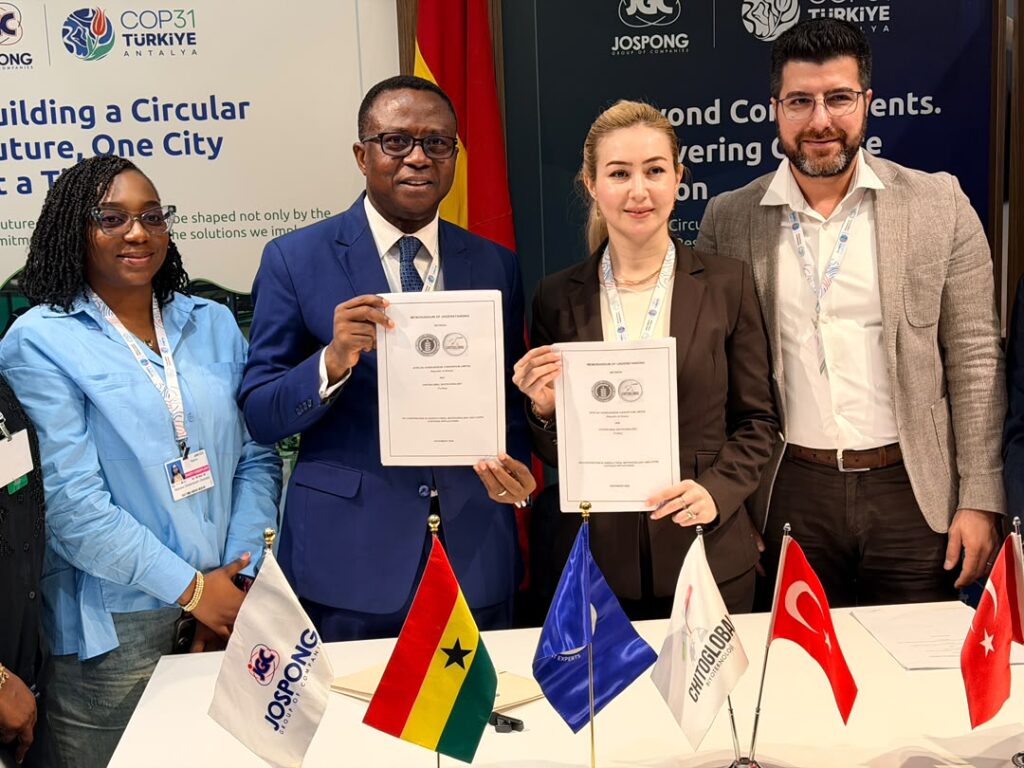
African Agribusiness Consortium Limited, a Jospong Group subsidiary, has partnered with Turkish firm ChitoGlobal Biotechnology to test shrimp-shell-derived products in Ghanaian farms. The memorandum of understanding was signed during the COP31 conference in Antalya. The partnership focuses on chitosan, a substance found in crustacean shells, to create products that protect seeds, boost crop resilience, strengthen plant defenses, and improve soil quality.
Jospong Group's Noah Gyimah emphasized the transition from research to practical implementation and commercial production. The joint efforts aim to evaluate the products' commercial viability, identify potential buyers, and assess local raw material availability. If successful, the consortium plans to offer the products to smallholder farmers and explore their use in growing crops for the Ghanaian market.
The agreement resulted from a visit by a four-member AAC delegation, led by AAC Coordinator Dr. Emmanuel Volsuuri, to ChitoGlobal's facility in Antalya. Dr. Volsuuri arranged the visit after meeting ChitoGlobal at COP31, where discussions led to the opportunity to examine the company's operations and technology. AAC's CEO, Dr. Adelaide Araba Siaw Agyepong, heads the consortium, which cultivates rice, maize, vegetables, and soybeans in Ghana and supports farmers with mechanization, financing, and market access.
ChitoGlobal Biotechnology develops biopolymer products for agriculture and medicine. The partnership will combine both companies' expertise, with the trials determining whether the chitosan-based products can be adapted for Ghanaian farms and whether local production is commercially viable.
Rewritten by urgent.news; may contain errors — check the original.