Is forfieting copies of a book the right way to handle ‘objectionable content’?
The Constitution provides for a ban or forfeiture of a book on three grounds - national security, threat to public order and threat to public morality
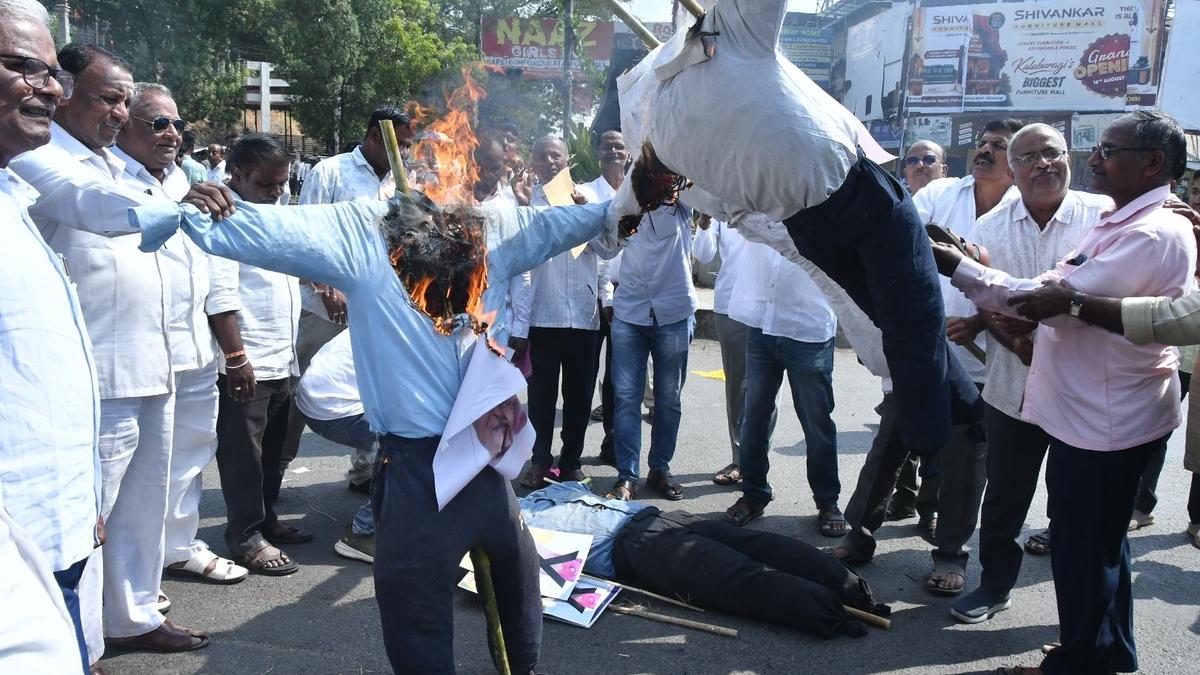
The Karnataka Cabinet's recent decision to forfeit copies of the book Basava Mantapa, authored by NRI Ravi Hanj, over alleged derogatory remarks against the 12th-century social reformer Basavanna, has sparked a renewed discussion about the appropriateness of banning or forfeiting books. While some writers support the book, arguing that no book should be banned, others, including law enforcement officials, contend that the line between freedom of expression and hate speech is increasingly difficult to distinguish, particularly when public order is endangered.
However, this is not the first instance of book banning in Karnataka; at least six books have been banned or forfeited since independence, largely due to hurt religious sentiments.
The courts have upheld such decisions, as seen in the case of Dharmakarana by P.V. Narayana in 1997, and the case of Dhundhi (2013), where the court's ruling led to an effective ban. Despite numerous calls for banning other books, these demands did not result in any restrictions. During the Basava Mantapa controversy, Jaganendra Jayaprakash, the author of an academic work questioning Basavanna's origins, Aanudeva Horaganavanu (2007), argued that the response to any book should be another book.
He emphasized that the essence of a book — the intent, language, and academic rigor — matter, and not all controversial books can be treated alike.
Yogesh Master, whose novel Dhundhi faced a ban, contended that banning a book deprives the academic community of the chance to read and debate its contents. Master argued that a book's credibility can be jeopardized only if it is proven to be hollow, not by banning it. Hanj's statements were deemed a "cultural insult to Kannada", given that Basavanna was a revered Lingayat religious leader and a socio-cultural icon of the state.
Arvind Narrain, president of the People’s Union of Civil Liberties, Karnataka, explained that the Constitution permits the ban or forfeiture of a book on three grounds: national security, threat to public order, and threat to public morality. In this case, the government invoked a threat to public order, which was referenced in four FIRs filed against the author.
Narrain questioned whether the protests across the state over the book truly constituted a threat to public order that the government could not manage. He emphasized that banning a book reflects the actions of an oppressive state and is not reflective of a government committed to upholding constitutional values. Narrain suggested that the state could invoke provisions related to hate speech against such individuals.
In a parallel incident, the Bengaluru City Police recently halted the performance of the controversial play Gandhi Hatyeya Satya by Addanda C. Cariappa after protests and allegations of defamation against Gandhi. The police demanded the submission of play scripts under the colonial-era Dramatic Performances Act, 1876, which is seldom utilized.
Poet and playwright Raghunandana criticized the police intervention, stating that while the play could be criticized, physically assaulting the playwright and forcing police action against the play's performance was not an appropriate response. He noted that such actions give the state an opportunity for censorship, a precedent he believed was unjust.
Rewritten by urgent.news; may contain errors — check the original.