Is Europe finally ready to play hardball with Putin?
Europe is finally ready to step into negotiations with Russia. Following this week's meeting of the Coalition of the Willing in Berlin, European countries are set to be represented at the negotiating table alongside Ukraine, Russia and the United States. The continent will be represented by the E5 — Germany, France, the U.K., Italy and Poland — together with NATO and the EU representation.…
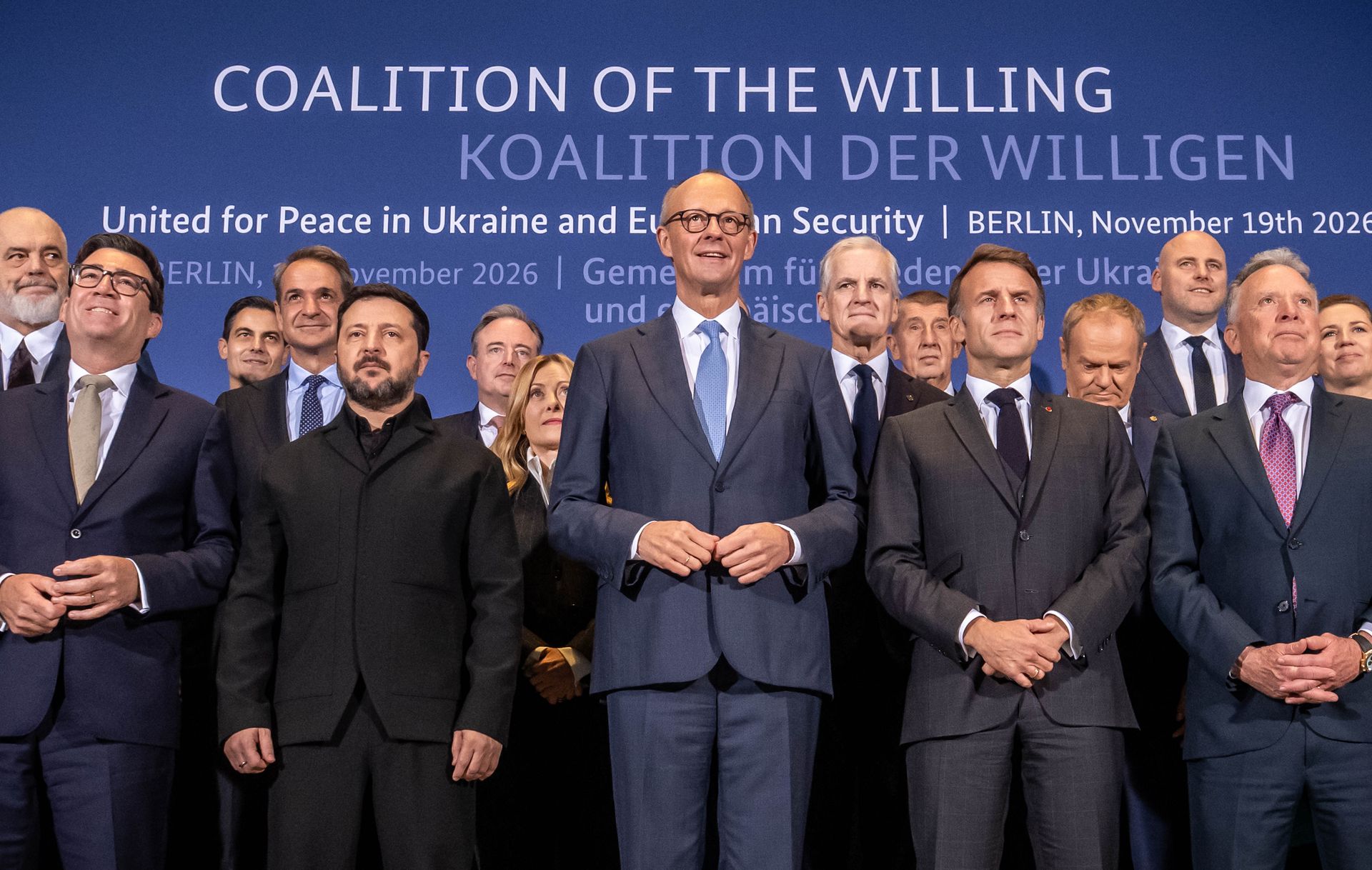
Europe is finally prepared to engage in tough negotiations with Russia. At the recent Coalition of the Willing meeting in Berlin, European nations, NATO, and the EU will join Ukraine at the negotiating table. Crucially, they must present a united front, a requirement that gained significance after Jared Kushner's criticisms of Europeans during talks in Abu Dhabi.
The timing and structure of the subsequent "quad" meeting remains undetermined, but securing Europe's seat at the table is a significant step, particularly as Russia persists in demanding a substantial overhaul of European security arrangements. Future discussions must build upon the limited progress made at earlier talks in Saudi Arabia and subsequent diplomatic exchanges between American envoys and Russians.
The efficacy of Russia's willingness to compromise remains to be seen. The Kremlin's stance remains steadfast, unchanged from its maximalist demands during the Istanbul negotiations in March 2022: no foreign troops, Ukraine's disarmament, neutral status, and unrestricted access to Russian-occupied territories with no external interference.
Zelensky maintains that Russia is not ready for peace, echoing the Russian saying that "the appetite comes with the meal." This perspective suggests Putin's demands have not shifted since his initial requests in 2021, even surpassing them. Vladimir Putin met with U.S. envoys Jared Kushner and Steve Witkoff at the Kremlin in Moscow on November 12, 2026.
The inclusion of "European security architecture" in negotiations, despite the absence of Europeans, underscores the point Ukraine has been emphasizing for five years of full-scale invasion: if you do not halt Putin in Ukraine, he will extend his reach to Europe. Undoubtedly, Europe's resolute support for Ukraine, while the United States has reduced military and financial aid, has provoked a negative reaction in the Kremlin.
Moreover, Europe's renewed commitment to bolster its defense and deterrence capabilities has delivered a stern warning to Russia, signaling that it's time for Europe to advance its efforts rather than halt them. Former European Parliament Secretary-General and current EU Defense Commissioner advisor Klaus Welle remarked, "We are back in the world of predators."
Significant strides have already been made: Europe is no longer heavily reliant on Russian oil and gas, nor does it intend to prioritize business interests over security. Following five years of witnessing Russia's brutal war against Ukraine and facing uncertainty about the once-trusted transatlantic alliance, the EU has undergone a transformative shift — from being primarily an economic community to one with geopolitical agency and defense readiness as a central priority.
The former European Parliament Secretary-General, Klaus Welle, aptly described Europe's current stance as "we are back in the world of predators." Europe has acknowledged the necessity to fortify itself to survive in this hostile environment. Brussels has commenced active discussions on the future of European security architecture, with Ukraine at its core, and ways to operationalize Article 42.7 of the Treaty on European Union – the EU's mutual assistance clause akin to NATO's Article 5.
The bloc has also increased defense spending in the Multiannual Financial Framework, established a dedicated Security and Defense Committee in the European Parliament, and seeks to harmonize national defense industries to enhance interoperability, effectively translating industrial capacity into joint capability planning. Separately, to move away from veto power and towards qualified majority voting in decision-making (like Hungary), Europe is exploring the creation of a new intergovernmental arrangement parallel to the EU, akin to a European Defense Union with a European Security Council as its governing body.
Ukraine is considered a crucial member in shaping a new military doctrine for the European pillar of NATO. The United Kingdom's involvement in drone operations during a patrol as part of the Multinational Force-Ukraine (MNF-U) and the ongoing Exercise Koalicja, which tests the force's readiness to deploy in the event of hostilities cessation, near Rzeszow, Poland, on November 16, 2026, further exemplify Europe's growing determination.
These gradual yet unprecedented moves in the EU have stirred some controversy in the Kremlin, prompting it to bring up the European security architecture issue. The EU's greater share in financial support for Ukraine provides it with a valid argument against the Americans, and the $300 billion in Russian sovereign assets held in Belgium offers additional leverage over Russia.
Discussions about appointing a permanent EU envoy to Russia are underway, though a clear mandate for the position and its candidate have yet to be finalized.
Rewritten by urgent.news; may contain errors — check the original.