Iraqi government's control of Jurf Al Sakhar marks rare success – but key issues remain
The Iraqi government’s control of a strategic area in the south marks a rare success in curbing the influence of armed groups without provoking violence, but experts say that key questions remain unresolved. Prime Minister Ali Al Zaidi this week ordered security forces to move against the heavily armed Iran-backed militia Kataib Hezbollah, which officials accused of running an oil smuggling…
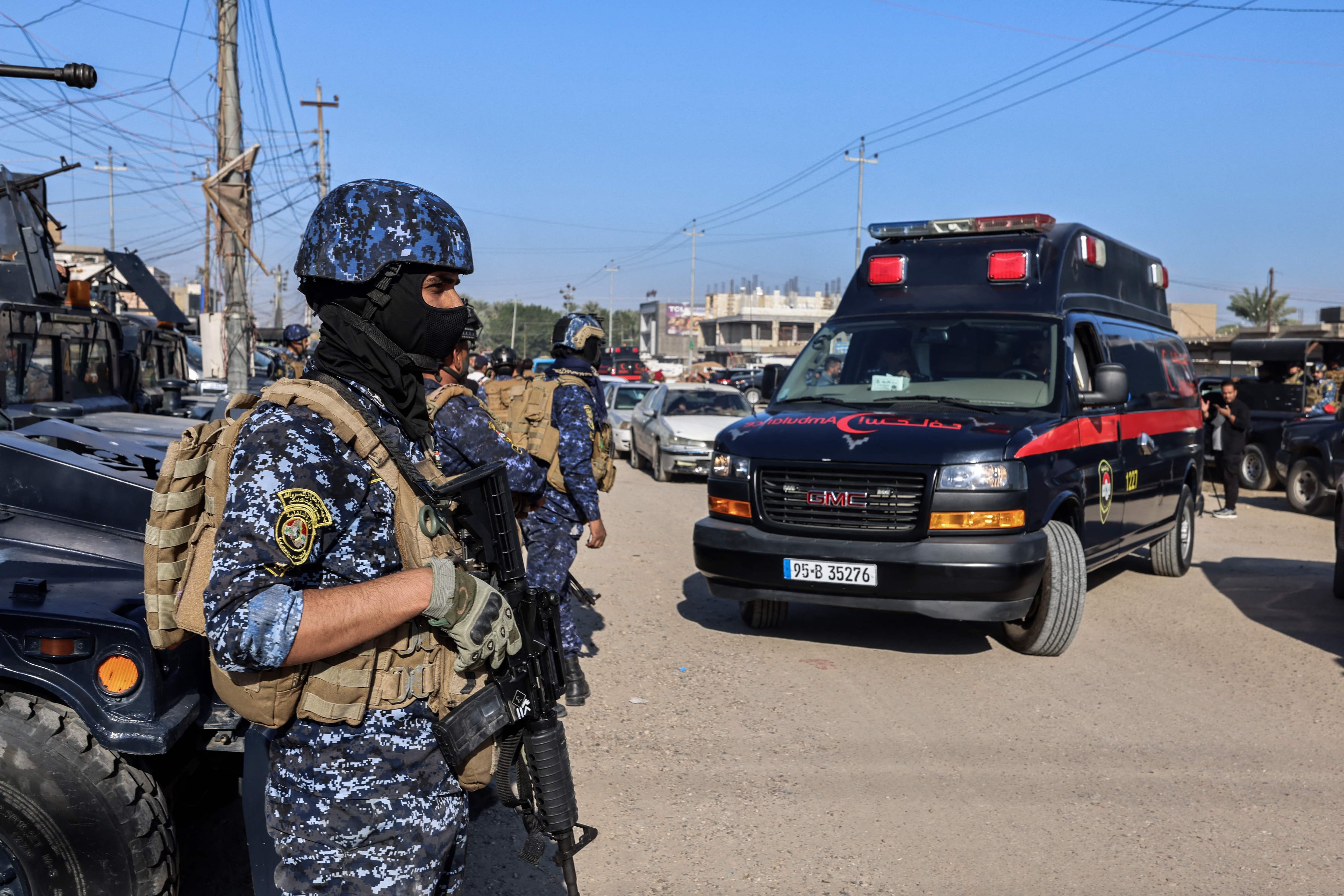
The Iraqi government's control of Jurf Al Sakhar, a strategic southern area, represents a rare success in countering the influence of armed groups without causing unrest. However, experts note that crucial issues persist. Prime Minister Ali Al Zaidi recently ordered security forces to confront Kataib Hezbollah, an Iran-backed militia involved in oil smuggling and running the area's oil pipelines.
Tanks and armored vehicles entered Jurf Al Sakhar as government troops assumed positions under a security pact with Kataib Hezbollah. This move aimed to reclaim the subdistrict, withdraw the militia, and transfer control to the Iraqi army, federal police, Counter-Terrorism Service, and PMF's 72 and 79 brigades.
The US has pressured Al Zaidi's administration to curb Iran's influence, a challenging task for a nation long divided between its two allies. The success in Jurf Al Sakhar is positive, but significant questions remain unanswered, such as the extent of Kataib Hezbollah's withdrawal and whether the government sees this as genuine state authority restoration or merely a redistribution of power among armed factions.
Key issues include establishing a clear chain of command, full government control of the subdistrict, and the return of displaced residents. Without effective oversight and a pathway for former residents to return, the core problem remains unresolved.
Kataib Hezbollah informed about the disputes with the local authority through their spokesman, denying enemies the chance to exploit the disagreements. While the move is better than nothing and a partial humiliation for the militia, it remains less than a breakthrough. Much of the sensitive command centers and prisons in the central area were still under PMF control.
Moreover, returning displaced civilians is critical, as Jurf Al Sakhar, located 60km southwest of Baghdad, has been off-limits to civilians for over a decade. Around 100,000 people were displaced 12 years ago and have not been allowed to return, with most being Sunni. The government recently announced that the Fadhiliya-Karbala road would be open to civilian vehicles, but not to trucks, aiming to facilitate the residents' return.
Rewritten by urgent.news; may contain errors — check the original.