How Nkrumah secretly communicated with his cameraman Dr Chris Hesse, using a walking stick
Ghana’s first President, Dr Kwame Nkrumah, had an unusual way of directing his personal cameraman, Rev. Dr Chris Tsui Hesse, without uttering a word — a discreet signalling system involving his walking stick.
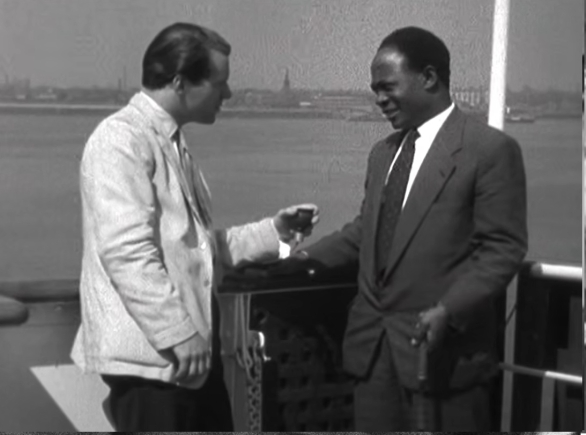
Ghana's inaugural President, Dr Kwame Nkrumah, communicated with his personal cameraman, Rev. Dr Chris Tsui Hesse, employing a clandestine signaling technique utilizing a walking stick. This method was detailed in the documentary "The Eyes of Ghana," which explores Hesse's career and his intimate working relationship with Ghana's founding leader.
At 94 years old, Hesse recounted that the walking stick played a pivotal role in the code they devised for private communication during official engagements and significant events. Certain signals enabled Nkrumah to instruct Hesse when to begin filming and when to cease, all without drawing public notice. Hesse emphasized that the walking stick was not a result of Nkrumah's physical disability, but rather an ingenious tool for covert communication.
The system allowed the President to exert control over what was captured on camera, particularly in sensitive political and official scenarios, without having to divulge instructions openly. Hesse also recounted the immense trust Nkrumah placed in him when he was tasked with documenting events of national and historical importance.
"My son, I'm depending on you as the filmmaker to tell the story," the President reportedly told Hesse, highlighting the profound responsibility placed upon him. This duty granted Hesse a unique opportunity to record some of the defining moments of Ghana's early independence years and the broader African liberation movement during the 1950s and 1960s.
Directed by Ben Proudfoot, "The Eyes of Ghana" sheds light on Hesse's work behind the camera and the historical significance of the images he captured. The documentary also advocates for the repatriation of the filmmaker's extensive collection of archival film, which remains largely unseen for decades. Hesse's mission to recover and return over 1,000 reels of footage is particularly urgent due to his advancing age and deteriorating eyesight.
The reels provide a rare visual record of Africa's political transformations in the 1950s and 1960s, including the rise of independence movements and the continent's fight against colonial rule. "The Eyes of Ghana" delves into the broader implications of preserving Ghana's historical records and the crucial role of safeguarding original footage as part of the nation's heritage.
As a man who dedicated years to recording history from behind the camera, the challenge now lies in ensuring that the images he preserved are not lost to the passage of time.
Rewritten by urgent.news; may contain errors — check the original.
Source: myjoyonline.com