Extreme rainfalls flood Sri Lanka’s coastal city as wetlands, drains vanish
COLOMBO — On Nov. 6, a 129-millimeter (5-inch) downpour flooded parts of Sri Lanka’s commercial capital within minutes, stranding commuters and submerging a large number of vehicles. Siva Sivasagunthan, a three-wheeler driver working at a local ride-hailing app, told Mongabay that the water levels quickly increased and his vehicle was partially submerged in water. It […]
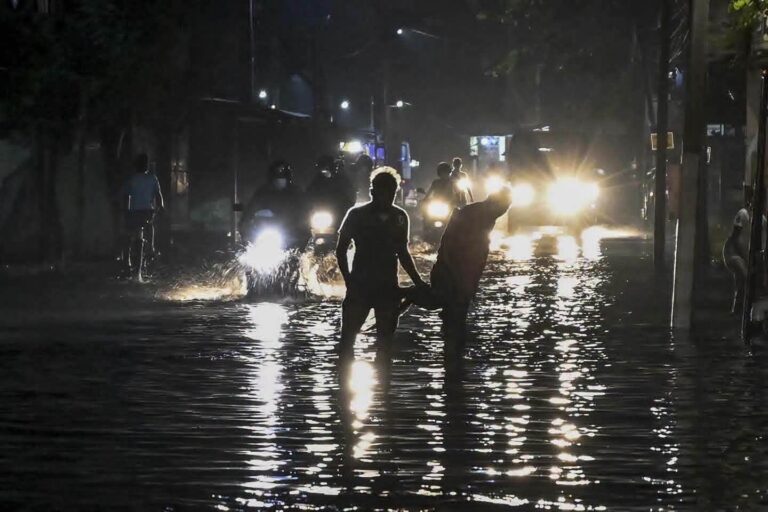
On November 6, torrential rains in Colombo, Sri Lanka's bustling commercial hub, caused devastating flooding in mere minutes. Commuters were stranded and hundreds of vehicles were submerged underwater. Siva Sivasagunthan, a local three-wheeler driver, recounted how rapidly rising water levels turned a 30-minute commute into a two-hour ordeal.
Ajith Wijemanna, director of Sri Lanka's Department of Meteorology, revealed that serious rainfall events exceeding 400 mm (15.7 inches) have occurred in the past. The most intense downpours recorded were in June 1992 (493.7 mm or 19.4 inches) and November 2010 (440.2 mm or 17.3 inches). Meteorologists emphasized that the speed of rainfall is crucial, with readings on November 6 indicating over 120 mm (4.7 inches) per hour.
Another location in Colombo recorded more than 135 mm (5.3 inches) of rain per hour within an hour. Wijemanna attributed the flooding to the intense, short-term rainfall, akin to a gushing downpour. However, Sri Lanka currently lacks advanced technologies like Doppler radar systems to better monitor such extreme weather events.
Written by urgent.news from Mongabay's reporting — not their text. Machine-written — may contain errors; check the original before relying on it.