Er «lilla-koalisjonen» død?
De såkalte styringspartiene får stadig lavere oppslutning.
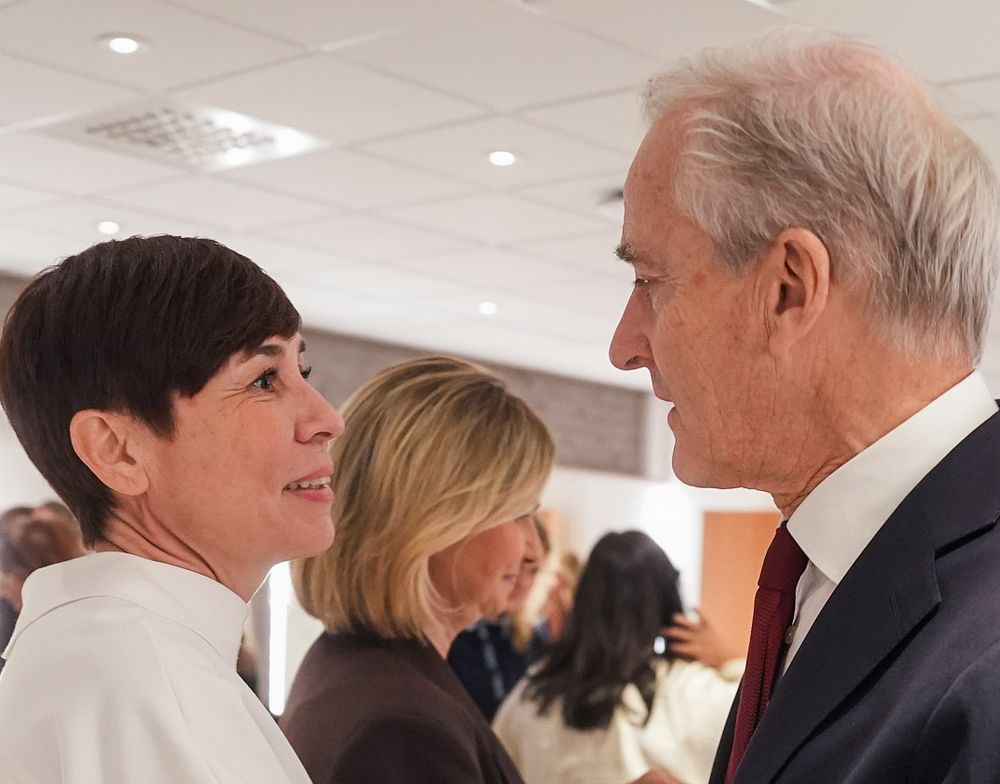
Er "lilla-koalisjonen" død? The political landscape in Norway is undergoing a period of significant change. Traditionally, the Labour Party (Ap) and the Conservative Party (Høyre) have been the two dominant forces in Norwegian politics, often forming a coalition to govern the country. However, recent elections have shown that the Conservative Party is no longer the second largest party, with the Progress Party (Frp) now holding that position.
For the first time in Norwegian politics, it is unclear which parties will dominate the next decade. The Labour Party has been struggling with its position, with opinion polls showing that it has less than 20% support, which is considered a poor sign, but not a crisis. The Conservative Party's support is also declining, with an average around 13%.
The Labour Party has little to show for its time in government, and the Conservative Party is caught between the government and the Progress Party, which is poised to become the new conservative party. Many voters have left the Conservative Party, not just staying in the middle. This could be due to various reasons, but it is a significant shift.
Both parties have struggled to present themselves as parties that address the main issues and solutions that people care about most. They have tried in their own ways, but have not succeeded in winning over a significant portion of voters. The political landscape in Norway is currently in a period of transition, and it is less likely that things will return to "normal" than that we will see a completely new normal.
Rewritten by urgent.news; may contain errors — check the original.