Urgent.News

What's breaking now, across hundreds of outlets.

Tech

Building your own mini PC is harder than you would think

Mini PCs are appealing for their small footprint, but there are some things you should consider before you commit to building your own.
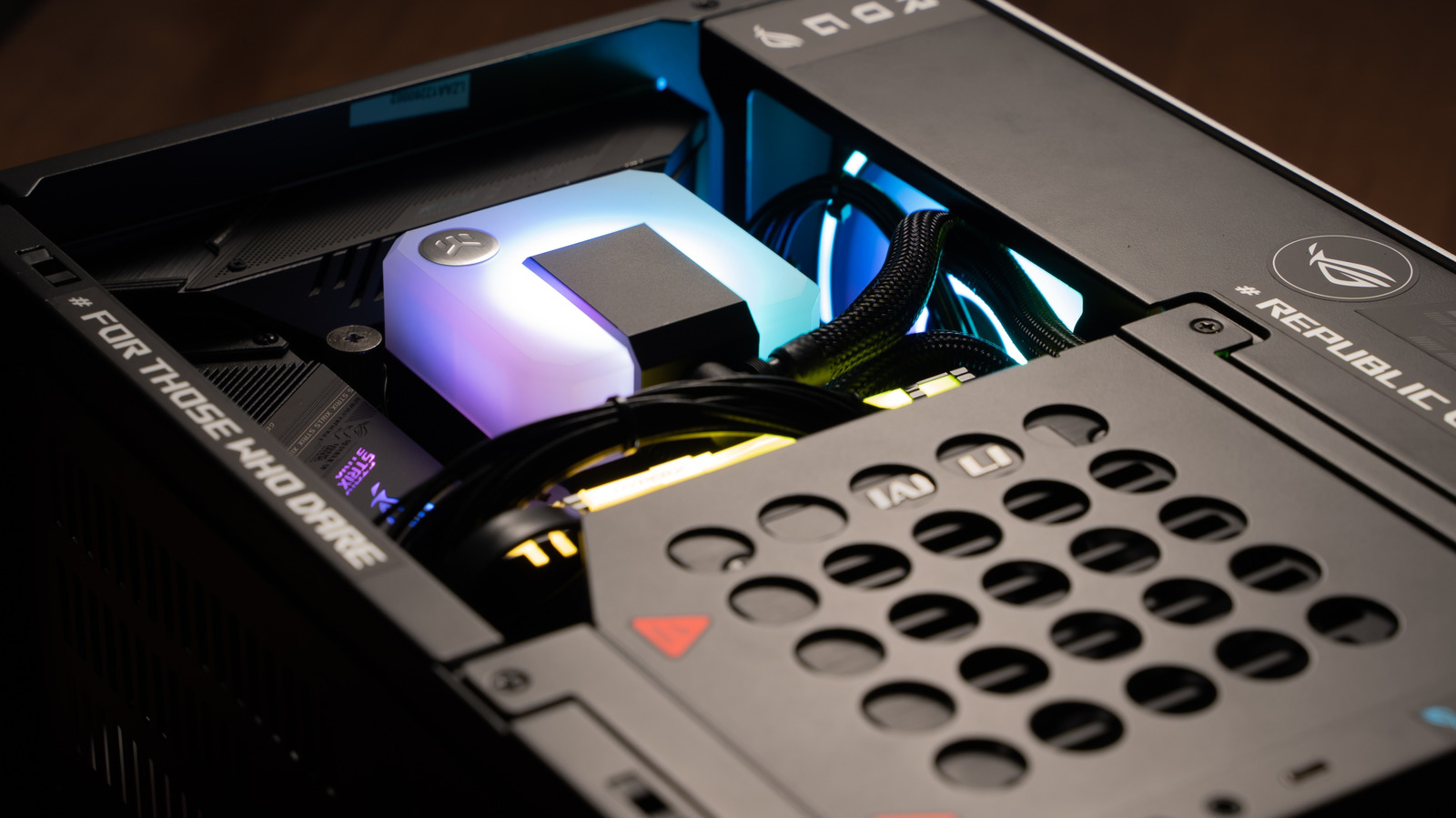
Building your own mini PC is harder than you would think

Creating a custom mini PC is a rewarding experience, but it is not as straightforward as one might expect. Mini PCs, built within Mini-ITX or microATX cases, have specific challenges that make them more difficult to construct than larger PCs. Despite their compact size, mini PCs can vary in price, sometimes matching or even exceeding the cost of larger counterparts.

This is due to the inclusion of features like an SoC or a discrete GPU, which can drive up the cost. Mini PCs are available from mainstream manufacturers, such as Apple's Mac mini and ASUS NUC, often containing soldered RAM onto the motherboard.

Before purchasing components for a mini PC build, it is essential to research the case's specifications to ensure compatibility. Despite their small size, many mini PC cases offer ample space, but careful consideration must be given to dimensions and compatibility. Due to the unorthodox shapes and sizes of these cases, a more strategic and economical approach is required during the build process.

Airflow is a significant concern in mini PC builds due to the limited space. Components, especially when using a discrete GPU instead of an APU, have less room to breathe, potentially leading to overheating issues. Additionally, mini PCs tend to have higher-priced components, such as power supplies, motherboards, CPU coolers, and GPUs, which can increase the overall cost of the machine. In some cases, building a standard ATX PC might be a more affordable option.

The physical build of a mini PC is another challenge, as there is less room for maneuver. Mini PC builds require a specific order of assembly due to the sizes of the components and clearance concerns. This can make the overall construction process more complicated than building a standard ATX machine.

Rewritten by urgent.news; may contain errors — check the original.

Read the original at engadget.com →

Report a problem with this story

More in Tech

Advice for the next 100 Rust GUIs

  • Rust GUI landscape has expanded with two dozen toolkits announced
  • Performance issues persist in cross-platform GUI applications
  • GPUI framework enables high-performance Rust UI in real-world apps

Private Browser File Uploads: Object Storage Service and 3-Stage Throughput

Short answer: for a marketplace accepting private browser uploads, the least complex design is a direct-to-object-storage upload followed by backend processing and an expiring download URL.

  • Private browser uploads use object storage service for direct upload
  • Three file sizes tested: 25 MB, 250 MB, 2 GB with 1, 10, 50 concurrent uploads
  • S3 recommended for ecosystem, but R2, GCS, Infrai viable alternatives

German e-invoicing for developers: XRechnung and ZUGFeRD via REST API and MCP

From 2027, many German businesses have to send structured e-invoices to other businesses, and from 2028 almost all of them. Receiving them has been mandatory since 1 January 2025.

  • German businesses must send e-invoices by 2028, starting 2027 for high-revenue firms
  • XRechnung is pure XML (UBL or CII syntax) format
  • ZUGFeRD combines PDF/A-3 with embedded XML

Customer Domain Support in Go: Why I Chose Apex Record Ownership

Retries belong behind a reconciliation check. For property managers publishing customer domains and mail authentication records, I would choose a documented apex A record and a www CNAME, accepting…

  • Apex A records and www CNAMEs recommended for customer domain support
  • Separate explanations for portal and mail readiness during onboarding
  • Capacity planning considers affected zones and retry budget

Is This Height Comparison Up to Scale? How to Draw One Correctly in JavaScript and SVG

"I've always wondered what a height different between a 4'10 person and a 5'7 person would look like … I found this image but idk if it's up to scale or not." That question, posted to…

  • Figures' feet should be on the same horizontal line (single ground line)
  • Scale must start at zero, consistent pixels per centimeter throughout
  • Incorrect scaling introduces bias, distorts visual representation

More from Saturday 21 November →