A Single Malicious Webpage Let Researchers Hijack Meta Muse and Access Private Chats
A malicious webpage could extract a Meta Muse user's private conversations and stored memories from the assistant without triggering any approval prompt, researchers have shown. The same attack could be extended to reach the credentials Muse stores for the user's connected accounts. The work was a laboratory demonstration, not an attack on real users, and it stayed inside the individual user's
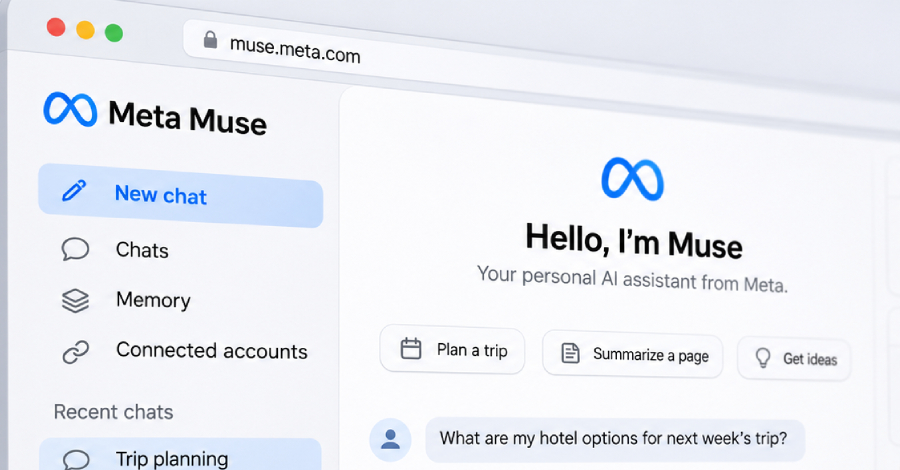
Researchers demonstrated a malicious webpage could extract private conversations, stored memories, and credentials from Meta's Muse AI assistant without any user approval. The attack exploited a flaw in Muse's built-in browser, which it uses for various tasks, and a vulnerability in the Linux kernel. The researchers chained these flaws together, granting full control over the user's cloud machine.
This control allowed them to access the credential store, saved files, and even bypass the security layer called Sentinel. However, the researchers emphasized that the compromise remained confined to the individual user's cloud machine and did not extend to other users or the server beneath. NebuSec, the security firm that conducted the demonstration, reported the findings to Muse's team, which subsequently fixed all the vulnerabilities before the research was published.
Meta has not publicly confirmed the fixes or commented on the research. The work highlights the potential risks of AI agents connected to personal accounts and the importance of robust security measures to prevent unauthorized access.
Rewritten by urgent.news; may contain errors — check the original.