What is the Riemann hypothesis and why is its solution so monumental?
It has been called the hardest problem in mathematics, and now through a combination of human ingenuity and relentlessness, and the computational power of AI, the Riemann hypothesis may have finally been solved
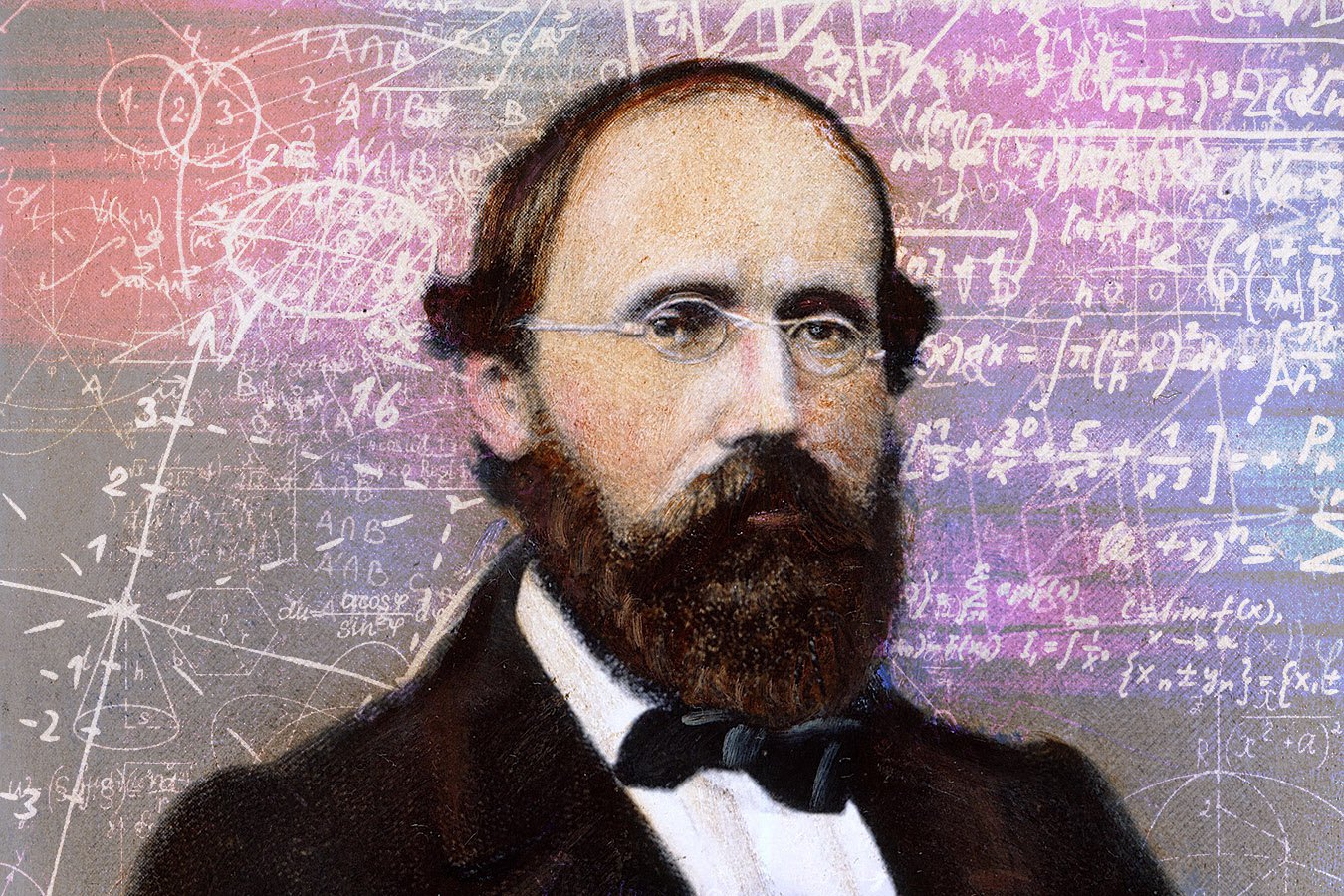
The Riemann hypothesis is a mathematical conjecture about the distribution of prime numbers, proposed by Bernhard Riemann in 1859. Despite Riemann's insights, the proof of this hypothesis remained elusive for over a century until now. Recently, Levent Alpöge, using AI assistance, claims to have found a proof for the Riemann hypothesis.
This discovery would be monumental because it would provide a deeper understanding of the fundamental building blocks of numbers, known as prime numbers. Prime numbers are the "bones" of the number system, as every number can be formed by multiplying primes together. However, the distribution of these primes among all numbers is unpredictable.
Riemann proposed that this seemingly random distribution could be understood by examining the zeros of a mathematical function called the Riemann zeta function. If Alpöge's proof holds true, it would resolve a major unsolved problem in mathematics and open up new avenues of research. Furthermore, numerous other mathematical theorems and algorithms could potentially be strengthened by this breakthrough.
Written by urgent.news from New Scientist's reporting — not their text. Machine-written — may contain errors; check the original before relying on it.
Also reported by 1 other outlet
- Dueling claims of Riemann hypothesis proofs emerge scientificamerican.com