US, China & Russia issue peace declaration rejecting nuclear war
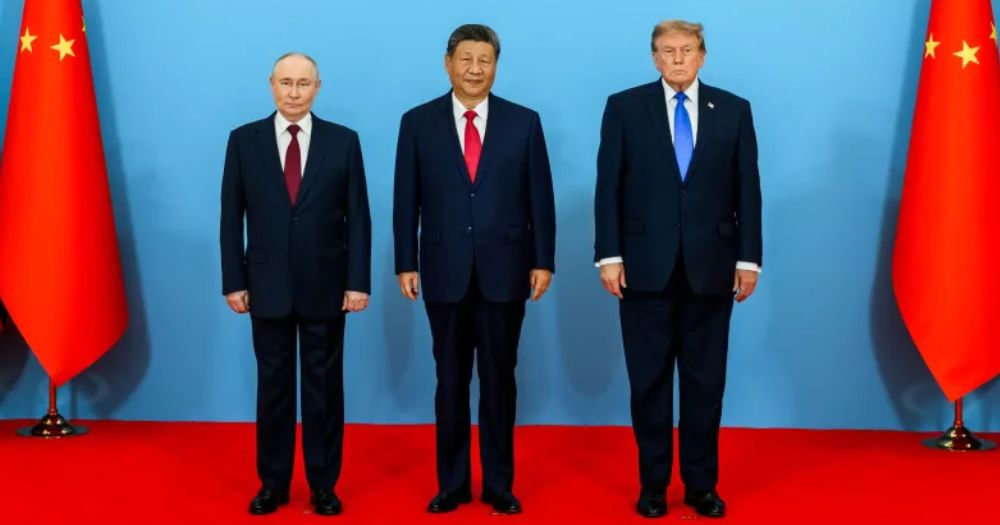
On November 19, President Xi Jinping of China, President Vladimir Putin of Russia, and President Donald Trump of the United States met in Shenzhen, China, and issued a four-point declaration aimed at promoting peace. The leaders met on the sidelines of the 33rd APEC summit, with Putin attending in person for the first time since 2017.
The White House reported that the leaders had an "in-depth exchange of views on the current international situation and committed to maintaining strategic stability and international security."
The four points outlined in the declaration were: first, a commitment as permanent members of the United Nations Security Council to reform the UN to better address global challenges and uphold its mission of international peace and security; second, an emphasis on increasing the production and supply of refined petroleum products, while reaffirming the importance of stable energy flows; third, the recognition of state consent and respect for the immunities of state officials as being of paramount importance; and fourth, an agreement that the International Criminal Court and similar bodies must not abuse their jurisdiction.
All three leaders emphasized that a nuclear war "cannot be won and must never be fought" and pledged to engage in dialogue on reducing nuclear risk and preventing the proliferation of nuclear weapons. The Hill quoted Trump as opening the 90-minute closed-door meeting by stating that the three countries had a "special responsibility to maintain open, respectful, and productive dialogue" on issues impacting the entire planet.
He criticized previous leaders for avoiding dialogue with nations with which they disagreed, stating that such an approach never resolved problems and that "no peace was ever forged by declining opportunities for engagement and speech."
Observers suggested that the meeting could be seen as a "New Yalta," as Trump and Putin discussed ending the Ukraine war. Putin directly addressed these comparisons, noting that the world was not divided between the participants of the 1945 Yalta Conference, but rather that the conference "codified the realities that had emerged after the Second World War." He reiterated that the realities on the ground would need to be accepted, just as they were after World War II.
Written by urgent.news from Mothership's reporting — not their text. Machine-written — may contain errors; check the original before relying on it.