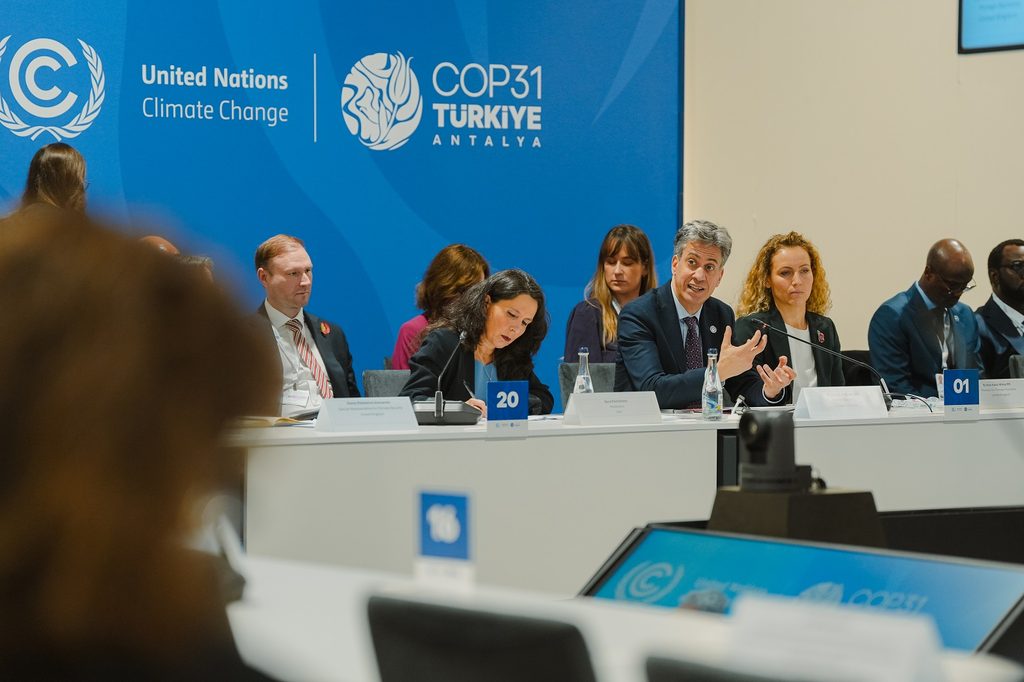
UN climate talks run into overtime as countries clash over fossil fuel cuts
Deep divisions over fossil fuels and financial support for poorer nations pushed the Cop31 climate summit in Turkey beyond its scheduled closing day on Friday, as nearly 200 countries struggled to agree on how to tackle global warming.

As the final day approaches for the annual U.N. climate summit in Antalya, Turkey, negotiators are still grappling with how to tackle the issue of global warming, even as evidence mounts that only drastically reducing fossil fuels can avert the worst impacts. The two-week summit, known as COP31, has thus far failed to reach any significant agreements on transitioning away from fossil fuels like coal, oil, and gas, which are major contributors to disasters such as Europe's deadly heatwaves and Nepal's devastating floods.
Panama's Environment Minister, Juan Carlos Navarro, called for the summit to be reformed, stating that it's time to tell the truth to citizens and themselves. The COPs need to address the "perverse futility and blatant inflexibility" from nations that should be leading the effort to combat climate change.
A key issue on the table is an electrification goal, which aims to increase the share of electricity in global energy consumption from 21% to 35% by 2035. While the goal prefers that this increase comes from renewable sources like solar and wind, it doesn't explicitly ban coal and other fossil fuels from being used to power grids initially.
This lack of explicit language on transitioning away from fossil fuels has raised concerns among climate activists, who argue that weakening commitments on fossil fuel phase-out could undermine progress in the fight against the climate crisis.
Developing nations, which have contributed the least to the climate crisis, are also frustrated with the lack of sufficient funding from developed nations to help them recover from climate disasters and adapt to a warmer world. Mohamed Adow, director of Power Shift Africa, emphasized that vulnerable countries cannot move forward "even an inch" without the financial support they desperately need.
The U.S., as the world's largest emitter of greenhouse gases, has chosen not to participate in COP31, leaving a significant gap in the negotiations. This absence has been highlighted by climate activists, who argue that richer nations, like the U.S., should provide funding to help vulnerable countries cope with the impacts of climate change. Despite the setbacks, there is still some hope that next year's climate summit in Ethiopia will yield more meaningful outcomes.
Written by urgent.news from The Mainichi's reporting — not their text. Machine-written — may contain errors; check the original before relying on it.
This story
This is one outlet's version. Read the fullest account.
- Nations still seeking deeper fossil fuel cuts as annual UN climate change summit enters final day winnipegfreepress.com
- Nations seek deeper fossil fuel cuts, as annual UN climate summit enters final day mainichi.jp
- COP 31: Nations still seeking deeper fossil fuel cuts as climate summit enters final day thehindu.com