Trump, Xi and Putin revive Reagan-Gorbachev nuclear pledge: Why the 40-year-old principle matters today?
Trump, Xi and Putin have revived a Cold War-era pledge against nuclear war. But with the New START treaty expired and Washington seeking to bring Beijing into a new arms-control framework, turning the declaration into concrete disarmament measures remains a challenge.
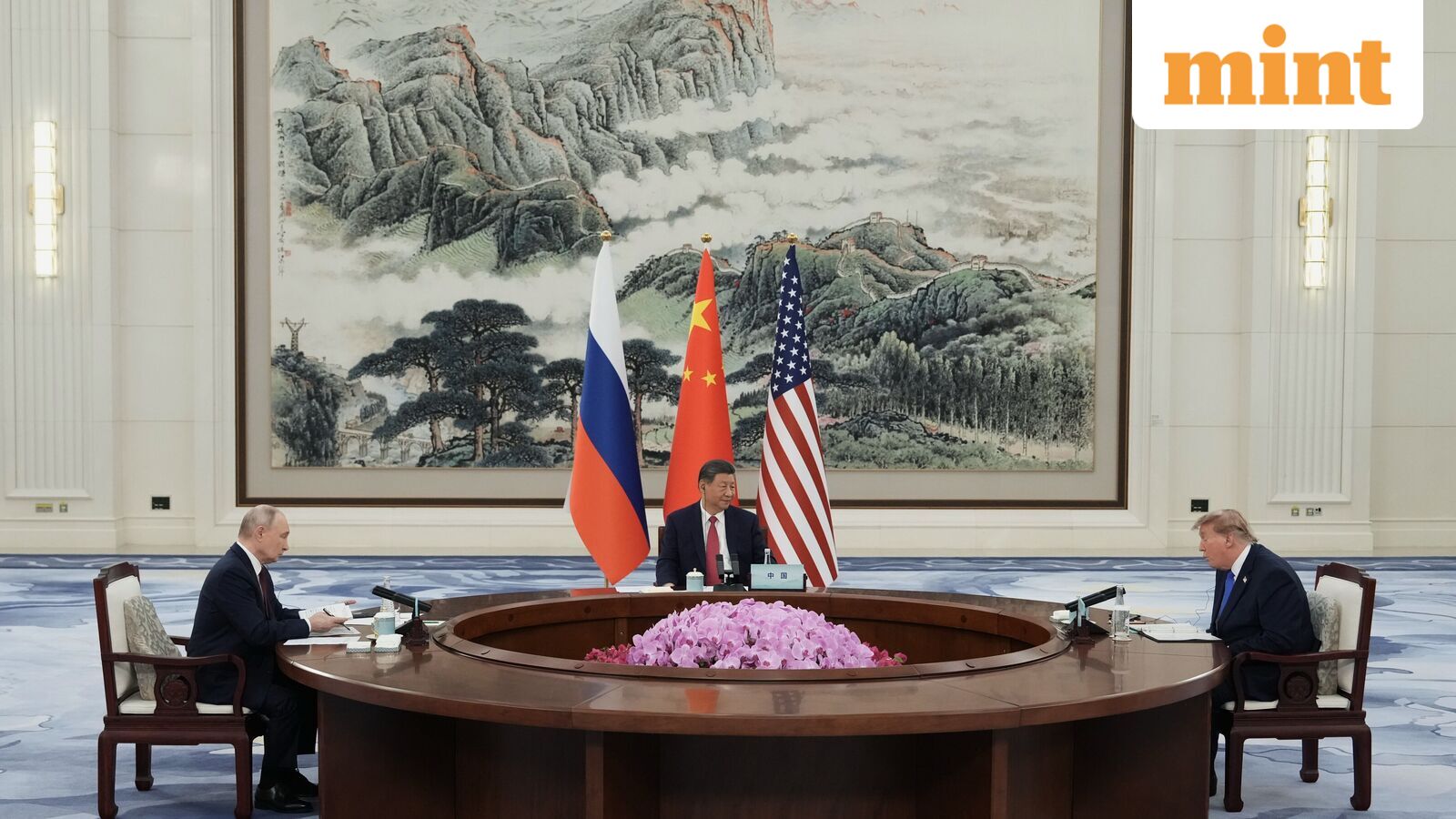
On Thursday, US President Donald Trump, Chinese President Xi Jinping, and Russian President Vladimir Putin convened a trilateral meeting in Shenzhen, alongside the Asia-Pacific Economic Cooperation (APEC) summit. In the aftermath of the meeting, the three nations released a joint statement reiterating that "a nuclear war cannot be won and must never be fought."
Additionally, they pledged to engage in dialogue concerning the reduction of nuclear risks and the prevention of nuclear weapons proliferation. However, the leaders did not present any specific timeline for such discussions, nor did the statement mention a potential trilateral nuclear arms-reduction agreement.
The notion that a nuclear war is unwinnable and must never be waged has its roots in the Reagan-Gorbachev principle, which emerged in 1985 following the Geneva summit between US President Ronald Reagan and Soviet leader Mikhail Gorbachev. The pair formally incorporated the declaration into a joint statement, reinforcing their commitment to the principle amidst evolving nuclear arms control challenges.
Since then, the Reagan-Gorbachev principle has been instrumental in shaping diplomatic conditions for subsequent arms-control endeavors, such as the 1987 Intermediate-Range Nuclear Forces (INF) Treaty and the 1991 Strategic Arms Reduction Treaty (START I).
These agreements substantially reduced strategic nuclear arsenals and established verification measures to monitor compliance. Nonetheless, the current commitment by the three leaders to recommit to the Reagan-Gorbachev principle occurs at a time when nuclear arms control faces fresh challenges. While the United States and Russia possess the world's largest nuclear arsenals, China's nuclear capabilities are rapidly expanding.
Consequently, Beijing has shown reluctance to engage in negotiations for a three-way nuclear arms-reduction arrangement, arguing that its arsenal remains considerably smaller than those of the US and Russia. The disparities in nuclear capabilities and security priorities complicate the negotiation of a common framework. Furthermore, the weakening of existing arms-control arrangements, including the expiration of the New START treaty between the US and Russia on February 5, 2026, has further complicated efforts to reach a comprehensive agreement.
Written by urgent.news from Live Mint's reporting — not their text. Machine-written — may contain errors; check the original before relying on it.
This story
This is one outlet's version. Read the fullest account.