There are now more satellites over most towns than stars you can actually see
Those figures come from The Night Sky Report, which UK engineering firm Accu Components published based on US Space Force tracking data from CelesTrak. The company plotted where nearly 15,900 active satellites in low Earth orbit sat every two minutes across seven October nights. Over a full night, it found... Read Entire Article
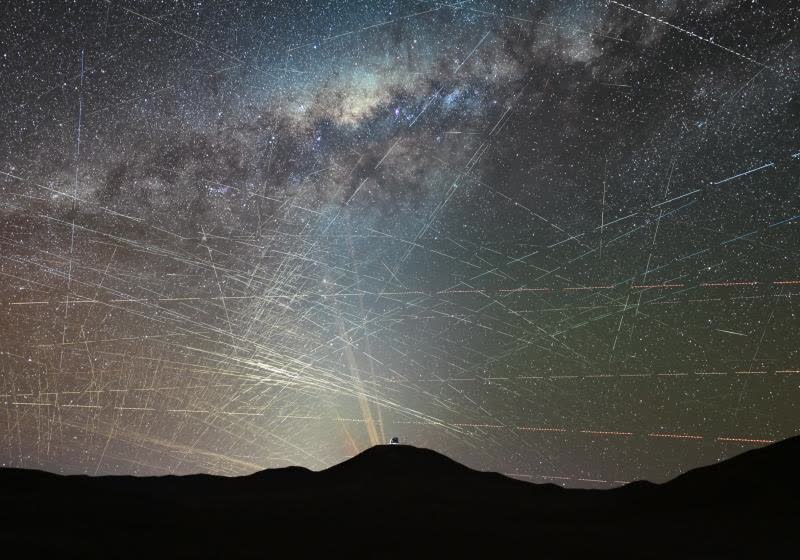
Light pollution has dimmed the night sky above most big cities to a few dozen stars—perhaps a few hundred in suburban areas. However, a new analysis has revealed that something else may now outnumber these stars: satellites. The Night Sky Report, published by UK engineering firm Accu Components, estimated that around 710 satellites are above the horizon over a typical town at any given time after dark.
This figure stems from US Space Force tracking data from CelesTrak, which tracked nearly 15,900 active satellites in low Earth orbit every two minutes across seven October nights. Over a full night, the analysis found that approximately 13,000 different satellites passed over an average UK town. Most of these satellites cannot be seen as they lack their own lights and only become visible when sunlight still reaches them and the ground below is dark.
Out of the estimated 13,000 satellites, about 105 can typically be seen at any given moment. This average number hides significant variations throughout the night, with roughly 300 satellites catching the light in the first hour after dark, dropping below 20 by midnight. Interestingly, latitude affects visibility in opposite ways on each side of the Atlantic.
In the UK, the number of visible satellites decreases as you move north, with Lerwick in the Shetland Islands seeing only 47 satellites visible more than 30 degrees up, compared to 83 in Falmouth. In contrast, across the US, Seattle tops the list with 88 visible satellites, while Miami is at the bottom with 57. This discrepancy is attributed to Starlink's orbits, which cluster around 43 and 53 degrees north.
Since most of the US lies south of these bands, heading north brings you closer to them. However, most of Britain already sits at or past the 53-degree line, so moving further north only takes you away from the densest concentrations. Interestingly, Starlink alone accounts for 70% of active satellites in low Earth orbit. SpaceX has also applied for permission to launch up to a million more satellites that would function as orbital data centers.
While the report has not been peer-reviewed and only covers October, astronomers are primarily concerned about the satellites yet to come. According to astronomer Olivier Hainaut from the European Southern Observatory, SpaceX's planned constellation could leave hundreds of satellites visible for much of every night, potentially reaching several thousand at certain times.
This growing satellite population will add to the light pollution from the ground, which has already been increasing the night sky's brightness by roughly 10% annually.
Written by urgent.news from TechSpot's reporting — not their text. Machine-written — may contain errors; check the original before relying on it.