The BepiColombo spacecraft is finally entering orbit around Mercury
After an eight-year voyage towards the sun, the BepiColombo spacecraft can finally begin its mission to unpick the many mysteries of our solar system's smallest planet
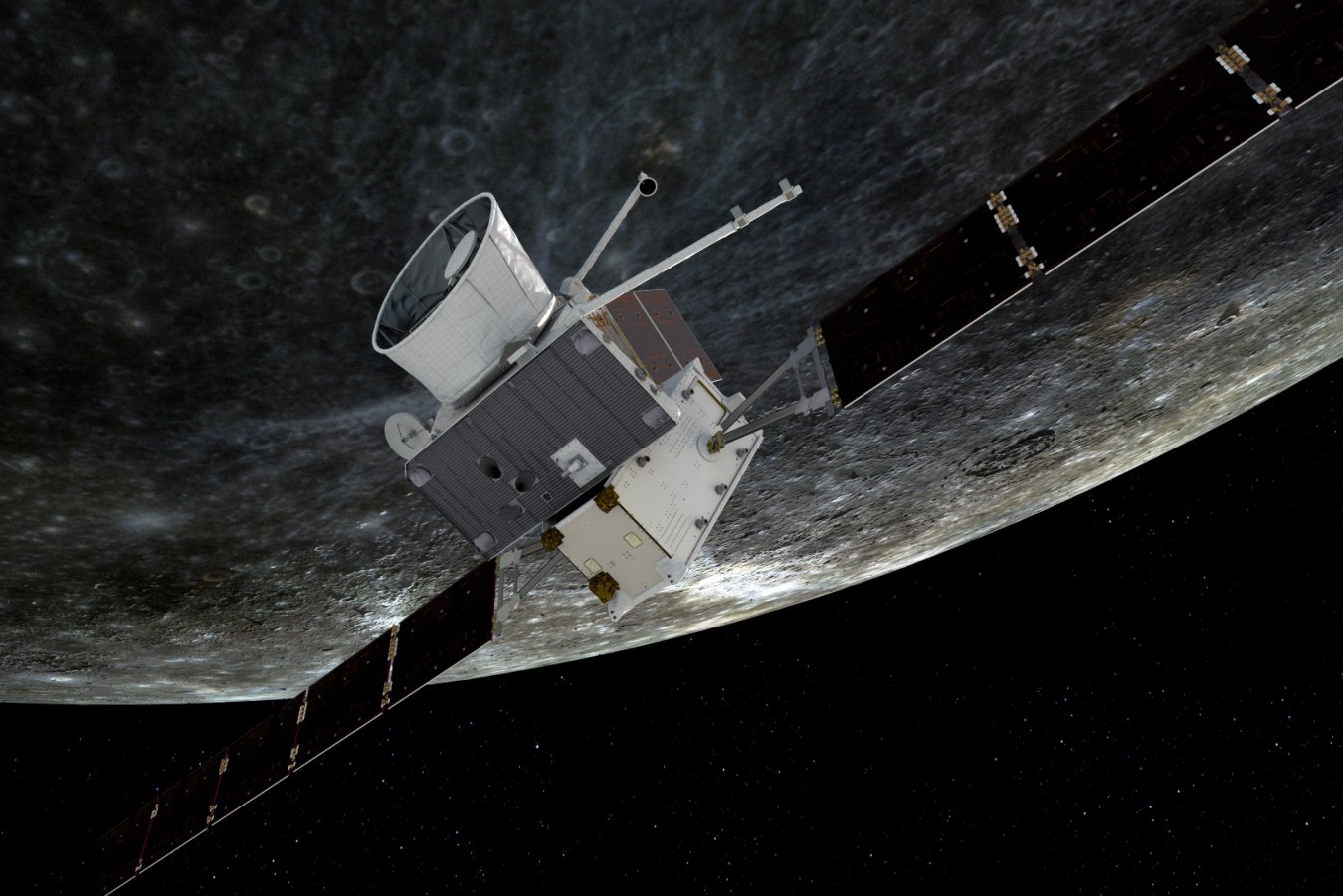
After an extensive journey lasting eight years, the BepiColombo spacecraft has finally arrived at Mercury's orbit on November 21. This joint mission between the European Space Agency (ESA) and Japan Aerospace Exploration Agency (JAXA) aims to investigate the planet's geology, atmosphere, and magnetic field to comprehend its formation and evolution.
Launched in October 2018, BepiColombo took a looping trajectory to reach Mercury due to its proximity to the sun, passing Venus and Mercury multiple times for gravity assists. In 2024, a thruster issue extended the journey, delaying arrival from 2025 to 2026. The spacecraft consists of two orbiters: ESA's Mercury Planetary Orbiter (MPO) and JAXA's Mercury Magnetospheric Orbiter (MMO).
These orbiters will separate in December, with MPO in a near-circular orbit taking 2.3 hours to complete and Mio on a more distant elliptical path, taking 9.3 hours. Each orbiter has distinct scientific instruments to study Mercury's surface, terrain, atmosphere, magnetic field, and solar wind. The primary mission will last one Earth year, providing crucial data to solve Mercury's mysteries, including its magnetic field, atmosphere, and formation.
Written by urgent.news from New Scientist's reporting — not their text. Machine-written — may contain errors; check the original before relying on it.