Teenage Engineering’s first CD player puts the spinning disc on display
Teenage Engineering announced what it describes as "a modern take on a classic CD player" with its new EP/BC-1 featuring a slab-like design that leaves the spinning disc exposed instead of hiding it under a lid or inside a slide-out tray. The company says the EP/BC-1 is the first entry in its new broadcast series […]
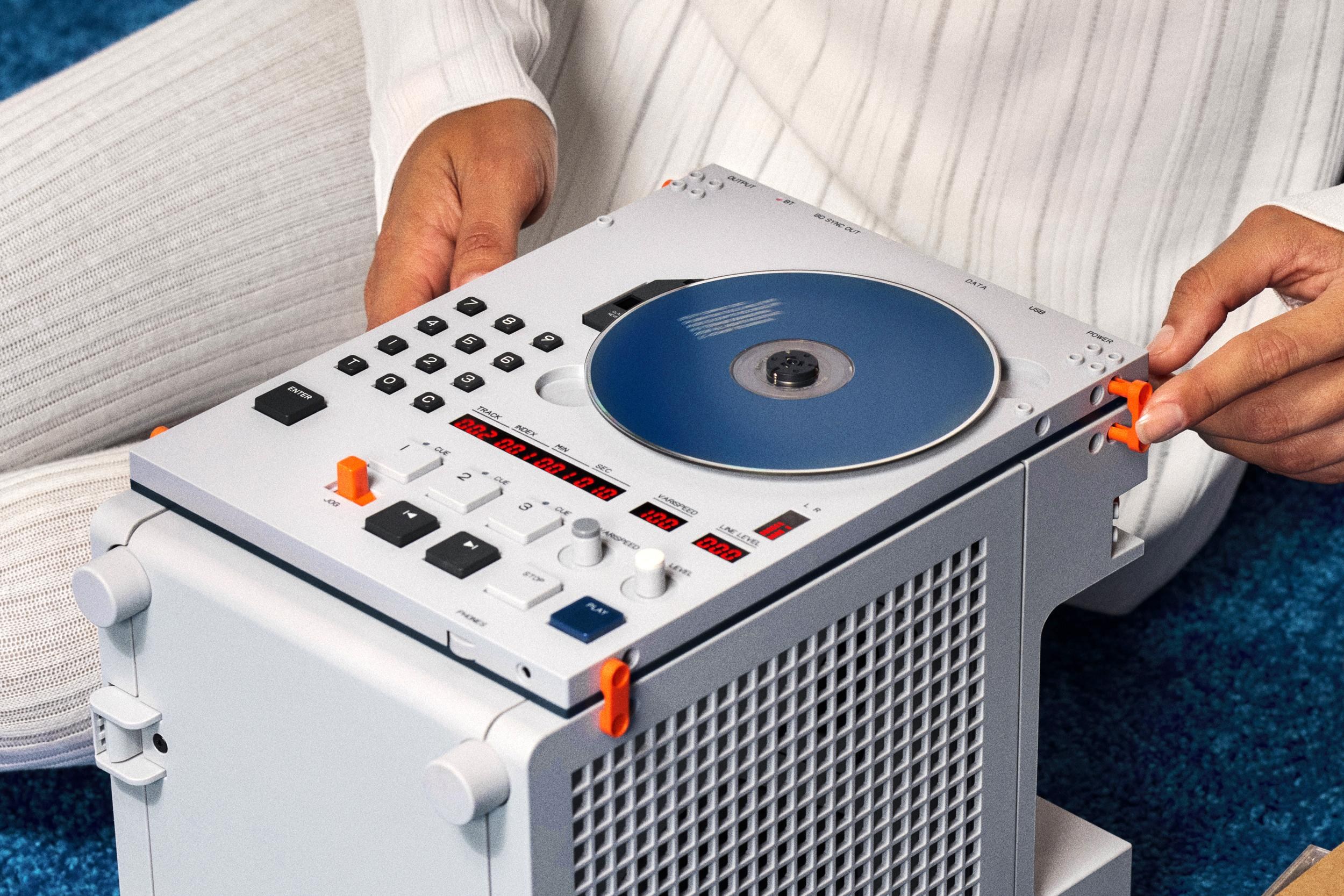
Teenage Engineering has unveiled its first CD player, the EP/BC–1, which showcases the spinning disc instead of hiding it. This modern take on a classic CD player features a slab-like design, bringing physical audio formats into a contemporary context. The EP/BC–1 is the inaugural product in Teenage Engineering's new broadcast series, aiming to preserve the formats they grew up with. Priced at $299, the CD player is now available on Teenage Engineering's online store, joining their existing EP-series of audio devices.
The EP/BC–1 boasts Bluetooth connectivity, enabling wireless streaming to headphones or multiple devices using Auracast. In addition to traditional audio inputs like a headphone jack and USB 2.0 port, the player has a built-in rechargeable battery that supports both Bluetooth and Auracast streaming. It offers variable speed playback, cue markers, a jog wheel for forward and reverse search, and built-in beat detection. Digital displays on the front showcase track, index, time information, and audio levels.
Compatible with standard CDs and MP3 files, the EP/BC–1 can rip tracks to 44.1 Hz/16-bit WAV files. For MP3s or other formats, users must convert them manually. This CD player, available in the same dimensions as Teenage Engineering's 2023 KO II synthesizer, is designed to seamlessly connect with other gear, including the recently announced EP-35 battery-powered amp.
Written by urgent.news from The Verge's reporting — not their text. Machine-written — may contain errors; check the original before relying on it.