Semiconductor Stocks Heading for Worst 2-Month Slump Since 2001 as Nvidia, Anthropic and the AI Trade Crack: This Week on Wall Street
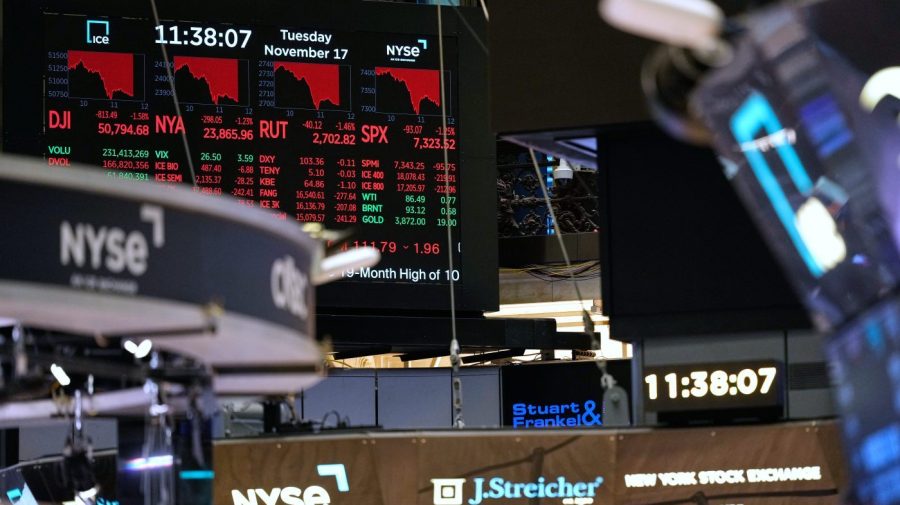
Semiconductor stocks are closing out a two-month collapse with only one precedent, and it was written in the autumn of 2001 . The iShares Semiconductor ETF (NASDAQ:SOXX) fell 10% on Friday alone and is down 34.5% since Sept. 30. In 25 years of trading, the only worse two-month stretch ended in September 2001, at 35.1%, when the dot-com bust met the Sept. 11 attacks. The worst two months of 2008…

Semiconductor stocks have been sliding for two months, marking the worst two-month period since 2001. The iShares Semiconductor ETF (SOXX) dropped 10% in a single day and is down 34.5% since the end of September. This slump is the worst since 2001, when the dot-com bubble burst and the 9/11 attacks hit, resulting in a 35.1% decline. The last time the semiconductor market saw such a severe two-month decline was in 2008, with a 33.2% drop.
For the fifth week in a row, the AI trade has been losing ground. Nvidia (NVDA) saw a 13% drop, its lowest since May 2025 and 48% below its October 6 record. The week-long decline was its seventh consecutive weekly loss, the longest run since July 2008. Nvidia's stock now trades at $127, down 48% from its October high. Other chipmakers like SanDisk (SNDK), Micron (MU), Advanced Micro Devices (AMD), Broadcom (AVGO), and Taiwan Semiconductor Manufacturing (TSM) also suffered significant losses, with declines of 16%, 14%, 12.7%, 12.4%, and 9% respectively.
The technology-heavy S&P 500 fell 3.2% on Friday to 6,949, marking its seventh straight decline and an 8.7% loss for the week. This is the deepest seven-session slide since February 2020, pushing the index below its October 6 record close by 11%. The S&P 500 is now in correction territory for the first time since April 2025, down 8% for the week and 8% for November, its worst monthly performance since September 2022.
The Nasdaq 100 also saw heavy losses, dropping 4.7% on Friday and 9.5% for the week. It has turned negative for 2026 and is down 17% since the end of September, the steepest two-month decline since November 2008. The index is just a point away from entering bear market territory.
Meanwhile, the Federal Reserve signaled a tougher stance with a potential half-point interest rate hike at their upcoming Dec. 8-9 meeting. This move, aimed at curbing inflation, could add more pressure to the already weakening semiconductor sector. The 10-year Treasury yield dropped to 4.92% from 5.14%, and the 2-year yield fell to 4.62% from 4.85%. Safe-haven demand for Treasuries pushed yields lower, providing a temporary respite for investors.
Written by urgent.news from Benzinga's reporting — not their text. Machine-written — may contain errors; check the original before relying on it.
This story
This is one outlet's version. Read the fullest account.