Schokolade: Pralinen, Skulpturen, Insektenflügel – Die süßesten Innovationen der Welt
Bei den World Chocolate Masters zeigten einige der besten Chocolatiers der Welt, dass Innovation oft unspektakulär wirkt und dennoch eine Welt verändern kann. Ein Besuch in Antwerpen.
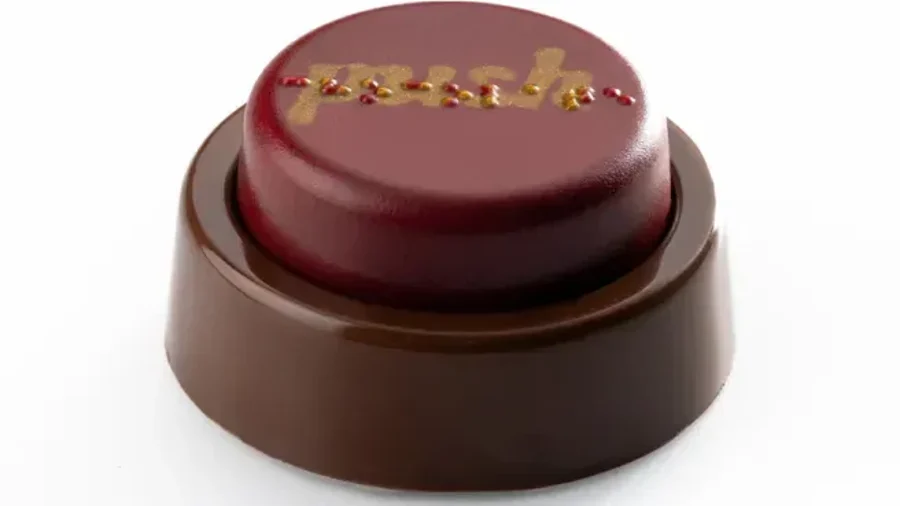
In the Antwerp Trade Hall, the oldest commercial building in the world, a variety of tools and equipment come into play. These include infrared thermometers, heated guns, cold sprays, fly paper, electrical rotating paddles, silicone mats and 3D printer forms. How does this relate to the sweet scent of chocolate? The World Chocolate Masters (WCM) are taking place, and with the help of these tools, the most beautiful chocolate sculptures are created.
Participants use any technology available to them to innovate. The history of chocolate as a food goes back over 5,500 years. The Mayo-Chinchipe culture in the upper Amazon, present-day Ecuador, used the plant. Around 1900 BC, the Aztecs called it Xotolatl. New developments came in millennia. It took nearly 3,500 years for chocolate to conquer Europe.
In 1528, Spanish conquistadors brought the fruit to Europe. In 1828, Coenraad van Houten invented a press that separated cocoa butter and cocoa powder, allowing for industrial use. In 1847, Brits created the first table chocolate. From 1875 to 1879, Daniel Peters and Henri Nestlé developed milk chocolate, and Rodolphe Lindt invented the conching process, which made chocolate melt smoothly.
The basic method has remained largely unchanged. Lothar Buss is present at the Antwerp Trade Hall, standing by eight tables where chocolate makers from China to Brazil compete. Buss is a chocolatier based in Cologne and is the only German involved in the World Chocolate Masters. "As a chocolatier, you always keep an eye on what you could use," Buss says.
Walking through the hardware store can be as inspiring as attending an art exhibition. Buss mentors candidates from Germany and Austria. Until recently, he ran several chocolate shops in the Rhineland. Today, he mainly advises and provides training. He participated in the first edition of the WCM. The tension at 6:45 AM on Monday morning is familiar.
The first of two groups has five hours to create a figure and make pralines in the meantime. Repeating the ordinary does not get the competitors to the final round of the next day. "In every competition, there's something that hasn't been there before in the chocolate industry," Buss says. Kirsten Tibballs from Australia leads the technical execution jury.
She is experienced in commissioned innovations. In 2015, she was asked to show something new at a presentation. "I spent weeks on it," Tibballs recalls. She has published several books and runs an online training channel. Her chocolate work has gained over 780,000 Instagram followers. The final product is a white chocolate ball with colored chocolate stripes that create different patterns when spun.
This technique is now standard for ambitious chocolatiers. It can be replicated in any household. Tibballs would prefer it to spread rather than be protected. "Ideas spreading and helping chocolate gain more attention is good," she says. She supports the World Chocolate Masters' organizer, chocolate manufacturer Callebaut, a listed company belonging to Barry Callebaut.
Temperature stability is crucial. Chocolatiers from China to Brazil work under a tight time constraint. "Temperature between 21 and 23 degrees is ideal," Tilling says, as no softening occurs. With heated air guns, thermal fields, induction cookers, and cold sprays, the chocolatiers maintain the ideal temperature. Insects' wings, ships, bridges, comic characters, roots, and diamond replicas are some of the creations.
In the preliminary round of country winners, imagination knows no bounds. As long as the structure is correct. "My candidate works with 3D printer forms," Tilling says. Individual shapes are possible in a world saturated with common forms like balls, stars, honeycombs, or stars. Form first, taste second. But does it taste good? In the sculptures that resemble carpentry, taste is secondary.
Amaury Guichon chairs the jury that includes technical jury member Kirsten Tibballs and taste jury member Patissier Jordi Roca. Guichon is known for his kakaomonuments and has a massive Instagram following of 19 million. "I always try to redraw the boundaries," Guichon says. The urge to create something new is always present.
Written by urgent.news from Handelsblatt's reporting — not their text. Machine-written — may contain errors; check the original before relying on it.
This story
This is one outlet's version. Read the fullest account.