Roman Protasevich’s show about his ex Sofia Sapega aired on a Belarusian propaganda channel. She says a man posing as a Novaya Gazeta reporter tried to trick her into an interview in Lithuania.
The Belarusian state television channel STV aired an episode of “No Cover,” a program hosted by Roman Protasevich, the former editor-in-chief of the opposition channel Nexta, devoted to his former girlfriend, Sofia Sapega. The episode was released on the evening of November 19 under the title “Benders, Pills, and Rehab: Sofia Sapega’s Dirty Secrets.” It included video, edited audio recordings of…
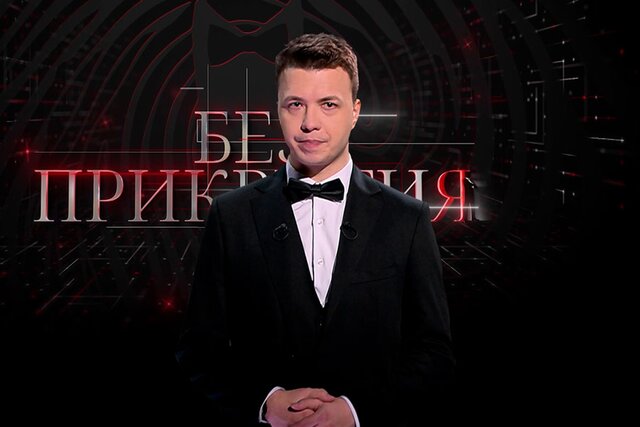
On November 19, Belarusian state television channel STV broadcast an episode of "No Cover," a show hosted by Roman Protasevich, the ex-editor-in-chief of opposition channel Nexta. The episode focused on Protasevich's ex-girlfriend, Sofia Sapega, featuring video footage, edited audio recordings of Sapega's conversations, and messages allegedly revealing their financial dealings. Protasevich had previously labeled Sapega as having "mental health problems."
Sapega informed media outlets Port and Nasha Niva that she had been approached by propagandists, who tried to trick her into granting them an interview. In 2021, after a Ryanair flight carrying Protasevich and Sapega from Athens to Vilnius was forced to land in Minsk due to a bomb threat, both individuals were detained. Protasevich had previously served as the editor-in-chief of Nexta, a widely-followed Telegram channel that played a crucial role in organizing Belarus's 2020 protests.
Sapega, meanwhile, administered the Telegram channel Black Book of Belarus, which exposed the personal data of security officers involved in the violent suppression of protesters.
Roman Protasevich was sentenced to eight years in a penal colony following his detention, but was later pardoned and became a Belarusian propagandist. In May 2023, Russian authorities facilitated her release and transfer to Russia. After an interview with Zerkalo, a Russian news outlet, a man claiming to be a Novaya Gazeta Europe journalist named Ilya Azar contacted Sapega on Telegram.
He invited her to participate in a video project aimed at European Russian-speaking audiences, with the prospect of filming three episodes about her life, her involvement in the protest movement, her imprisonment, and her relationship with Protasevich. The man offered Sapega 1,800 euros per episode and promised a 302-euro advance.
On November 6, Sapega received the advance and began filming in Vilnius on November 15. The crew, which included an interviewer, photographer, camera operator, and others, conducted shoots on the streets, in a park, and in a rented apartment. The crew learned that no one on the team knew the individual who had hired them, as they had all been promised their contracts and the remaining money by November 16.
Concerned, Sapega contacted Novaya Gazeta Europe, only to be informed that the newsroom had no prior knowledge of the assignment or interview.
Realizing something was amiss, Sapega reached out to Novaya Gazeta Europe, where she was told the same information. The crew ultimately decided not to deliver the footage to the man who had commissioned the shoot, and the videos were subsequently deleted. Only photographs from the set were aired on STV. The man who had commissioned the shoot threatened to fly from Prague to Vilnius himself, claiming he would confront the crew members.
Upon advice from her lawyer and trusted sources, Sapega arranged a meeting with the man at a café, but he never arrived. However, the man's messages accurately depicted the events surrounding them. STV aired snippets of conversations between Sapega and Protasevich, emphasizing her discussion of recent developments within the Belarusian opposition and the dispute between Sviatlana Tsikhanouskaya and Siarhei Tsikhanouski.
Protasevich claimed that filming the episode required "extra trouble and playing spy," but expressed satisfaction with the outcome. Sapega disputes these claims, stating that the propagandists misrepresented her views.
Written by urgent.news from Meduza (English)'s reporting — not their text. Machine-written — may contain errors; check the original before relying on it.