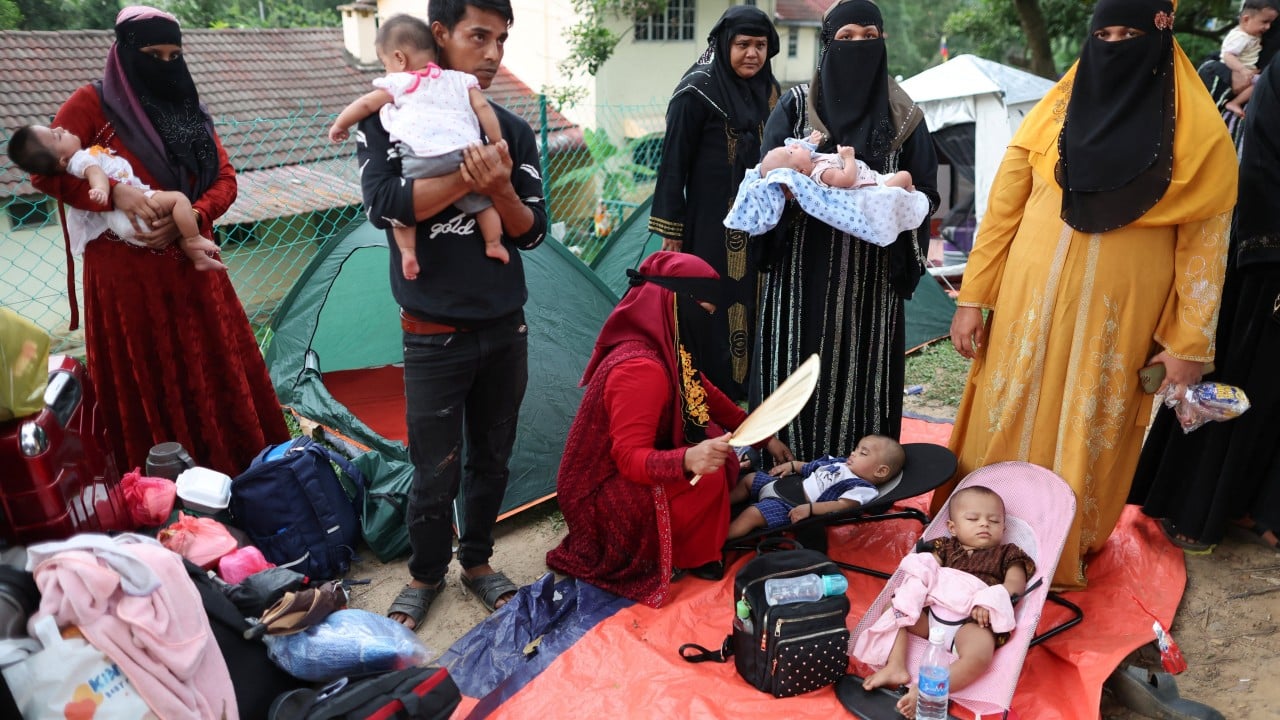
Rohingya in Bangladesh welcome UN court's genocide verdict but say they want to go home to Myanmar
COX'S BAZAR, Bangladesh (AP) -- Hundreds of Rohingya refugees in Bangladesh sat in front of a big screen at their sprawling camp in Cox's Bazar, watch
Beijing expressed concerns over judicial overreach following the International Court of Justice's (ICJ) ruling that Myanmar committed genocide against its Rohingya minority. The ruling, which marked the ICJ's first ever determination of genocide by a state, was delivered on Friday. China's statement came in response to the top UN court's verdict that Myanmar's 2017 crackdown on the mostly Muslim minority amounted to genocide.
China, a long-standing partner of Myanmar since the 2021 coup, voiced its concerns about potential jurisdiction overreach and expanded interpretation of the ruling. Foreign ministry spokesman Guo Jiakun stated that the international community should work together to prevent further complications in the situation. He emphasized that all ICJ judges should perform their duties independently, drawing on professional experience and international law.
One of the ICJ's judges, Xue Hanqin, who is Chinese, voted in Myanmar's favor on all but one count. Guo Jiakun affirmed that Xue's decision was based on the facts of the case and international law. The ruling ordered refugees to be given safe passage home and compensation, with UN Secretary-General Antonio Guterres urging Myanmar to allow the exiled Rohingya to return.
Written by urgent.news from Free Malaysia Today's reporting — not their text. Machine-written — may contain errors; check the original before relying on it.
This story
This is one outlet's version. Read the fullest account.
- China says Myanmar genocide ruling ‘not conducive’ to solving disputes freemalaysiatoday.com
- Myanmar guilty of genocide against Rohingya, rules ICJ hindustantimes.com
- Myanmar committed genocide against the Rohingya, world court rules 3news.com
- Myanmar committed genocide, ICJ finds theage.com.au
- Myanmar committed genocide, ICJ finds smh.com.au