Quake Traced to a Fault Deep Below Mars’s Largest Canyon
A seismic event from Valles Marineris spotted by the InSight lander has been identified as an actual marsquake, with implications for seismicity on worlds without tectonic plates.
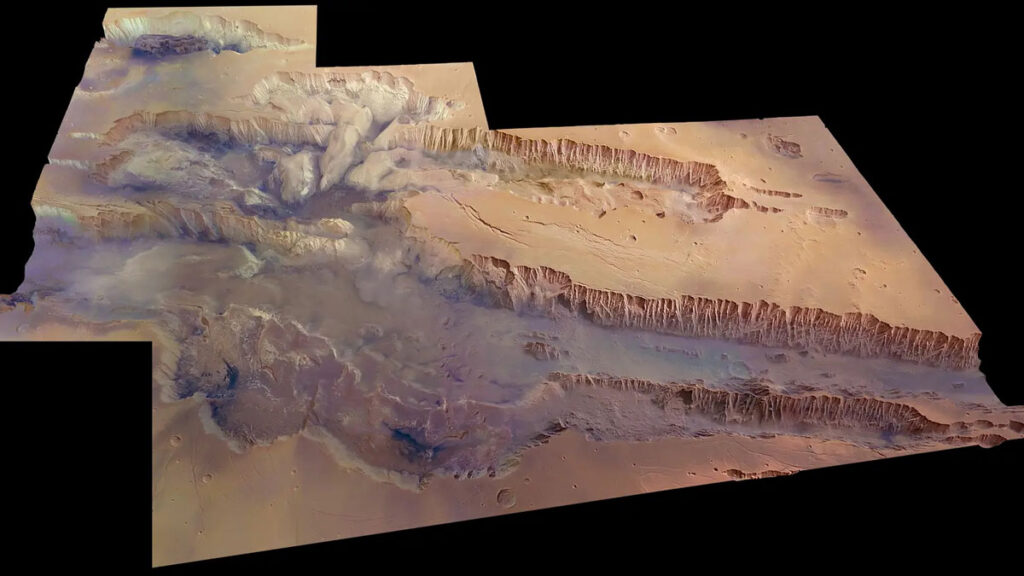
A recent study published in Nature Communications has traced the source of a martian quake to a fault deep beneath Mars's largest canyon, Valles Marineris. The quake, labeled S0976a, was detected by the InSight lander on its 976th Martian day of operation and originated almost on the opposite side of the planet. This finding suggests that an active fault beneath the canyon may be responsible for the shaking, which could provide insights into the geologic evolution of planets.
Lead author Jung-Hun Song, a seismologist at Imperial College London, noted that the quake is different from surface events and likely results from deep subsurface sources. The fault, located 20-40 kilometers underneath the canyon, is similar to midcontinent rifts on Earth and may have been reactivated recently. Planetary geologist Caroline Beghein of UCLA emphasized that such a quake is likely to be relatively common and called for future missions with multiple seismometers to better understand the planet's seismic activity.
The discovery of active faults on Mars is crucial to understanding how rocky planets form and why Earth is the only one known to have active tectonics.
Written by urgent.news from Eos's reporting — not their text. Machine-written — may contain errors; check the original before relying on it.