Mystery Skeleton Buried in Sandstone Revealed to Be Tiny Jurassic "Dragon" Reptile Sporting Horns
Learn about a newly discovered Jurassic reptile species with dragon-like horns that lived in Wyoming around 156 million years ago.
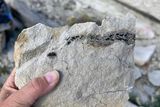
In 2022, a peculiar skeleton hidden within a sandstone slab in Wyoming captured the attention of paleontologists. The fossilized remains of a tiny reptile with dragon-like horns, dating back approximately 156 million years, were almost entirely concealed within the stone. A special neutron imaging technique provided a glimpse into the remains, revealing pelvic bones, a hind leg, and a nearly complete skull.
The newly identified species, Meilynodraco amonamarthi, belonged to an extinct group of reptiles called choristoderes and lived during the Late Jurassic period in Wyoming. The specimen was about a foot and a half long and may have met a gruesome end after being attacked by a larger predator. The detached head and the skull allowed researchers to uncover this reptile's evolutionary connections.
Meilynodraco amonamarthi's tiny ear bones provided valuable insights into its position on the evolutionary tree, suggesting that choristoderes might be more closely related to living reptiles than previously thought. The species' name, Meilynodraco, means "Dragon of Meilyn," in reference to its dragon-like horns, and amonamarthi honors the Swedish melodic death metal band Amon Amarth, with whom paleontologist Torsten Scheyer has a fondness.
Written by urgent.news from Discover Magazine's reporting — not their text. Machine-written — may contain errors; check the original before relying on it.